
World
UK Construction Sector Faces Sharpest Slowdown Since 2020

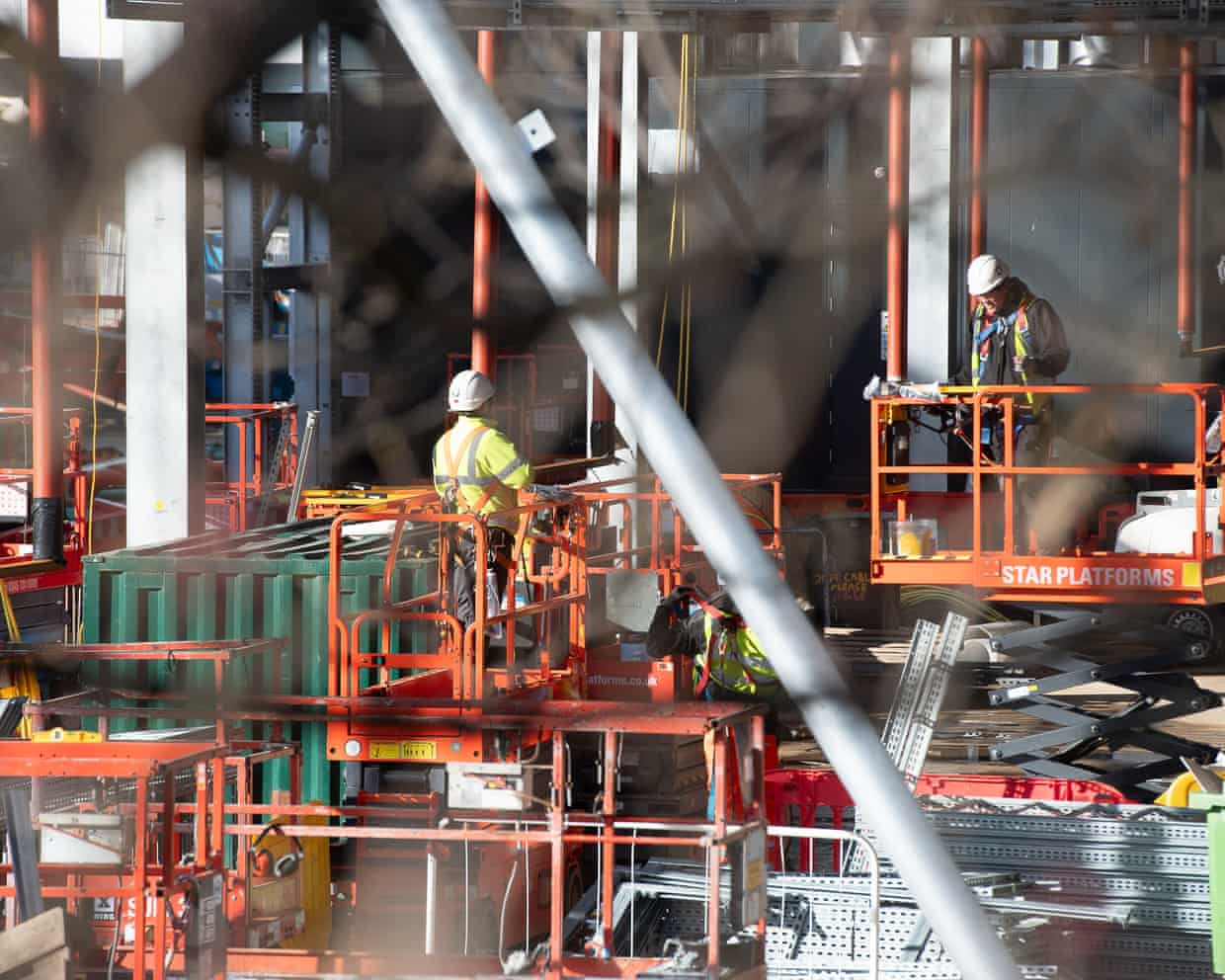
The UK construction sector experienced a significant slowdown in November 2023, marking the sharpest decline in activity since the initial Covid-19 lockdown. According to a survey conducted by S&P Global, the monthly purchasing managers’ index (PMI) for construction plummeted to 39.4, down from 44.1 in October. This reading not only fell below the anticipated 44.6 but also signals a contraction in the industry, with any figure below 50 indicating a decrease in activity.
This downturn presents a considerable challenge to the Labour government’s objectives of enhancing infrastructure projects and constructing 1.5 million homes by 2030. The survey results revealed that building firms are scaling back on residential projects amid a sluggish housing market and increasing construction costs. In addition, both infrastructure and commercial development work contracted sharply as clients postponed investment decisions due to uncertainty surrounding the autumn budget and widespread concerns about the UK’s economic outlook.
Job Cuts and Economic Outlook
The consequences of this slowdown extend beyond construction activity. Research from the Bank of England indicates that UK businesses reduced jobs at the fastest rate in four years during November, with an annual employment cut of 1.8%, the steepest decline since July 2021. This data comes from the decision maker panel, closely followed by Bank officials and referenced by members of its interest rate-setting committee.
Despite the grim figures, financial officers maintain a cautious optimism for the upcoming year. Expectations suggest a further employment decline of 0.7%, the lowest level since October 2020. Robert Wood, the chief UK economist at Pantheon Macroeconomics, expressed skepticism about the severity of the reports, suggesting they may be influenced by “chaotic” speculation prior to the autumn budget.
Contrasting Perspectives on Construction Activity
Wood noted that construction output statistics from the Office for National Statistics have performed better than the PMI survey thus far in 2023, while job postings showed an increase in November. “There’s no doubt that construction firms are extremely disappointed in the government’s progress, but we think the PMI remains too pessimistic,” he stated.
Matthew Swannell, chief economic adviser to the forecasting group EY Item Club, echoed these sentiments, arguing that the PMI figures appear excessively negative compared to official estimates. “November’s extremely weak PMI should be approached with a healthy degree of scepticism,” Swannell remarked.
The current situation in the UK construction sector reflects a complex interplay of economic factors, highlighting the challenges faced by businesses as they navigate a landscape marked by uncertainty and shifting market conditions. As the government aims to stimulate growth in this vital sector, the coming months will be critical in determining whether these ambitious targets can be met or if further setbacks will arise.

Cosmic Mystery Deepens: Where Are the Universe’s Defects?

Lady Bulldogs Shine in Postseason Awards Following Final Four Run

CALV Hosts Essential Class for Local Real Estate Professionals

Urgent Alert: “Spaving” Surges as Shoppers Overspend Online

Jefferies Initiates Coverage on Insmed with “Buy” Rating

Three Dog Night to Perform with Ambrosia at Mayo Civic Center

Urgent Announcement: Charles M. Payment Passes Away at 78

Houston Education Foundation Donates $4,592 for Student Programs

Beeks Financial Cloud Shares Drop 7% Amid Increased Trading Volume

Foreign Inflows into Japan Stocks Surge to ¥1.34 Trillion

University of Hawaiʻi Joins $25.6M AI Project to Monitor Disasters

Sydney Sweeney Embraces Body Positivity Amid Hollywood Challenges

Hudson Williams Gains Popularity as Breakout Star on Heated Rivalry

Urgent Farewell: Joleen Chaney Leaves Legacy at KFOR

Boeing’s Merger with McDonnell Douglas: A Strategic Move Explained

$1.25M Grant Advances Hawaiʻi’s Real-Time Hazard Monitoring

Derrick Dove and ABAC Band Set for Free Americana Concert

BOYNEXTDOOR’s Jaehyun Faces Backlash Amid BTS-TWICE Controversy
-
Business9 months ago
Foreign Inflows into Japan Stocks Surge to ¥1.34 Trillion
-
Science8 months ago
University of Hawaiʻi Joins $25.6M AI Project to Monitor Disasters
-
 Entertainment9 months ago
Sydney Sweeney Embraces Body Positivity Amid Hollywood Challenges
-
 Entertainment7 months ago
Hudson Williams Gains Popularity as Breakout Star on Heated Rivalry
-
 Top Stories8 months ago
Urgent Farewell: Joleen Chaney Leaves Legacy at KFOR
-
 World9 months ago
Boeing’s Merger with McDonnell Douglas: A Strategic Move Explained
-
 Science7 months ago
$1.25M Grant Advances Hawaiʻi’s Real-Time Hazard Monitoring
-
 Entertainment8 months ago
Derrick Dove and ABAC Band Set for Free Americana Concert
-
 Top Stories9 months ago
BOYNEXTDOOR’s Jaehyun Faces Backlash Amid BTS-TWICE Controversy
-

 Health6 months ago
Bodybuilder Eugene Teo Transitions to Mindful Movement for Health
-

 World6 months ago
San Francisco Airport to Host 16 Nonstop Airlines to Europe in 2026
-

 Top Stories7 months ago
National Coast Guard Museum Set to Open in 2027 After Funding Secured