
World
Trump Faces Declining Support as Key Voter Groups Shift Away

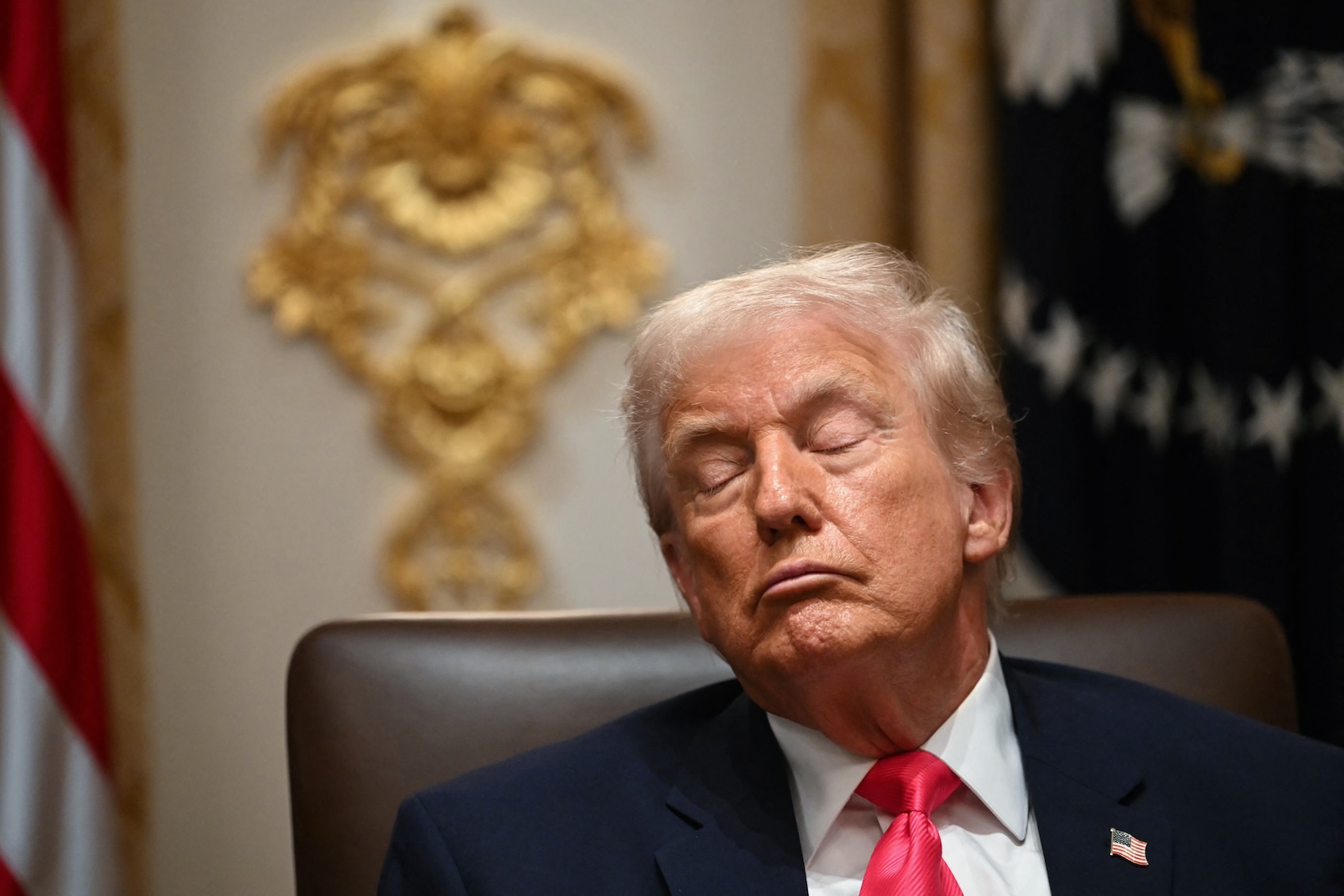
Donald Trump’s standing among voters is deteriorating, particularly after the Republican Party’s significant losses in the recent off-year elections. A new YouGov/Economist poll indicates that Trump’s approval rating has dropped to 38 percent. With three years left in his second term and upcoming midterm elections in 2024 likely to bring further challenges, questions arise about his ability to regain momentum or face a decline.
Concerns over Trump’s health and a noticeably reduced public schedule are compounding his waning support. Reports have surfaced about his apparent fatigue during public meetings, including moments where he seemed to fall asleep during a Cabinet meeting. Although he remains active on social media, posting frequently at night, his daytime engagements appear disconnected from current events. This physical vulnerability threatens to undermine his carefully cultivated image as a robust political figure, particularly as he approaches 80 years old.
In an attempt to dominate the media landscape, Trump has utilized his Truth Social platform to express controversial opinions, including disparaging remarks about Minnesota Governor Tim Walz and inflammatory comments regarding immigration. Despite these efforts to attract attention, polls reveal that his policies, including those related to immigration and the economy, are increasingly unpopular. In a historic first, Trump’s net approval rating has turned negative across numerous polls aggregated by the New York Times, positioning him with the second-lowest approval ratings for any president since World War II.
As voters begin to consider their options for the 2026 midterm elections, Democrats currently hold a lead over Republicans by 14 percentage points. This gap suggests that Democrats could reclaim control of the House of Representatives, and while the Senate remains a challenge due to structural issues, the enthusiasm among Democratic voters surpasses that of their Republican counterparts. The results from November’s elections further indicate a referendum on Trump’s presidency, with a clear message of discontent among voters.
While Trump’s approval ratings may reflect a broader discontent, it is crucial to recognize that he primarily seeks the support of his Republican base, particularly his loyal MAGA followers. Currently, Trump enjoys an 88 percent approval rating among Republican voters, representing a mere six-point decline since his inauguration. Yet, within his coalition, dissatisfaction is growing. Notably, Trump initially made significant gains among Latino voters, particularly men, but many are now distancing themselves due to his stringent immigration policies. Young voters, previously inclined towards him, are also expressing disappointment as economic conditions worsen, leading to a sense of betrayal regarding promises made.
A recent poll by AP-NORC highlights that Trump’s management, particularly during the recent government shutdown, has resulted in a substantial loss of support among Republicans. Other issues, including the ongoing Russia conflict, the fallout from the Jeffrey Epstein scandal, and contentious foreign policy decisions, are also contributing factors to his declining popularity.
Despite this, analysis by CNN political analyst Harry Enten suggests that core Republican voters remain steadfast in their loyalty to Trump. Understanding this relationship requires delving into the unique dynamics between Trump and his supporters. The MAGA movement operates more as a personality-driven cult than a traditional political movement, fostering a deep emotional connection among its followers. The allegiance to Trump transcends typical political affiliations, forming a community identity that is both personal and ideological.
Though some Trump voters express frustration, many remain committed to him, often citing dissatisfaction with the Democratic alternatives. Interviews conducted by NBC News with Trump supporters reveal a complex reality: while they may feel let down by his presidency, they still reject Democratic candidates, believing them to be worse options. A farmer from Oklahoma stated, “I wouldn’t change my vote, but I’m not happy,” reflecting a sentiment shared by many in his base.
A new report from the SNF Agora Institute at Johns Hopkins University found that loyalty among Republican voters remains strong, with Trump perceived as a figure who speaks authentically and without the filters typical of politicians. This loyalty persists across diverse demographics, regardless of income, gender, or age.
Despite narratives claiming Trump is becoming a “lame duck” president, evidence shows that his influence within the Republican Party remains significant. Approximately 85 percent of Republicans believe their party is on the right track and should continue its current direction, indicating that the MAGA movement’s momentum may extend beyond Trump’s presidency. However, cracks are beginning to appear in his support, with nearly one-third of Trump voters reporting regret or disappointment, often citing the stagnant economy and recent government shutdown as primary concerns.
While Trump’s challenges are evident, it is important to recognize his political resilience and ability to navigate turbulent waters. Public opinion is fluid, and the current sentiment may shift as political dynamics evolve. Despite facing declining approval ratings, Trump’s core base remains devoted, representing a competitive advantage that could influence future elections.
As the 2024 elections approach, the extent to which Trump’s loyal supporters can help him reclaim political dominance remains uncertain. Historian Ruth Ben-Ghiat notes that for hard-core MAGA followers, the realization that their leader may be faltering will be unsettling, though they may initially dismiss these concerns. The coming months will likely witness intensified efforts from pro-Trump media to discredit dissenters within the party.
The implications for American democracy are significant. While Trump’s support may be waning, the mechanisms that could undermine electoral integrity are becoming increasingly pronounced, raising questions about the future of governance in the United States.

Cosmic Mystery Deepens: Where Are the Universe’s Defects?

Lady Bulldogs Shine in Postseason Awards Following Final Four Run

CALV Hosts Essential Class for Local Real Estate Professionals

Urgent Alert: “Spaving” Surges as Shoppers Overspend Online

Jefferies Initiates Coverage on Insmed with “Buy” Rating

Three Dog Night to Perform with Ambrosia at Mayo Civic Center

Urgent Announcement: Charles M. Payment Passes Away at 78

Houston Education Foundation Donates $4,592 for Student Programs

Beeks Financial Cloud Shares Drop 7% Amid Increased Trading Volume

Foreign Inflows into Japan Stocks Surge to ¥1.34 Trillion

University of Hawaiʻi Joins $25.6M AI Project to Monitor Disasters

Sydney Sweeney Embraces Body Positivity Amid Hollywood Challenges

Hudson Williams Gains Popularity as Breakout Star on Heated Rivalry

Urgent Farewell: Joleen Chaney Leaves Legacy at KFOR

Boeing’s Merger with McDonnell Douglas: A Strategic Move Explained

$1.25M Grant Advances Hawaiʻi’s Real-Time Hazard Monitoring

Derrick Dove and ABAC Band Set for Free Americana Concert

BOYNEXTDOOR’s Jaehyun Faces Backlash Amid BTS-TWICE Controversy
-
Business9 months ago
Foreign Inflows into Japan Stocks Surge to ¥1.34 Trillion
-
Science8 months ago
University of Hawaiʻi Joins $25.6M AI Project to Monitor Disasters
-
 Entertainment9 months ago
Sydney Sweeney Embraces Body Positivity Amid Hollywood Challenges
-
 Entertainment7 months ago
Hudson Williams Gains Popularity as Breakout Star on Heated Rivalry
-
 Top Stories8 months ago
Urgent Farewell: Joleen Chaney Leaves Legacy at KFOR
-
 World9 months ago
Boeing’s Merger with McDonnell Douglas: A Strategic Move Explained
-
 Science7 months ago
$1.25M Grant Advances Hawaiʻi’s Real-Time Hazard Monitoring
-
 Entertainment8 months ago
Derrick Dove and ABAC Band Set for Free Americana Concert
-
 Top Stories9 months ago
BOYNEXTDOOR’s Jaehyun Faces Backlash Amid BTS-TWICE Controversy
-

 Health6 months ago
Bodybuilder Eugene Teo Transitions to Mindful Movement for Health
-

 World6 months ago
San Francisco Airport to Host 16 Nonstop Airlines to Europe in 2026
-

 Top Stories7 months ago
National Coast Guard Museum Set to Open in 2027 After Funding Secured