
Science
Cosmic Mystery Deepens: Where Are the Universe’s Defects?

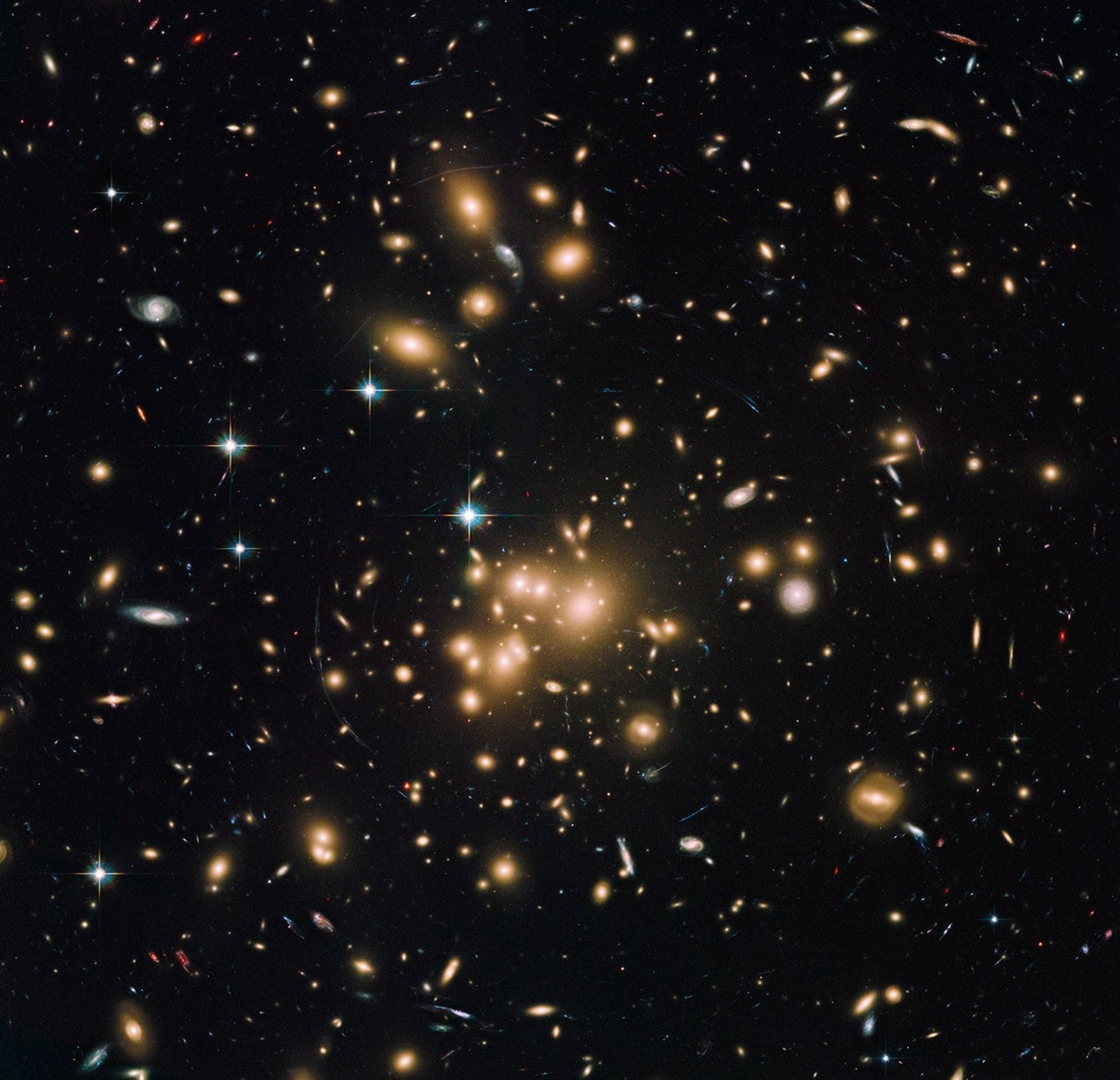
The search for the universe’s topological defects, remnants of the early cosmos, continues to baffle scientists. Recent investigations suggest that these anomalies, which should have formed during the cooling period following the Big Bang, are conspicuously absent from observations. Despite theoretical predictions that these defects would manifest as cosmic strings and magnetic monopoles, scientists are left wondering: where are they?
Mathematical topology indicates that the early universe was chaotic, filled with knots and defects. According to prevailing theories of phase transitions, these defects had to emerge as the universe cooled. Yet, the universe appears surprisingly devoid of evidence for these cosmic imperfections. The expectation was that the fabric of space-time would be teeming with 1D cracks, physically present but undetectable, and contributing to a chaotic cosmic backdrop. Instead, the sky remains remarkably clear.
One of the most intriguing aspects of cosmic strings is their potential to create gravitational waves, ripples in space-time caused by massive objects moving rapidly. Detecting these waves has become a significant focus for observatories like LIGO and NanoGRAV, which have successfully identified the collision of black holes and neutron stars billions of light-years away. Yet, the persistent hum of vibrating cosmic strings remains absent, presenting a puzzling silence that contradicts theoretical expectations.
Further complicating the picture is the issue of magnetic monopoles. Back in 1982, physicist Blas Cabrera claimed to have detected a monopole when his equipment recorded a unique signal. This single event, however, has not been replicated despite extensive searches and advancements in detection technology. If monopoles existed as predicted by standard theories, their weight would be so substantial that they could have prevented the universe from expanding, potentially leading to a “Big Crunch” before the first stars ignited.
This discrepancy raises questions about the validity of current theories. Theories of inflation, a rapid expansion of the universe shortly after the Big Bang, may provide some answers. If defects were created before or during inflation, their spatial distribution could have been stretched to such an extent that they are now nearly imperceptible. Imagine a few dots on a balloon that expands to the size of the solar system; those dots persist, but are now so far apart that they remain unseen.
Despite this potential explanation, scientists are still searching for tangible evidence of these defects. The universe should display remnants or “construction debris” from the formation of these anomalies, yet nothing conclusive has been found. The absence of even the slightest indication of cosmic strings or monopoles leads to speculation that scientists may be searching for the wrong phenomena.
It is possible that some topological defects did not vanish but rather transformed into something else. For instance, what if some of these strings became “vortons,” tiny, heavy, and essentially invisible knots that do not interact with light? If this were the case, they could account for the mysterious dark matter that constitutes a significant portion of the universe’s mass.
As the search for cosmic defects continues, the scientific community remains hopeful for breakthroughs that could shed light on these enduring mysteries. The next phase of research will focus on understanding whether these defects exist in altered forms, potentially reshaping our understanding of the universe itself. The question remains: Are we on the brink of discovering a new chapter in the cosmic narrative?

Cosmic Mystery Deepens: Where Are the Universe’s Defects?

Lady Bulldogs Shine in Postseason Awards Following Final Four Run

CALV Hosts Essential Class for Local Real Estate Professionals

Urgent Alert: “Spaving” Surges as Shoppers Overspend Online

Jefferies Initiates Coverage on Insmed with “Buy” Rating

Three Dog Night to Perform with Ambrosia at Mayo Civic Center

Urgent Announcement: Charles M. Payment Passes Away at 78

Houston Education Foundation Donates $4,592 for Student Programs

Beeks Financial Cloud Shares Drop 7% Amid Increased Trading Volume

Foreign Inflows into Japan Stocks Surge to ¥1.34 Trillion

University of Hawaiʻi Joins $25.6M AI Project to Monitor Disasters

Sydney Sweeney Embraces Body Positivity Amid Hollywood Challenges

Hudson Williams Gains Popularity as Breakout Star on Heated Rivalry

Urgent Farewell: Joleen Chaney Leaves Legacy at KFOR

Boeing’s Merger with McDonnell Douglas: A Strategic Move Explained

$1.25M Grant Advances Hawaiʻi’s Real-Time Hazard Monitoring

Derrick Dove and ABAC Band Set for Free Americana Concert

BOYNEXTDOOR’s Jaehyun Faces Backlash Amid BTS-TWICE Controversy
-
Business9 months ago
Foreign Inflows into Japan Stocks Surge to ¥1.34 Trillion
-
Science8 months ago
University of Hawaiʻi Joins $25.6M AI Project to Monitor Disasters
-
 Entertainment9 months ago
Sydney Sweeney Embraces Body Positivity Amid Hollywood Challenges
-
 Entertainment7 months ago
Hudson Williams Gains Popularity as Breakout Star on Heated Rivalry
-
 Top Stories8 months ago
Urgent Farewell: Joleen Chaney Leaves Legacy at KFOR
-
 World9 months ago
Boeing’s Merger with McDonnell Douglas: A Strategic Move Explained
-
 Science7 months ago
$1.25M Grant Advances Hawaiʻi’s Real-Time Hazard Monitoring
-
 Entertainment8 months ago
Derrick Dove and ABAC Band Set for Free Americana Concert
-
 Top Stories9 months ago
BOYNEXTDOOR’s Jaehyun Faces Backlash Amid BTS-TWICE Controversy
-

 Health6 months ago
Bodybuilder Eugene Teo Transitions to Mindful Movement for Health
-

 World6 months ago
San Francisco Airport to Host 16 Nonstop Airlines to Europe in 2026
-

 Top Stories7 months ago
National Coast Guard Museum Set to Open in 2027 After Funding Secured