
Science
Federal Reserve Faces Tough Choices Amid Oil Prices Surge

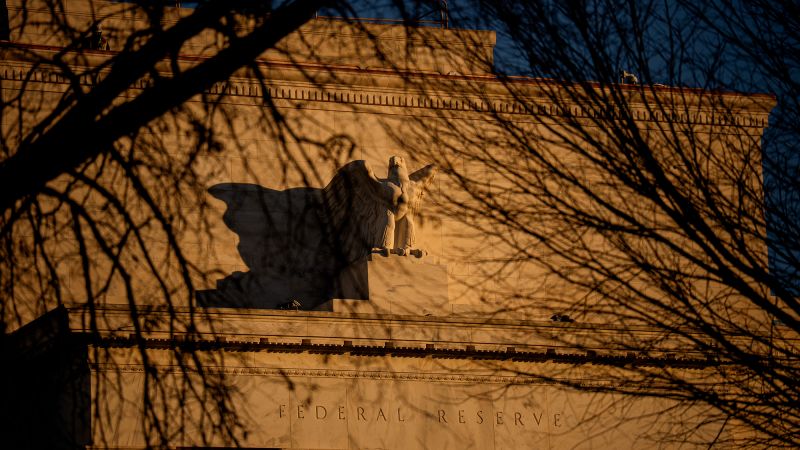
The Federal Reserve is confronting a potential crisis as soaring oil prices threaten to destabilize the US economy. This week, policymakers will meet to navigate the implications of escalating costs driven by President Donald Trump’s actions against Iran. Last week, the price of West Texas Intermediate (WTI) crude hit a peak of $120 per barrel, raising concerns about the impact on consumer goods and overall economic growth.
The rising energy costs pose a dual challenge for the Fed: they risk fueling inflation while simultaneously squeezing household budgets and business operating expenses. This situation could lead to a slowdown in hiring and broader economic activity. The timing is particularly sensitive as Kevin Warsh, Trump’s nominee to lead the central bank, awaits Senate confirmation, complicating discussions around interest rates.
Historical Context and Current Differences
The current oil crisis echoes past challenges, notably the severe inflation and economic stagnation during the 1973 Arab-Israeli War. During that time, the US economy was heavily reliant on foreign oil, and the Federal Reserve, under then-Chair Arthur Burns, hesitated to raise interest rates despite rising inflation. Experts today suggest that the situation is markedly different, as the United States is now the world’s largest oil producer and less dependent on imports.
According to Nicholas Mulder, a history professor at Cornell University, the current disruptions to oil production are more significant than those experienced in the 1970s. He noted that around 20 million barrels are currently impacted by the conflict, compared to approximately 4.5 million barrels during the previous crisis. This scale of disruption presents a more complex challenge for policymakers.
The Federal Reserve’s approach to economic management has evolved since the 1970s. Current officials generally accept that monetary policy can influence economic stability during shocks. Nevertheless, the ongoing conflict poses unique challenges. Josh Freed, senior vice president at Third Way, commented on the situation, noting that Iranian attacks on energy facilities could lead to prolonged disruptions that may exceed the impact of the past oil embargo.
Impact on Consumers and Employment
American consumers are already feeling the effects of rising oil prices. The University of Michigan reported a decline in consumer sentiment as the war in Iran weighed on expectations about inflation. This dip indicates that many Americans are increasingly concerned about how rising energy costs will affect their finances.
The job market is also showing signs of strain. The Bureau of Labor Statistics revealed that employers cut 92,000 jobs in February, raising the unemployment rate to 4.4%. Although job openings increased by 400,000 in January, there are still more unemployed individuals than available positions.
Tani Fukui, senior director at MetLife Investment Management, highlighted the certainty of inflationary impacts resulting from the conflict, but acknowledged that the extent of this inflation remains uncertain. As American consumers grapple with rising costs, the Federal Reserve faces an uphill battle in balancing inflation control with economic growth.
The current oil crisis not only raises questions about price levels but also about the Federal Reserve’s ability to apply lessons from history to prevent a downturn in the economy. As the Fed prepares to make critical decisions, the stakes are high for both policymakers and consumers alike.

Cosmic Mystery Deepens: Where Are the Universe’s Defects?

Lady Bulldogs Shine in Postseason Awards Following Final Four Run

CALV Hosts Essential Class for Local Real Estate Professionals

Urgent Alert: “Spaving” Surges as Shoppers Overspend Online

Jefferies Initiates Coverage on Insmed with “Buy” Rating

Three Dog Night to Perform with Ambrosia at Mayo Civic Center

Urgent Announcement: Charles M. Payment Passes Away at 78

Houston Education Foundation Donates $4,592 for Student Programs

Beeks Financial Cloud Shares Drop 7% Amid Increased Trading Volume

Foreign Inflows into Japan Stocks Surge to ¥1.34 Trillion

University of Hawaiʻi Joins $25.6M AI Project to Monitor Disasters

Sydney Sweeney Embraces Body Positivity Amid Hollywood Challenges

Hudson Williams Gains Popularity as Breakout Star on Heated Rivalry

Urgent Farewell: Joleen Chaney Leaves Legacy at KFOR

Boeing’s Merger with McDonnell Douglas: A Strategic Move Explained

$1.25M Grant Advances Hawaiʻi’s Real-Time Hazard Monitoring

Derrick Dove and ABAC Band Set for Free Americana Concert

BOYNEXTDOOR’s Jaehyun Faces Backlash Amid BTS-TWICE Controversy
-
Business9 months ago
Foreign Inflows into Japan Stocks Surge to ¥1.34 Trillion
-
Science8 months ago
University of Hawaiʻi Joins $25.6M AI Project to Monitor Disasters
-
 Entertainment9 months ago
Sydney Sweeney Embraces Body Positivity Amid Hollywood Challenges
-
 Entertainment7 months ago
Hudson Williams Gains Popularity as Breakout Star on Heated Rivalry
-
 Top Stories8 months ago
Urgent Farewell: Joleen Chaney Leaves Legacy at KFOR
-
 World9 months ago
Boeing’s Merger with McDonnell Douglas: A Strategic Move Explained
-
 Science7 months ago
$1.25M Grant Advances Hawaiʻi’s Real-Time Hazard Monitoring
-
 Entertainment8 months ago
Derrick Dove and ABAC Band Set for Free Americana Concert
-
 Top Stories9 months ago
BOYNEXTDOOR’s Jaehyun Faces Backlash Amid BTS-TWICE Controversy
-

 Health6 months ago
Bodybuilder Eugene Teo Transitions to Mindful Movement for Health
-

 World6 months ago
San Francisco Airport to Host 16 Nonstop Airlines to Europe in 2026
-

 Top Stories7 months ago
National Coast Guard Museum Set to Open in 2027 After Funding Secured