
Politics
Federal Judge Critiques DOJ Over Alleged Political Bias in Prosecutions

A federal judge has criticized the U.S. Department of Justice (DOJ) for what he describes as politically motivated prosecutions, particularly regarding an investigation into Federal Reserve Chairman Jerome Powell. On March 15, 2024, District Judge James Boasberg quashed two grand jury subpoenas, stating they were aimed at coercing Powell to lower interest rates, with no substantiated evidence of wrongdoing.
In his ruling, Judge Boasberg outlined that there is a “mountain of evidence” indicating the subpoenas were intended to harass Powell. He referenced numerous social media posts and public statements that pressured Powell to lower interest rates, suggesting that the DOJ’s motives were improper. “Against such extensive and persuasive evidence of improper motive, the Government counters with only a tenuous assertion of a legitimate purpose,” Boasberg wrote.
Legal Challenges Ahead
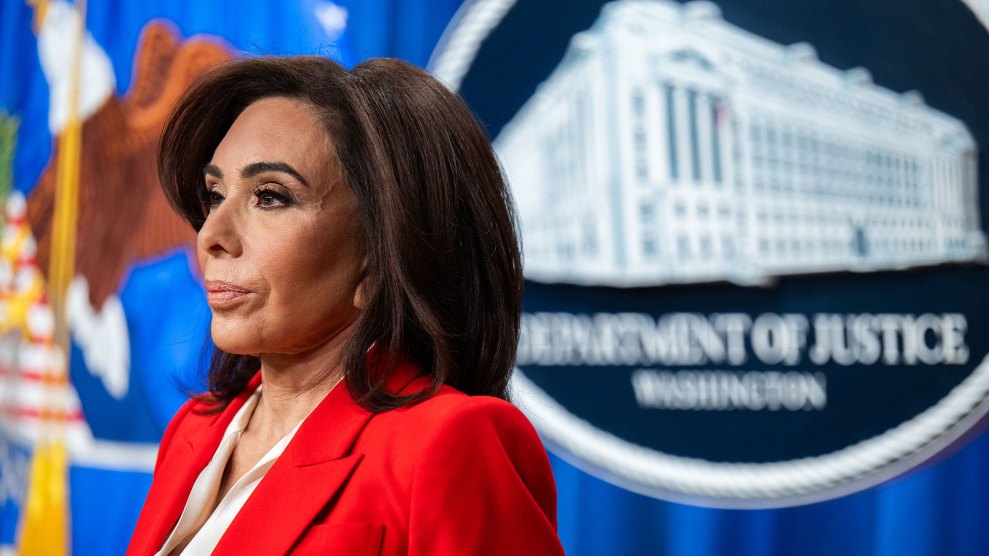
Following the ruling, Jeanine Pirro, a U.S. attorney and supporter of former President Donald Trump, announced her intent to appeal. At a press conference, she labeled the judge’s opinion as a dangerous precedent and insisted that the investigation into Powell was justified. She claimed that there were legitimate grounds for the inquiry, including concerns about the Federal Reserve’s renovation project exceeding its budget and potential discrepancies in Powell’s congressional testimony.
Judge Boasberg’s decision has raised alarms about the integrity of the DOJ, particularly during Trump’s presidency. He pointed out a troubling pattern of politically motivated prosecutions tied to Trump’s desire to remove Powell from his position. Boasberg highlighted that the origins of the allegations against Powell stemmed from Bill Pulte, a political appointee with no law enforcement experience, who suggested investigations aimed at discrediting Powell.
“The President spent years essentially asking if no one will rid him of this troublesome Fed Chair,” Boasberg stated. He expressed skepticism about the DOJ’s independence, noting that U.S. Attorneys are appointed by the President and can be dismissed at will. He exemplified this by referencing the ousting of a U.S. Attorney for refusing to pursue politically charged indictments.
Implications for DOJ Independence
Judge Boasberg’s ruling reflects a broader discontent regarding the relationship between the White House and the DOJ during Trump’s administration. He pointed out concerning instances where the DOJ complied with Trump’s directives, including investigations into various political adversaries. The judge’s remarks suggest that the current state of the DOJ has been compromised, leading to a loss of trust in its prosecutorial decisions.
Boasberg’s commentary underscores a significant shift in the traditional understanding of the DOJ’s role as an independent entity. He argued that the current administration’s approach has blurred the lines between political motivations and legitimate law enforcement efforts, eroding public confidence in the Department’s integrity.
The outcome of Pirro’s appeal may present critical questions for the U.S. Supreme Court, especially as it pertains to the balance of power between the executive branch and judicial oversight. The Court has previously indicated a willingness to support presidential authority, raising concerns about the future of judicial independence in politically sensitive cases.
As the legal proceedings unfold, the implications of Boasberg’s ruling may resonate beyond this individual case, potentially reshaping perceptions of the DOJ and its role in American governance. The ongoing scrutiny of the Department’s actions underscores the necessity for vigilance in its operations, particularly in an era marked by increasing political polarization.

Cosmic Mystery Deepens: Where Are the Universe’s Defects?

Lady Bulldogs Shine in Postseason Awards Following Final Four Run

CALV Hosts Essential Class for Local Real Estate Professionals

Urgent Alert: “Spaving” Surges as Shoppers Overspend Online

Jefferies Initiates Coverage on Insmed with “Buy” Rating

Three Dog Night to Perform with Ambrosia at Mayo Civic Center

Urgent Announcement: Charles M. Payment Passes Away at 78

Houston Education Foundation Donates $4,592 for Student Programs

Beeks Financial Cloud Shares Drop 7% Amid Increased Trading Volume

Foreign Inflows into Japan Stocks Surge to ¥1.34 Trillion

University of Hawaiʻi Joins $25.6M AI Project to Monitor Disasters

Sydney Sweeney Embraces Body Positivity Amid Hollywood Challenges

Hudson Williams Gains Popularity as Breakout Star on Heated Rivalry

Urgent Farewell: Joleen Chaney Leaves Legacy at KFOR

Boeing’s Merger with McDonnell Douglas: A Strategic Move Explained

$1.25M Grant Advances Hawaiʻi’s Real-Time Hazard Monitoring

Derrick Dove and ABAC Band Set for Free Americana Concert

BOYNEXTDOOR’s Jaehyun Faces Backlash Amid BTS-TWICE Controversy
-
Business9 months ago
Foreign Inflows into Japan Stocks Surge to ¥1.34 Trillion
-
Science8 months ago
University of Hawaiʻi Joins $25.6M AI Project to Monitor Disasters
-
 Entertainment9 months ago
Sydney Sweeney Embraces Body Positivity Amid Hollywood Challenges
-
 Entertainment7 months ago
Hudson Williams Gains Popularity as Breakout Star on Heated Rivalry
-
 Top Stories8 months ago
Urgent Farewell: Joleen Chaney Leaves Legacy at KFOR
-
 World9 months ago
Boeing’s Merger with McDonnell Douglas: A Strategic Move Explained
-
 Science7 months ago
$1.25M Grant Advances Hawaiʻi’s Real-Time Hazard Monitoring
-
 Entertainment8 months ago
Derrick Dove and ABAC Band Set for Free Americana Concert
-
 Top Stories9 months ago
BOYNEXTDOOR’s Jaehyun Faces Backlash Amid BTS-TWICE Controversy
-

 Health6 months ago
Bodybuilder Eugene Teo Transitions to Mindful Movement for Health
-

 World6 months ago
San Francisco Airport to Host 16 Nonstop Airlines to Europe in 2026
-

 Top Stories7 months ago
National Coast Guard Museum Set to Open in 2027 After Funding Secured