
Entertainment
Political Leaders Weaponize the Term ‘Ideology’ in Rhetoric

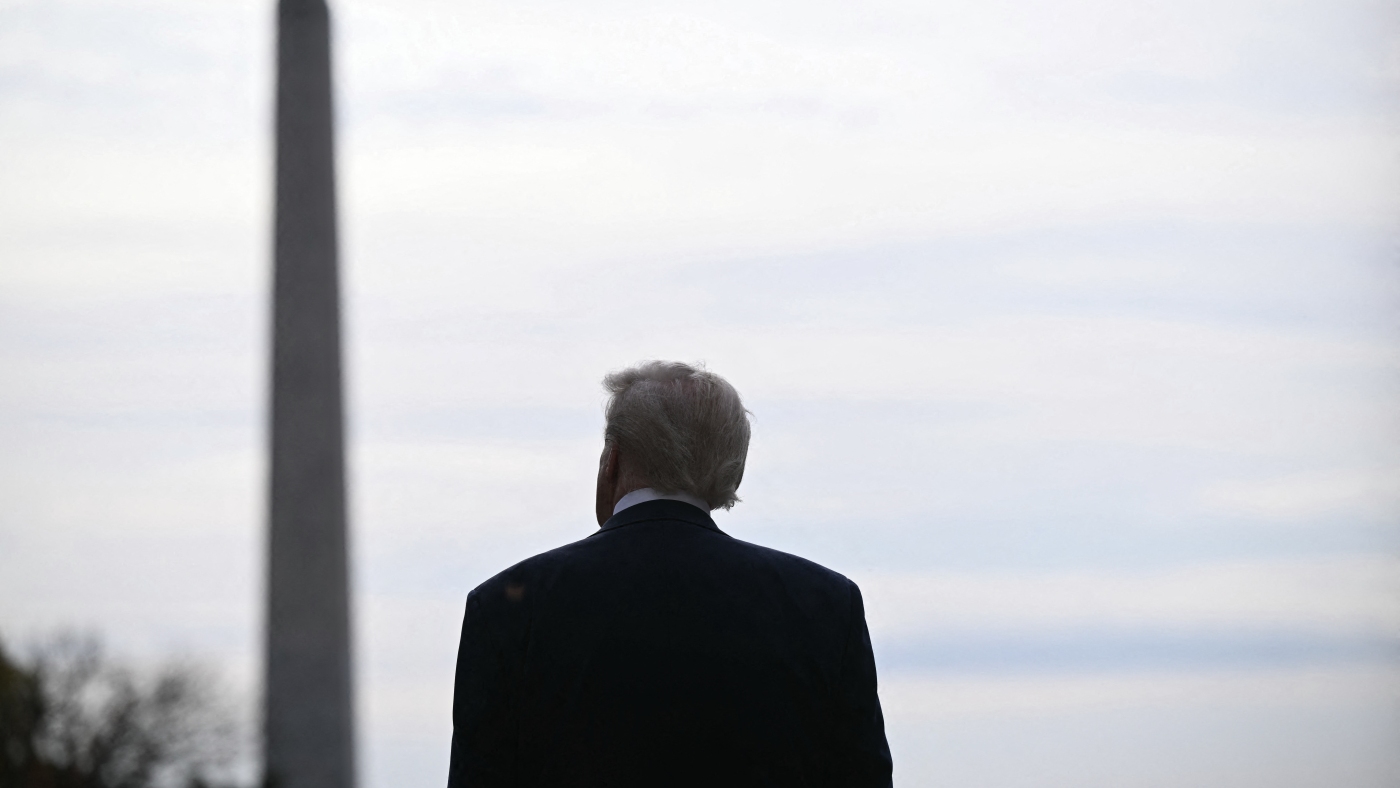
The term “ideology” has emerged as a prominent fixture in political discourse, particularly during the lead-up to the 2024 presidential election in the United States. Political figures are increasingly using the word to label their opponents’ beliefs as misguided or harmful. For instance, former President Donald Trump has vowed to “defeat the toxic poison of gender ideology,” pledging to take “historic action” to reaffirm what he calls a divinely created gender binary. Similarly, Education Secretary Linda McMahon has criticized “DEI ideologies” in hiring and admissions, advocating instead for merit-based practices. In a dramatic assertion, Utah Governor Spencer Cox linked a “leftist ideology” to the alleged assassination attempt on conservative figure Charlie Kirk.
This use of “ideology” is not limited to the right. Scholar Brad Onishi, author of *Preparing for War: The Extremist History of White Christian Nationalism — and What Comes Next*, identifies Christian nationalism as an ideology that posits the United States was founded as a Christian nation and should remain so.
Tracing the Roots of ‘Ideology’
The evolution of the term “ideology” is rich and complex, originating during the French Enlightenment. Philosopher Antoine de Tracy first coined the term as a neutral concept aimed at the scientific study of ideas. According to Samuel Chan, who teaches political thought at Occidental College, de Tracy envisioned that ideas should be examined with the same rigor as scientific inquiry. He believed that this exploration would bolster Enlightenment values such as personal liberty and private property.
However, the term quickly transformed into a pejorative under the regime of Napoleon Bonaparte. Napoleon referred to his political opponents as “ideologues,” framing them as threats to his authority because they favored legislative powers over executive control.
Later, Karl Marx appropriated the term to illustrate what he perceived as a false consciousness among workers who aligned with the ruling class’s interests. Marx contended that if laborers did not revolt, it was because they were bound to the “ideology of the ruling class,” according to Chan.
The Current Context of Ideology in Politics
In contemporary discourse, “ideology” has morphed into a form of name-calling, as noted by Jason Blakely, a political scientist at Pepperdine University and author of *Lost in Ideology*. He argues that conservatives often wield the term to criticize what they see as transient beliefs that challenge traditional values, while liberals employ it to denounce entrenched hierarchies that inhibit human development.
Chan suggests that alternative terms, such as “worldview” or “narrative,” may provide a more empathetic framework for understanding how communities interpret their histories and assign meaning to their lives. This perspective could foster greater understanding across diverse political and cultural divides.
Blakely proposes treating ideology similarly to religion. He asserts that while religious individuals believe their faith is true, they also recognize it as a cultural framework that requires dialogue and persuasion. Presenting one’s viewpoint effectively may yield better outcomes than outright dismissing opposing beliefs.
As political leaders continue to wield the term “ideology” to shape public perception, its implications for discourse and understanding remain profound. The challenge lies in navigating these complex conversations while fostering empathy and respect for differing perspectives.

Cosmic Mystery Deepens: Where Are the Universe’s Defects?

Lady Bulldogs Shine in Postseason Awards Following Final Four Run

CALV Hosts Essential Class for Local Real Estate Professionals

Urgent Alert: “Spaving” Surges as Shoppers Overspend Online

Jefferies Initiates Coverage on Insmed with “Buy” Rating

Three Dog Night to Perform with Ambrosia at Mayo Civic Center

Urgent Announcement: Charles M. Payment Passes Away at 78

Houston Education Foundation Donates $4,592 for Student Programs

Beeks Financial Cloud Shares Drop 7% Amid Increased Trading Volume

Foreign Inflows into Japan Stocks Surge to ¥1.34 Trillion

University of Hawaiʻi Joins $25.6M AI Project to Monitor Disasters

Sydney Sweeney Embraces Body Positivity Amid Hollywood Challenges

Hudson Williams Gains Popularity as Breakout Star on Heated Rivalry

Urgent Farewell: Joleen Chaney Leaves Legacy at KFOR

Boeing’s Merger with McDonnell Douglas: A Strategic Move Explained

$1.25M Grant Advances Hawaiʻi’s Real-Time Hazard Monitoring

Derrick Dove and ABAC Band Set for Free Americana Concert

BOYNEXTDOOR’s Jaehyun Faces Backlash Amid BTS-TWICE Controversy
-
Business9 months ago
Foreign Inflows into Japan Stocks Surge to ¥1.34 Trillion
-
Science8 months ago
University of Hawaiʻi Joins $25.6M AI Project to Monitor Disasters
-
 Entertainment9 months ago
Sydney Sweeney Embraces Body Positivity Amid Hollywood Challenges
-
 Entertainment7 months ago
Hudson Williams Gains Popularity as Breakout Star on Heated Rivalry
-
 Top Stories8 months ago
Urgent Farewell: Joleen Chaney Leaves Legacy at KFOR
-
 World9 months ago
Boeing’s Merger with McDonnell Douglas: A Strategic Move Explained
-
 Science7 months ago
$1.25M Grant Advances Hawaiʻi’s Real-Time Hazard Monitoring
-
 Entertainment8 months ago
Derrick Dove and ABAC Band Set for Free Americana Concert
-
 Top Stories9 months ago
BOYNEXTDOOR’s Jaehyun Faces Backlash Amid BTS-TWICE Controversy
-

 Health6 months ago
Bodybuilder Eugene Teo Transitions to Mindful Movement for Health
-

 World6 months ago
San Francisco Airport to Host 16 Nonstop Airlines to Europe in 2026
-

 Top Stories7 months ago
National Coast Guard Museum Set to Open in 2027 After Funding Secured