
World
Ursa Major Unveils Cutting-Edge Liquid Propulsion for Hypersonics

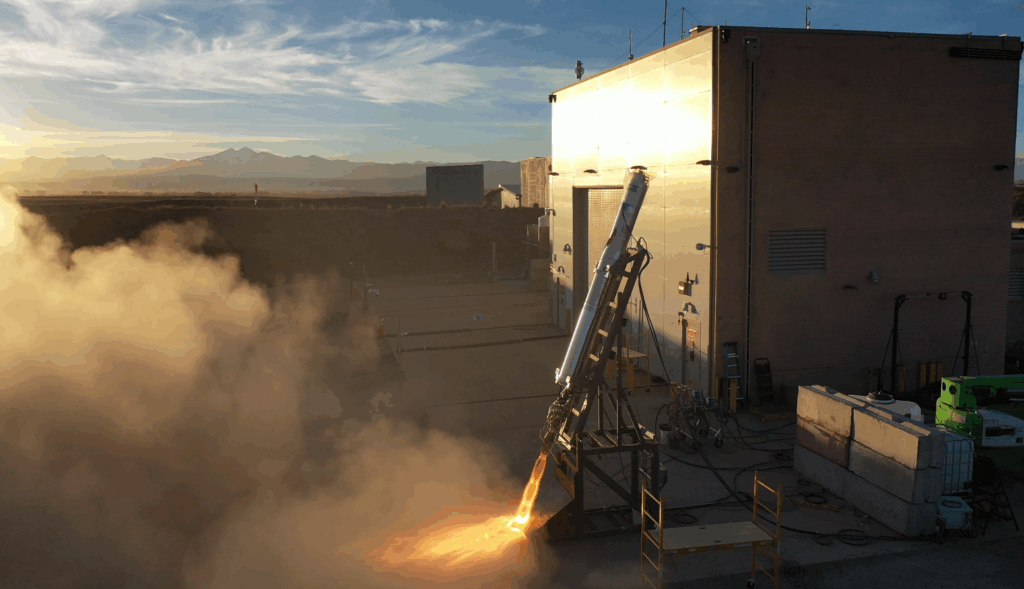
The landscape of hypersonic propulsion is evolving, with Ursa Major introducing a new storable liquid rocket engine that promises to enhance the United States’ capabilities in this critical area. As concerns grow about the U.S. potentially lagging behind Russia and China, this innovative propulsion technology offers significant advantages over traditional methods.
Ursa Major’s approach to hypersonic propulsion highlights the limitations of existing systems. Current options, such as solid-fuel rockets and air-breathing engines, often face challenges like high costs, limited maneuverability, and operational constraints. In contrast, Ursa Major’s storable liquid rocket engine technology allows for starting, stopping, and throttling the engine, thus improving maneuverability and survivability in various flight profiles.
The company’s CEO, Dan Jablonsky, discussed the state of hypersonic propulsion and the unique advantages of their technology during an interview. Jablonsky emphasized that the U.S. has not kept pace with its peer nations in this domain. He noted, “At a high level, we’re behind where we should be with peer and near-peer adversaries.” He elaborated on the high costs associated with existing propulsion systems, which have hampered development efforts.
Ursa Major’s storable liquid rocket engines, such as the Hadley engine, have already demonstrated remarkable performance, achieving flights at speeds exceeding Mach 5 with the help of Stratolaunch. This capability is crucial for both testing and operational applications. The flexibility and rapid development cycles offered by advanced 3D printing techniques have positioned Ursa Major as a leader in the hypersonic propulsion sector.
Innovative Features of the Draper System
The Draper system, a tactical variant of the Hadley engine, is designed to enhance operational readiness. Unlike traditional liquid engines that rely on cryogenic or hypergolic fuels, the Draper engine uses storable liquids that can remain viable for over 10 years. This feature allows for deployment in various environments, including onboard ships, air bases, or space missions.
Jablonsky explained that the Draper system combines the simplicity of solid fuels with the advanced capabilities of liquid systems. “You press a button, and it starts,” he said. This engine can operate effectively in high-altitude and space environments, where air-breathing engines may struggle due to low oxygen density.
The potential applications for the Draper engine within the Air Force are expansive. It can serve as a long-range weapon system, achieving speeds and distances that current air-breathing configurations cannot match. Jablonsky highlighted the urgency of developing these capabilities in response to advancements made by adversaries in hypersonic technology.
3D Printing: A Game Changer in Engine Development
Ursa Major’s commitment to additive manufacturing significantly contributes to its rapid engine development. Jablonsky pointed out the company’s use of high-temperature alloys capable of withstanding extreme operational conditions. The 3D printing process allows for the production of complex components, such as combustion chambers and turbo machinery, with unprecedented speed.
According to Jablonsky, approximately 60% of the Draper engine is additively manufactured, which streamlines the development process. “We can get to the test facilities in days and weeks with different configurations,” he stated. This agility in design and production not only accelerates time to market but also facilitates the introduction of advanced solutions for military operations.
As Ursa Major continues to push the boundaries of hypersonic propulsion, the implications for national defense are profound. The introduction of storable liquid engines may redefine the U.S. military’s approach to modern warfare, allowing for greater flexibility and responsiveness in a rapidly changing global landscape. The development of systems like the Angry Tortoise program further underscores the strategic importance of these advancements in maintaining a competitive edge.

Cosmic Mystery Deepens: Where Are the Universe’s Defects?

Lady Bulldogs Shine in Postseason Awards Following Final Four Run

CALV Hosts Essential Class for Local Real Estate Professionals

Urgent Alert: “Spaving” Surges as Shoppers Overspend Online

Jefferies Initiates Coverage on Insmed with “Buy” Rating

Three Dog Night to Perform with Ambrosia at Mayo Civic Center

Urgent Announcement: Charles M. Payment Passes Away at 78

Houston Education Foundation Donates $4,592 for Student Programs

Beeks Financial Cloud Shares Drop 7% Amid Increased Trading Volume

Foreign Inflows into Japan Stocks Surge to ¥1.34 Trillion

University of Hawaiʻi Joins $25.6M AI Project to Monitor Disasters

Sydney Sweeney Embraces Body Positivity Amid Hollywood Challenges

Hudson Williams Gains Popularity as Breakout Star on Heated Rivalry

Urgent Farewell: Joleen Chaney Leaves Legacy at KFOR

Boeing’s Merger with McDonnell Douglas: A Strategic Move Explained

$1.25M Grant Advances Hawaiʻi’s Real-Time Hazard Monitoring

Derrick Dove and ABAC Band Set for Free Americana Concert

BOYNEXTDOOR’s Jaehyun Faces Backlash Amid BTS-TWICE Controversy
-
Business9 months ago
Foreign Inflows into Japan Stocks Surge to ¥1.34 Trillion
-
Science8 months ago
University of Hawaiʻi Joins $25.6M AI Project to Monitor Disasters
-
 Entertainment9 months ago
Sydney Sweeney Embraces Body Positivity Amid Hollywood Challenges
-
 Entertainment7 months ago
Hudson Williams Gains Popularity as Breakout Star on Heated Rivalry
-
 Top Stories8 months ago
Urgent Farewell: Joleen Chaney Leaves Legacy at KFOR
-
 World9 months ago
Boeing’s Merger with McDonnell Douglas: A Strategic Move Explained
-
 Science7 months ago
$1.25M Grant Advances Hawaiʻi’s Real-Time Hazard Monitoring
-
 Entertainment8 months ago
Derrick Dove and ABAC Band Set for Free Americana Concert
-
 Top Stories9 months ago
BOYNEXTDOOR’s Jaehyun Faces Backlash Amid BTS-TWICE Controversy
-

 Health6 months ago
Bodybuilder Eugene Teo Transitions to Mindful Movement for Health
-

 World6 months ago
San Francisco Airport to Host 16 Nonstop Airlines to Europe in 2026
-

 Top Stories7 months ago
National Coast Guard Museum Set to Open in 2027 After Funding Secured