
World
Scientists Discover Rare Hybrid Blood Type Posing Transfusion Challenges

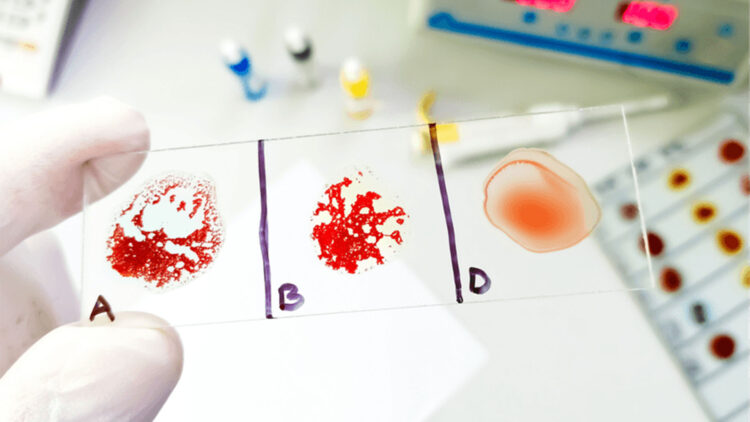
Researchers at Mahidol University in Thailand have identified an exceptionally rare hybrid blood type, named B(A), which poses significant challenges for blood transfusions and compatibility. This discovery, detailed in the journal Transfusion and Apheresis Science, marks the first identification of this blood type in only three individuals from a total of over 544,230 blood samples tested.
The B(A) phenotype represents a unique version of type B blood, displaying a peculiar combination of B antigens and a small amount of A-like activity. The research team, led by hematologist Janejira Kittivorapart, made this finding while investigating unexpected results in blood tests for various patients at Siriraj Hospital.
Understanding the Hybrid Blood Type
Typically, blood types are categorized into four main groups: A, B, AB, and O, each of which can be either positive or negative based on specific markers called antigens found on red blood cells. While type B blood usually contains only B antigens, the B(A) phenotype exhibits both the predominant B antigens and a slight presence of A antigens due to gene mutations affecting the enzyme responsible for adding sugar molecules to these antigens.
Blood typing involves analyzing both the antigens on red blood cells and the antibodies present in the plasma. An inconsistency between these two elements, known as an ABO discrepancy, can complicate medical treatments, as doctors must confirm the accurate blood type before proceeding with transfusions. The presence of the B(A) hybrid complicates this process, especially in emergency situations where time is critical.
Rare Cases and Genetic Insights
To assess the frequency of unusual blood types, Kittivorapart and her team examined blood tests conducted over an eight-year period. Among the 285,450 samples from donors and 258,780 from patients, they found that only 396 patient samples, or approximately 0.15 percent, exhibited ABO discrepancies. After excluding cases related to stem cell transplants—which can temporarily alter blood types—only 198 samples remained, with just one patient found to have the B(A) phenotype.
Among the donor samples, only 74 cases (or 0.03 percent) showed inconsistencies, and only two donors displayed the B(A) phenotype. This means that out of nearly 550,000 tested samples, only three individuals possess this rare variant.
A closer examination of the DNA of these individuals revealed four mutations in the ABO gene, which regulates the enzyme that modifies blood antigens. This combination of mutations, never reported before, results in blood that behaves like type B but confuses standard blood typing tests.
The researchers concluded their study by stating, “Future studies are required to elucidate the structural and functional consequences of the mutated [enzyme] AB transferase.”
The significance of understanding rare blood types like B(A) cannot be overstated. In recent years, medical advancements have unveiled new blood group systems, underscoring the complexities of blood compatibility. For instance, in 2024, scientists solved a long-standing mystery regarding a pregnant woman’s blood sample from 1972, which represented an entirely new blood group system.
Additionally, earlier this year, researchers in France identified a new blood type called “Gwada-negative” in a patient from the Caribbean island of Guadeloupe. According to medical biologist Thierry Peyrard, this patient is “undoubtedly the only known case in the world,” highlighting the ongoing need for research in this vital area of medicine.
As these discoveries illustrate, the field of immunohematology continues to evolve, revealing just how much remains to be learned about the intricacies of human blood and its implications for medical practice.

Cosmic Mystery Deepens: Where Are the Universe’s Defects?

Lady Bulldogs Shine in Postseason Awards Following Final Four Run

CALV Hosts Essential Class for Local Real Estate Professionals

Urgent Alert: “Spaving” Surges as Shoppers Overspend Online

Jefferies Initiates Coverage on Insmed with “Buy” Rating

Three Dog Night to Perform with Ambrosia at Mayo Civic Center

Urgent Announcement: Charles M. Payment Passes Away at 78

Houston Education Foundation Donates $4,592 for Student Programs

Beeks Financial Cloud Shares Drop 7% Amid Increased Trading Volume

Foreign Inflows into Japan Stocks Surge to ¥1.34 Trillion

University of Hawaiʻi Joins $25.6M AI Project to Monitor Disasters

Sydney Sweeney Embraces Body Positivity Amid Hollywood Challenges

Hudson Williams Gains Popularity as Breakout Star on Heated Rivalry

Urgent Farewell: Joleen Chaney Leaves Legacy at KFOR

Boeing’s Merger with McDonnell Douglas: A Strategic Move Explained

$1.25M Grant Advances Hawaiʻi’s Real-Time Hazard Monitoring

Derrick Dove and ABAC Band Set for Free Americana Concert

BOYNEXTDOOR’s Jaehyun Faces Backlash Amid BTS-TWICE Controversy
-
Business9 months ago
Foreign Inflows into Japan Stocks Surge to ¥1.34 Trillion
-
Science8 months ago
University of Hawaiʻi Joins $25.6M AI Project to Monitor Disasters
-
 Entertainment9 months ago
Sydney Sweeney Embraces Body Positivity Amid Hollywood Challenges
-
 Entertainment7 months ago
Hudson Williams Gains Popularity as Breakout Star on Heated Rivalry
-
 Top Stories8 months ago
Urgent Farewell: Joleen Chaney Leaves Legacy at KFOR
-
 World9 months ago
Boeing’s Merger with McDonnell Douglas: A Strategic Move Explained
-
 Science7 months ago
$1.25M Grant Advances Hawaiʻi’s Real-Time Hazard Monitoring
-
 Entertainment8 months ago
Derrick Dove and ABAC Band Set for Free Americana Concert
-
 Top Stories9 months ago
BOYNEXTDOOR’s Jaehyun Faces Backlash Amid BTS-TWICE Controversy
-

 Health6 months ago
Bodybuilder Eugene Teo Transitions to Mindful Movement for Health
-

 World6 months ago
San Francisco Airport to Host 16 Nonstop Airlines to Europe in 2026
-

 Top Stories7 months ago
National Coast Guard Museum Set to Open in 2027 After Funding Secured