
World
Stig Ørskov Discusses Media Evolution and Future Challenges

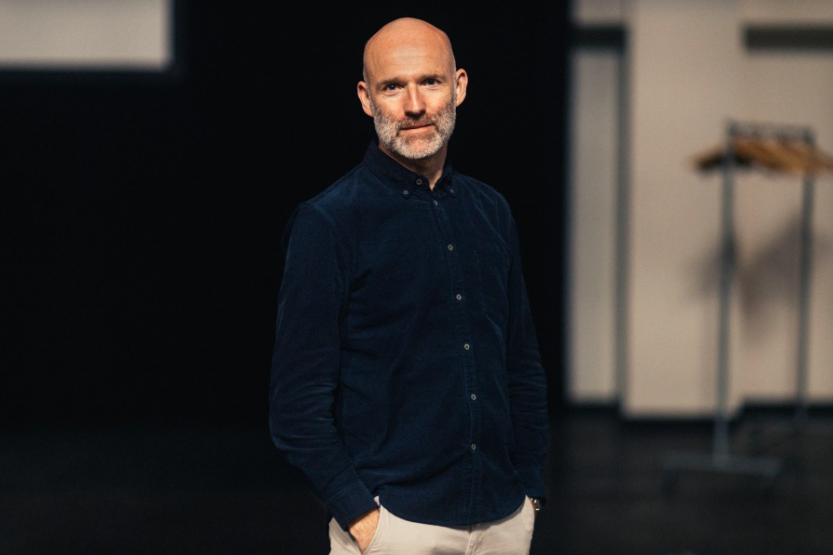
Stig Ørskov, a prominent figure in Danish media, has led the transformation of the JP/Politiken Media Group through significant shifts in audience expectations and technology over the past decade. As he prepares to transition to his new role as CEO of WAN-IFRA in 2026, Ørskov shared insights on his experiences and the challenges facing the industry during the WAN-IFRA Newsroom Summit held at JP/Politiken in Copenhagen.
Known for its flagship titles such as Ekstra Bladet, Politiken, and Jyllands-Posten, JP/Politiken has expanded its portfolio to include a diverse range of business niche sites, book publishing, and e-commerce. The group anticipates generating over €700 million in revenue by 2026, signaling a robust future in an evolving media landscape.
During a fireside chat moderated by Professor Dr. Alexandra Borchardt, Ørskov reflected on his journey from business journalist to CEO. He acknowledged the allure of journalism over management, stating, “Definitely being a journalist. That was a really fun, and funny, period of my life.” His candidness about the challenges of leadership was evident as he discussed the necessity of maintaining editorial independence while navigating commercial pressures.
Borchardt probed into Ørskov’s early skepticism regarding e-papers, recounting an anecdote from 2017 when a price increase led to a surge in digital subscriptions. Ørskov admitted, “I thought they were a digital relic… but it worked.” This experience highlighted a key lesson: sometimes, leadership requires trust in the insights of others rather than solely relying on personal convictions.
The conversation shifted toward the balance between editorial integrity and commercial viability, a theme that has defined Ørskov’s tenure. He emphasized the importance of remaining connected to the newsroom, though he acknowledged the challenges posed by the separation of editorial and commercial operations. “I would urge any CEO in our industry to stay closer to the newsroom and the organization – if possible,” he said.
As the media landscape evolves, Ørskov recognized that different operational models may emerge. He identified two successful types of media companies: those that target niche audiences with tailored content and those that leverage their scale to serve a broader market. He noted the success of companies like Schibsted and Bonnier in the Nordics, which have thrived under these models.
On the commercial front, Ørskov discussed the struggle to balance decentralization with scalability. While decentralization allowed for agility in meeting specific audience needs, it also hindered the ability to capitalize on the group’s full potential. Recently, JP/Politiken has begun consolidating its technological and financial resources, a shift Ørskov described as essential for aligning products with audience demands.
“What defines true journalistic independence,” Ørskov explained, “is financial sustainability and not being dependent on anyone other than the audience.” His critical view of the acquisition of Danish startup Zetland by Bonnier exemplifies his commitment to independent journalism. Zetland, known for its quality journalism that attracts paying users, represents a model Ørskov admires.
Reflecting on past failures in the industry, Ørskov credited his background in business journalism with shaping his approach. He recounted experiences with startups that struggled financially, emphasizing the importance of maintaining a strong economic foundation to support independent journalism.
Amidst the challenges, Ørskov expressed optimism for the future of journalism, particularly in the context of artificial intelligence (AI). He noted that early investments in AI initiatives have positioned JP/Politiken advantageously in this rapidly changing environment. “I’m convinced the people in this room will find the next set of solutions,” he said, highlighting the industry’s resilience and adaptability.
As the conversation drew to a close, Ørskov reflected on the personal toll of his leadership role. “Yes, it affects you and your family, and there are sleepless nights,” he admitted. Yet, he also emphasized the privilege of engaging in meaningful discussions and collaborating with talented individuals.
Looking ahead, Ørskov acknowledged the need for a cultural shift within the media industry, urging leaders to adapt more swiftly to changing circumstances. He recognized that the defensive mindset often prevalent in journalism could hinder necessary transformations. “We need to shift resources faster from declining areas to growth areas,” he stated, underscoring the urgency of investing in new ventures.
As he prepares for his new role, Ørskov leaves behind a legacy of resilience and innovation at JP/Politiken, embodying the spirit of collaboration that defines the future of media. His insights serve as a reminder of the importance of adaptability in an industry that continues to navigate disruption.

Cosmic Mystery Deepens: Where Are the Universe’s Defects?

Lady Bulldogs Shine in Postseason Awards Following Final Four Run

CALV Hosts Essential Class for Local Real Estate Professionals

Urgent Alert: “Spaving” Surges as Shoppers Overspend Online

Jefferies Initiates Coverage on Insmed with “Buy” Rating

Three Dog Night to Perform with Ambrosia at Mayo Civic Center

Urgent Announcement: Charles M. Payment Passes Away at 78

Houston Education Foundation Donates $4,592 for Student Programs

Beeks Financial Cloud Shares Drop 7% Amid Increased Trading Volume

Foreign Inflows into Japan Stocks Surge to ¥1.34 Trillion

University of Hawaiʻi Joins $25.6M AI Project to Monitor Disasters

Sydney Sweeney Embraces Body Positivity Amid Hollywood Challenges

Hudson Williams Gains Popularity as Breakout Star on Heated Rivalry

Urgent Farewell: Joleen Chaney Leaves Legacy at KFOR

Boeing’s Merger with McDonnell Douglas: A Strategic Move Explained

$1.25M Grant Advances Hawaiʻi’s Real-Time Hazard Monitoring

Derrick Dove and ABAC Band Set for Free Americana Concert

BOYNEXTDOOR’s Jaehyun Faces Backlash Amid BTS-TWICE Controversy
-
Business9 months ago
Foreign Inflows into Japan Stocks Surge to ¥1.34 Trillion
-
Science9 months ago
University of Hawaiʻi Joins $25.6M AI Project to Monitor Disasters
-
 Entertainment9 months ago
Sydney Sweeney Embraces Body Positivity Amid Hollywood Challenges
-
 Entertainment8 months ago
Hudson Williams Gains Popularity as Breakout Star on Heated Rivalry
-
 Top Stories9 months ago
Urgent Farewell: Joleen Chaney Leaves Legacy at KFOR
-
 World9 months ago
Boeing’s Merger with McDonnell Douglas: A Strategic Move Explained
-
 Science8 months ago
$1.25M Grant Advances Hawaiʻi’s Real-Time Hazard Monitoring
-
 Entertainment8 months ago
Derrick Dove and ABAC Band Set for Free Americana Concert
-
 Top Stories9 months ago
BOYNEXTDOOR’s Jaehyun Faces Backlash Amid BTS-TWICE Controversy
-

 Health6 months ago
Bodybuilder Eugene Teo Transitions to Mindful Movement for Health
-

 World6 months ago
San Francisco Airport to Host 16 Nonstop Airlines to Europe in 2026
-

 Top Stories7 months ago
National Coast Guard Museum Set to Open in 2027 After Funding Secured