
World
John Bolton Indicted on 18 Counts, Faces Selective Prosecution Claims

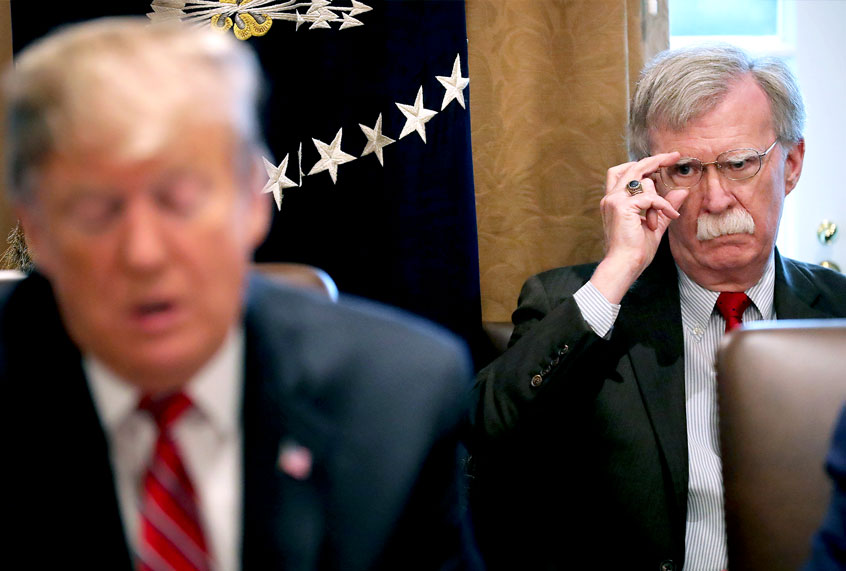
Former United Nations Ambassador and National Security Adviser John Bolton has been indicted on 18 counts of mishandling classified information, marking a significant legal challenge for the controversial figure. This indictment, which exceeds the number of charges typically seen in similar cases under the Espionage Act, raises questions about the motivations behind the prosecution, especially considering Bolton’s contentious relationship with former President Donald Trump.
Bolton’s legal troubles stem from allegations that he improperly shared classified information, including entries from his personal diary, with family members who lacked the necessary security clearances. This situation has drawn comparisons to other high-profile cases involving the mishandling of sensitive information, highlighting a perceived inconsistency in how the justice system addresses these violations.
In August, Bolton’s residence was subject to an armed raid as part of the investigation into his alleged mishandling of classified materials related to his memoir. The charges brought against him, which include both careless retention and transmission of classified information, have been described by some as a troubling example of the government’s increasing reliance on the Espionage Act to target perceived adversaries.
Bolton’s history of inflammatory comments about whistleblowers, including Chelsea Manning and Edward Snowden, complicates his public image. His previous statements advocating for severe penalties for those accused of leaking classified information have led to a complex narrative as he now finds himself in a similar predicament.
Legal Arguments and Implications
Despite the serious nature of the charges, Bolton may have a viable argument for a motion to dismiss based on claims of selective and vindictive prosecution. Legal experts point out that such motions are rarely granted, but Bolton’s circumstances—particularly the public statements made by Trump regarding Bolton’s actions—may provide a unique angle. Trump has openly criticized Bolton, labeling him as “treasonous” and calling for his imprisonment after the release of Bolton’s tell-all book.
The potential for a successful motion hinges on the argument that the prosecution’s actions are not justifiable and may be politically motivated. This kind of defense has been a common strategy among defendants in Espionage Act cases, and Bolton’s legal team is likely to emphasize the public nature of Trump’s animosity towards him.
Additionally, accusations of a two-tiered system of justice in cases involving classified information further cloud the situation. Past instances, such as the leniency shown to former CIA Director David Petraeus and former National Security Adviser Sandy Berger, who faced minimal penalties for similar offenses, have fueled public skepticism about equitable treatment under the law.
Bolton’s case arrives at a time of heightened scrutiny regarding the handling of classified information by government officials. The disparities in consequences for various individuals continue to raise ethical concerns about accountability and the application of justice.
The Broader Context
The implications of Bolton’s indictment extend beyond his personal legal battles. This case illustrates the complexities of national security law and the ongoing debates about transparency and accountability within the government. As Bolton faces charges that could reshape his legacy, the outcomes may also influence future discussions on whistleblowing and the treatment of classified materials.
While Bolton’s history and public persona may not garner widespread sympathy, the principle of fair treatment under the law remains crucial. As the legal proceedings unfold, the question looms—whether even the most controversial figures can expect a fair shake in a system increasingly perceived as politicized.
In an era where the intersection of politics and law is under intense scrutiny, Bolton’s case could set precedents that resonate far beyond his individual circumstances. The legal landscape surrounding classified information and the actions of high-ranking officials is at a critical juncture, and the outcome of Bolton’s situation may have lasting ramifications for all involved.
As events develop, it remains essential for the public to stay informed and engaged in discussions about the implications of these legal battles on democracy and justice.

Cosmic Mystery Deepens: Where Are the Universe’s Defects?

Lady Bulldogs Shine in Postseason Awards Following Final Four Run

CALV Hosts Essential Class for Local Real Estate Professionals

Urgent Alert: “Spaving” Surges as Shoppers Overspend Online

Jefferies Initiates Coverage on Insmed with “Buy” Rating

Three Dog Night to Perform with Ambrosia at Mayo Civic Center

Urgent Announcement: Charles M. Payment Passes Away at 78

Houston Education Foundation Donates $4,592 for Student Programs

Beeks Financial Cloud Shares Drop 7% Amid Increased Trading Volume

Foreign Inflows into Japan Stocks Surge to ¥1.34 Trillion

University of Hawaiʻi Joins $25.6M AI Project to Monitor Disasters

Sydney Sweeney Embraces Body Positivity Amid Hollywood Challenges

Hudson Williams Gains Popularity as Breakout Star on Heated Rivalry

Urgent Farewell: Joleen Chaney Leaves Legacy at KFOR

Boeing’s Merger with McDonnell Douglas: A Strategic Move Explained

$1.25M Grant Advances Hawaiʻi’s Real-Time Hazard Monitoring

Derrick Dove and ABAC Band Set for Free Americana Concert

BOYNEXTDOOR’s Jaehyun Faces Backlash Amid BTS-TWICE Controversy
-
Business9 months ago
Foreign Inflows into Japan Stocks Surge to ¥1.34 Trillion
-
Science8 months ago
University of Hawaiʻi Joins $25.6M AI Project to Monitor Disasters
-
 Entertainment9 months ago
Sydney Sweeney Embraces Body Positivity Amid Hollywood Challenges
-
 Entertainment7 months ago
Hudson Williams Gains Popularity as Breakout Star on Heated Rivalry
-
 Top Stories8 months ago
Urgent Farewell: Joleen Chaney Leaves Legacy at KFOR
-
 World9 months ago
Boeing’s Merger with McDonnell Douglas: A Strategic Move Explained
-
 Science7 months ago
$1.25M Grant Advances Hawaiʻi’s Real-Time Hazard Monitoring
-
 Entertainment8 months ago
Derrick Dove and ABAC Band Set for Free Americana Concert
-
 Top Stories9 months ago
BOYNEXTDOOR’s Jaehyun Faces Backlash Amid BTS-TWICE Controversy
-

 Health6 months ago
Bodybuilder Eugene Teo Transitions to Mindful Movement for Health
-

 World6 months ago
San Francisco Airport to Host 16 Nonstop Airlines to Europe in 2026
-

 Top Stories7 months ago
National Coast Guard Museum Set to Open in 2027 After Funding Secured