
World
Drones Revolutionize Cocaine Smuggling Tactics in Colombia

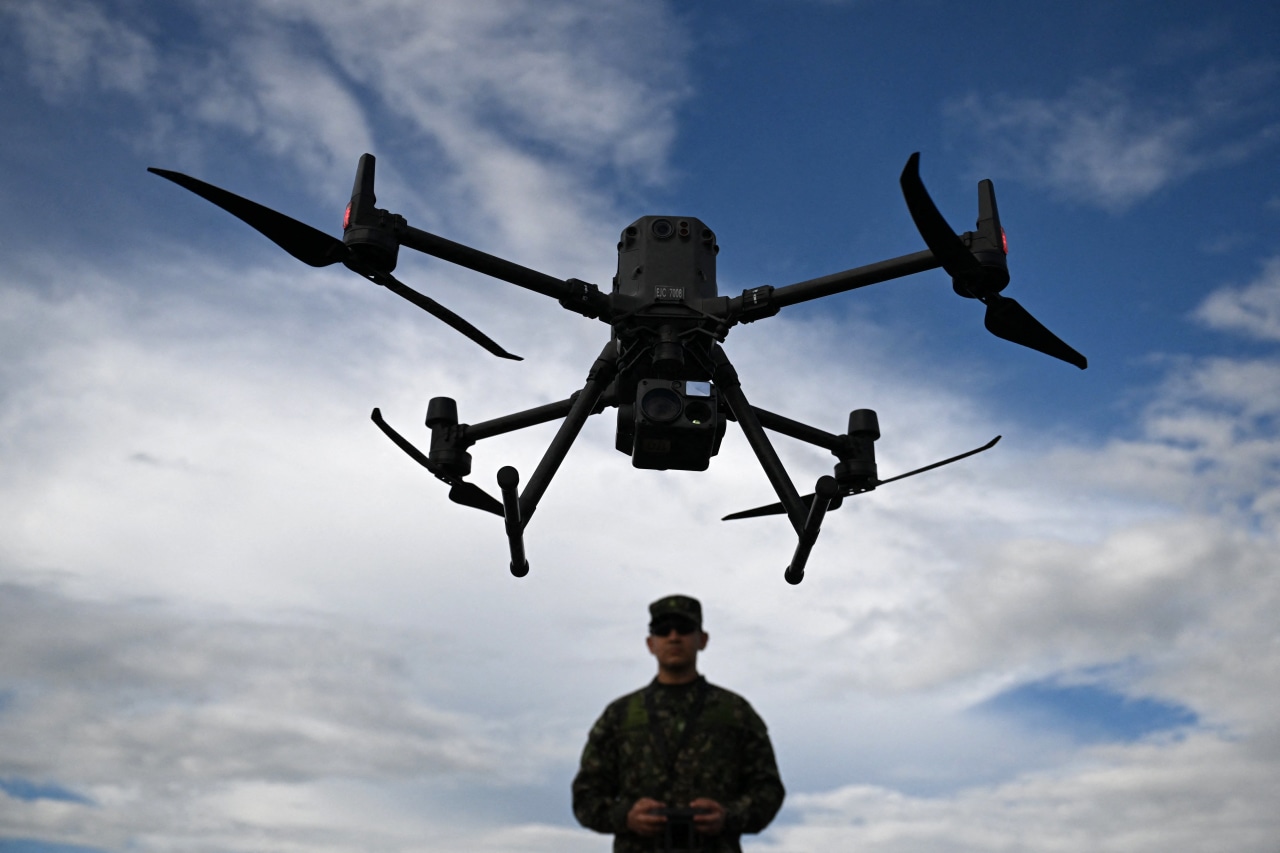
Colombia is witnessing a troubling surge in the use of drones by cocaine smuggling militias, significantly impacting the country’s security services. This new tactic, marked by a rise in both frequency and aggression, poses a serious challenge to law enforcement efforts in tackling drug trafficking.
The National Police of Colombia reported a notable increase in drone-related incidents since the beginning of 2023. The most alarming development occurred in November 2023 when a drone attack targeted a police station in Medellín, resulting in injuries to several officers. Such incidents highlight the evolving nature of threats faced by security personnel in Colombia.
The drones allow smugglers to conduct surveillance, deliver explosives, and even transport small quantities of drugs across borders. According to a recent report by the United Nations Office on Drugs and Crime, the Colombian cocaine market is valued at approximately $1.5 billion annually, making it a lucrative enterprise for these militias. The use of drones not only enhances their operational capabilities but also complicates efforts to counteract their activities.
Growing Threat to Security Services
The increasing sophistication of militia operations has strained Colombia’s security services, particularly in rural areas where state presence is limited. Drones provide a significant tactical advantage, allowing groups to operate with greater anonymity and precision. This shift has necessitated a reevaluation of security strategies within the National Police and the military.
In response to this evolving threat, the Colombian government has begun investing in drone detection and countermeasure technologies. The aim is to bolster defenses against remote attacks and enhance the safety of law enforcement personnel. Despite these efforts, challenges remain as militias adapt quickly to new countermeasures.
Implications for Drug Trafficking and Public Safety
The rise of drone technology in drug trafficking raises significant concerns about public safety and law enforcement efficacy. As militias become more emboldened, the potential for widespread violence increases, especially in urban areas where civilians are often caught in the crossfire.
The situation in Colombia is part of a larger trend observed in international drug trafficking, where technology plays an increasingly central role. Experts warn that if left unaddressed, the use of drones could further destabilize regions already grappling with violence and insecurity.
The Colombian government, along with international partners, must act swiftly to develop comprehensive strategies that address both the immediate threats posed by drone technology and the underlying issues fueling the drug trade. In doing so, they can safeguard communities and strengthen the fight against organized crime.
As Colombia grapples with these new challenges, the world watches closely, given the significant implications for global drug markets and security dynamics. The evolution of drone usage in this context underscores the urgent need for innovative solutions to combat an ever-adapting adversary.

Cosmic Mystery Deepens: Where Are the Universe’s Defects?

Lady Bulldogs Shine in Postseason Awards Following Final Four Run

CALV Hosts Essential Class for Local Real Estate Professionals

Urgent Alert: “Spaving” Surges as Shoppers Overspend Online

Jefferies Initiates Coverage on Insmed with “Buy” Rating

Three Dog Night to Perform with Ambrosia at Mayo Civic Center

Urgent Announcement: Charles M. Payment Passes Away at 78

Houston Education Foundation Donates $4,592 for Student Programs

Beeks Financial Cloud Shares Drop 7% Amid Increased Trading Volume

Foreign Inflows into Japan Stocks Surge to ¥1.34 Trillion

University of Hawaiʻi Joins $25.6M AI Project to Monitor Disasters

Sydney Sweeney Embraces Body Positivity Amid Hollywood Challenges

Hudson Williams Gains Popularity as Breakout Star on Heated Rivalry

Urgent Farewell: Joleen Chaney Leaves Legacy at KFOR

Boeing’s Merger with McDonnell Douglas: A Strategic Move Explained

$1.25M Grant Advances Hawaiʻi’s Real-Time Hazard Monitoring

Derrick Dove and ABAC Band Set for Free Americana Concert

BOYNEXTDOOR’s Jaehyun Faces Backlash Amid BTS-TWICE Controversy
-
Business9 months ago
Foreign Inflows into Japan Stocks Surge to ¥1.34 Trillion
-
Science9 months ago
University of Hawaiʻi Joins $25.6M AI Project to Monitor Disasters
-
 Entertainment9 months ago
Sydney Sweeney Embraces Body Positivity Amid Hollywood Challenges
-
 Entertainment8 months ago
Hudson Williams Gains Popularity as Breakout Star on Heated Rivalry
-
 Top Stories9 months ago
Urgent Farewell: Joleen Chaney Leaves Legacy at KFOR
-
 World9 months ago
Boeing’s Merger with McDonnell Douglas: A Strategic Move Explained
-
 Science8 months ago
$1.25M Grant Advances Hawaiʻi’s Real-Time Hazard Monitoring
-
 Entertainment8 months ago
Derrick Dove and ABAC Band Set for Free Americana Concert
-
 Top Stories9 months ago
BOYNEXTDOOR’s Jaehyun Faces Backlash Amid BTS-TWICE Controversy
-

 Health6 months ago
Bodybuilder Eugene Teo Transitions to Mindful Movement for Health
-

 World6 months ago
San Francisco Airport to Host 16 Nonstop Airlines to Europe in 2026
-

 Top Stories7 months ago
National Coast Guard Museum Set to Open in 2027 After Funding Secured