
World
California Issues Warning Over Contaminated Wild Pig Meat

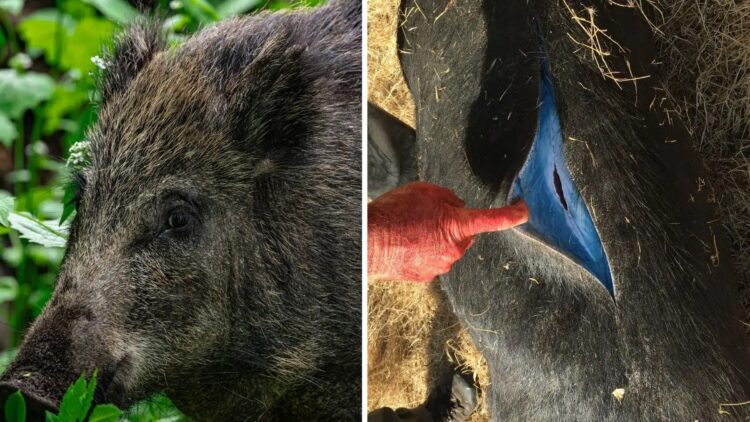
The California Department of Fish and Wildlife (CDFW) has issued a public health alert regarding contaminated wild pig meat in Monterey County. The warning follows reports from hunters who discovered that the meat of wild pigs exhibited an unusual blue coloration, a clear indication of rodenticide poisoning.
Hunters in the region raised concerns after noticing the striking blue hue of the meat, prompting further investigation. According to Dan Burton, owner of a wildlife control company, the color was not merely a slight tint; he described it as “neon blue, blueberry blue.” This alarming discovery led CDFW officials to emphasize the potential dangers of consuming game animals that may have ingested toxic substances.
Health Risks from Rodenticides
The blue discoloration has been linked to the rodenticide known as Difacinona, a first-generation anticoagulant that causes severe internal bleeding in animals. Ryan Bourbour, the pesticide research coordinator at the CDFW, warned that hunters should be cautious when harvesting game animals such as wild pigs, deer, bears, and geese, as these animals are at risk of contamination from rodenticides used in nearby agricultural areas.
Bourbour stated, “Exposure to rodenticides can be a problem for non-target wildlife in areas where applications occur very close to wildlife habitats.” The risk extends beyond wildlife; humans who consume contaminated meat may also face serious health risks.
Preventative Measures and Ongoing Concerns
To mitigate the risks associated with rodenticide usage, the CDFW recommends that pesticide applicators take necessary precautions. They advise ensuring that wildlife does not frequent areas where rodenticides are applied, and to use appropriate bait stations to prevent access by non-target species.
The use of chemical pesticides has long raised concerns among wildlife advocates and public health officials. Many argue that reliance on such chemicals has detrimental effects on ecosystems, leading to the poisoning of various species, including raptors, mountain lions, and even endangered species like the northern spotted owl and the San Joaquin fox.
Research in the United States has shown that residues from pesticides, such as chlorpyrifos, can lead to significant health issues, particularly in children, including structural brain abnormalities and impaired motor functions. The excessive use of pesticides threatens not only wildlife but also contaminates food sources, leading to calls for international cooperation to address the global implications of pesticide use.
As this situation unfolds in Monterey County, the CDFW continues to monitor the impact of rodenticides on wildlife and public health, urging hunters and the community to remain vigilant and informed about the risks associated with consuming game meat.

Cosmic Mystery Deepens: Where Are the Universe’s Defects?

Lady Bulldogs Shine in Postseason Awards Following Final Four Run

CALV Hosts Essential Class for Local Real Estate Professionals

Urgent Alert: “Spaving” Surges as Shoppers Overspend Online

Jefferies Initiates Coverage on Insmed with “Buy” Rating

Three Dog Night to Perform with Ambrosia at Mayo Civic Center

Urgent Announcement: Charles M. Payment Passes Away at 78

Houston Education Foundation Donates $4,592 for Student Programs

Beeks Financial Cloud Shares Drop 7% Amid Increased Trading Volume

Foreign Inflows into Japan Stocks Surge to ¥1.34 Trillion

University of Hawaiʻi Joins $25.6M AI Project to Monitor Disasters

Sydney Sweeney Embraces Body Positivity Amid Hollywood Challenges

Hudson Williams Gains Popularity as Breakout Star on Heated Rivalry

Urgent Farewell: Joleen Chaney Leaves Legacy at KFOR

Boeing’s Merger with McDonnell Douglas: A Strategic Move Explained

$1.25M Grant Advances Hawaiʻi’s Real-Time Hazard Monitoring

Derrick Dove and ABAC Band Set for Free Americana Concert

BOYNEXTDOOR’s Jaehyun Faces Backlash Amid BTS-TWICE Controversy
-
Business9 months ago
Foreign Inflows into Japan Stocks Surge to ¥1.34 Trillion
-
Science8 months ago
University of Hawaiʻi Joins $25.6M AI Project to Monitor Disasters
-
 Entertainment9 months ago
Sydney Sweeney Embraces Body Positivity Amid Hollywood Challenges
-
 Entertainment7 months ago
Hudson Williams Gains Popularity as Breakout Star on Heated Rivalry
-
 Top Stories8 months ago
Urgent Farewell: Joleen Chaney Leaves Legacy at KFOR
-
 World9 months ago
Boeing’s Merger with McDonnell Douglas: A Strategic Move Explained
-
 Science7 months ago
$1.25M Grant Advances Hawaiʻi’s Real-Time Hazard Monitoring
-
 Entertainment8 months ago
Derrick Dove and ABAC Band Set for Free Americana Concert
-
 Top Stories9 months ago
BOYNEXTDOOR’s Jaehyun Faces Backlash Amid BTS-TWICE Controversy
-

 Health6 months ago
Bodybuilder Eugene Teo Transitions to Mindful Movement for Health
-

 World6 months ago
San Francisco Airport to Host 16 Nonstop Airlines to Europe in 2026
-

 Top Stories7 months ago
National Coast Guard Museum Set to Open in 2027 After Funding Secured