
Top Stories
Tesla Registers 1,655 New Vehicles for ‘Robotaxi’ Service in CA

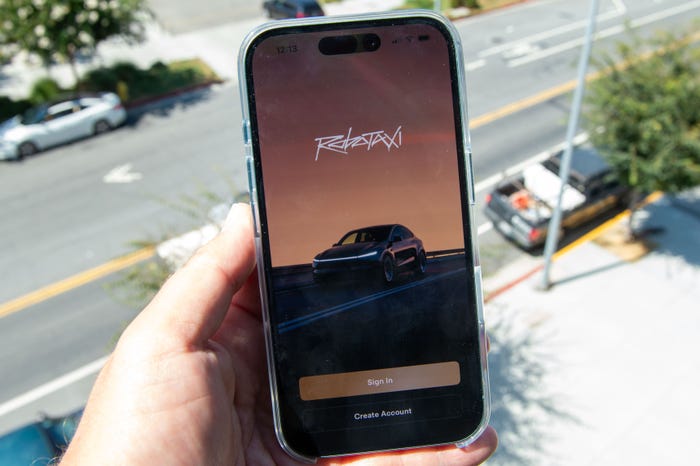
URGENT UPDATE: Tesla has made a significant leap in its California “Robotaxi” program, registering a remarkable 1,655 vehicles for its ride-hailing service in just a few months. This surge comes as the company ramps up operations, according to a spokesperson from the California Public Utilities Commission (CPUC).
Launched in August 2023, the service initially started with only 28 cars and 128 drivers. The rapid expansion reflects Tesla’s aggressive strategy in the ride-hailing market, with the current number of registered drivers now reaching 798. However, these figures represent approved vehicles and do not necessarily reflect the actual operational fleet size, suggesting the number could be even higher.
While Tesla’s operations grow, the company faces challenges. Users have reported long wait times since the public launch of the Robotaxi app in September. Some riders have experienced waits of up to 40 minutes during peak hours, raising concerns about the service’s reliability. Business Insider’s Alistair Barr noted that he sometimes struggles to secure a ride during busy times, pointing to a potential inventory issue.
In contrast, rival companies are also expanding their fleets. Waymo has over 1,955 vehicles registered in California, and Zoox operates 229 vehicles. Both companies run fully autonomous services, while Tesla’s Robotaxi is not classified as an autonomous vehicle under California’s stringent regulations.
Despite the growth, Tesla’s Robotaxi does not hold an autonomous vehicle registration and has not applied for a driverless testing permit. This limits its operations to ride-hailing services where human drivers are still involved. The CPUC has granted Tesla permission to offer transportation services to employees and select public members, but a separate permit is necessary for full passenger transport in autonomous vehicles.
To address staffing shortages, Tesla is actively recruiting additional drivers, even offering extra pay to current employees at its California factories. In Austin, where Tesla is also testing vehicles without drivers, the exact number of vehicles in operation remains unclear, as the company is not mandated to report these figures.
As the competition heats up, Tesla’s ability to scale its Robotaxi service will be critical. The company aims to have around 500 vehicles operational in Austin by the end of the year, as stated by Elon Musk during a recent podcast appearance.
Stay tuned for further updates on Tesla’s rapid expansion and its impact on the ride-hailing landscape. This developing story highlights the urgency for Tesla to balance growth with user satisfaction.

Cosmic Mystery Deepens: Where Are the Universe’s Defects?

Lady Bulldogs Shine in Postseason Awards Following Final Four Run

CALV Hosts Essential Class for Local Real Estate Professionals

Urgent Alert: “Spaving” Surges as Shoppers Overspend Online

Jefferies Initiates Coverage on Insmed with “Buy” Rating

Three Dog Night to Perform with Ambrosia at Mayo Civic Center

Urgent Announcement: Charles M. Payment Passes Away at 78

Houston Education Foundation Donates $4,592 for Student Programs

Beeks Financial Cloud Shares Drop 7% Amid Increased Trading Volume

Foreign Inflows into Japan Stocks Surge to ¥1.34 Trillion

University of Hawaiʻi Joins $25.6M AI Project to Monitor Disasters

Sydney Sweeney Embraces Body Positivity Amid Hollywood Challenges

Boeing’s Merger with McDonnell Douglas: A Strategic Move Explained

Hudson Williams Gains Popularity as Breakout Star on Heated Rivalry

$1.25M Grant Advances Hawaiʻi’s Real-Time Hazard Monitoring

Urgent Farewell: Joleen Chaney Leaves Legacy at KFOR

San Francisco Airport to Host 16 Nonstop Airlines to Europe in 2026

Derrick Dove and ABAC Band Set for Free Americana Concert
-
Business10 months ago
Foreign Inflows into Japan Stocks Surge to ¥1.34 Trillion
-
Science10 months ago
University of Hawaiʻi Joins $25.6M AI Project to Monitor Disasters
-
 Entertainment10 months ago
Sydney Sweeney Embraces Body Positivity Amid Hollywood Challenges
-
 World10 months ago
Boeing’s Merger with McDonnell Douglas: A Strategic Move Explained
-
 Entertainment9 months ago
Hudson Williams Gains Popularity as Breakout Star on Heated Rivalry
-
 Science9 months ago
$1.25M Grant Advances Hawaiʻi’s Real-Time Hazard Monitoring
-
 Top Stories10 months ago
Urgent Farewell: Joleen Chaney Leaves Legacy at KFOR
-
 World8 months ago
San Francisco Airport to Host 16 Nonstop Airlines to Europe in 2026
-
 Entertainment9 months ago
Derrick Dove and ABAC Band Set for Free Americana Concert
-

 Top Stories10 months ago
BOYNEXTDOOR’s Jaehyun Faces Backlash Amid BTS-TWICE Controversy
-
 Health7 months ago
Bodybuilder Eugene Teo Transitions to Mindful Movement for Health
-
 Top Stories8 months ago
National Coast Guard Museum Set to Open in 2027 After Funding Secured