
Top Stories
Dell’s $6.25 Billion Investment for Kids Sparks Outrage

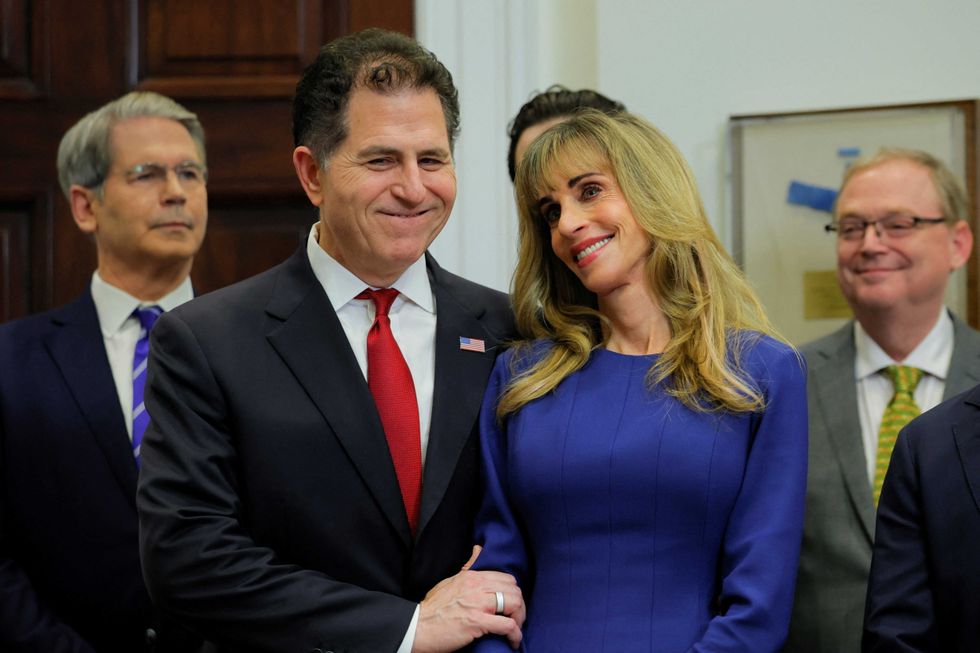
UPDATE: Silicon Valley magnate Michael Dell and his wife, philanthropist Susan Dell, have just announced a controversial plan to invest $6.25 billion in individual investment accounts aimed at 25 million American children. The investment has ignited backlash from advocates who fear it may primarily benefit the wealthy.
The Dells’ initiative, revealed on Tuesday, comes months after President Donald Trump signed the One Big Beautiful Bill, which establishes “Trump Accounts” for every U.S. child born between January 2025 and December 2028. These accounts will receive a $1,000 government investment at birth. However, the Dells’ contribution will extend eligibility to children born before the cut-off, targeting those aged 0-10.
Critics, including the National Women’s Law Center (NWLC), have raised concerns that this investment might not address the financial struggles of most families. “While we support direct investments in families, the Trump Accounts being hailed by the White House do not meet most families’ needs,” stated Amy Matsui, vice president at NWLC. She emphasized that these accounts could become mere tax shelters for the wealthiest, leaving families grappling with basic expenses like food and housing with little benefit.
Despite praise in corporate media as the largest private charitable donation to U.S. children, the effectiveness of the Dells’ plan is under scrutiny. Commentator Jim Vorel questioned whether a $250 investment per child is sufficient to secure a significant future for them. “What can that money realistically do in terms of providing for a child’s future?” Vorel asked, highlighting the stark contrast between the Dells’ wealth and the challenges faced by everyday families.
The success of these investment accounts depends on families’ ability to contribute meaningfully over the years, with potential annual contributions capped at $2,500 without tax implications. However, recent polls indicate that nearly a quarter of U.S. households are living paycheck to paycheck, raising doubts about whether many families can afford to invest at all.
Vorel further warned that the anticipated burst of the artificial intelligence “bubble” could negatively impact the stock market, where families are encouraged to invest. “The families most benefited by the concept of Trump Accounts will be those already on the best financial footing,” he noted.
Progressive Mass’s Jonathan Cohn echoed these sentiments, arguing that the Dells’ investment underscores the need for wealthy individuals to contribute more taxes. “The government should not be funding only what can secure the sympathies of erratic rich people,” Cohn remarked.
The NWLC asserts that the Trump Accounts reflect a broader “pronatalist” policy trend from the White House, which fails to deliver substantial support for families. Matsui concluded, “If the White House were serious about supporting families struggling with living costs, it would advocate for investments in childcare, an expanded Child Tax Credit, and reversing cuts to SNAP and Medicaid.”
As this story develops, the debate over the effectiveness and intentions behind these investments will likely continue, with advocates pushing for more inclusive solutions that address the needs of all American families.

Cosmic Mystery Deepens: Where Are the Universe’s Defects?

Lady Bulldogs Shine in Postseason Awards Following Final Four Run

CALV Hosts Essential Class for Local Real Estate Professionals

Urgent Alert: “Spaving” Surges as Shoppers Overspend Online

Jefferies Initiates Coverage on Insmed with “Buy” Rating

Three Dog Night to Perform with Ambrosia at Mayo Civic Center

Urgent Announcement: Charles M. Payment Passes Away at 78

Houston Education Foundation Donates $4,592 for Student Programs

Beeks Financial Cloud Shares Drop 7% Amid Increased Trading Volume

Foreign Inflows into Japan Stocks Surge to ¥1.34 Trillion

University of Hawaiʻi Joins $25.6M AI Project to Monitor Disasters

Sydney Sweeney Embraces Body Positivity Amid Hollywood Challenges

Hudson Williams Gains Popularity as Breakout Star on Heated Rivalry

Urgent Farewell: Joleen Chaney Leaves Legacy at KFOR

Boeing’s Merger with McDonnell Douglas: A Strategic Move Explained

$1.25M Grant Advances Hawaiʻi’s Real-Time Hazard Monitoring

Derrick Dove and ABAC Band Set for Free Americana Concert

BOYNEXTDOOR’s Jaehyun Faces Backlash Amid BTS-TWICE Controversy
-
Business9 months ago
Foreign Inflows into Japan Stocks Surge to ¥1.34 Trillion
-
Science8 months ago
University of Hawaiʻi Joins $25.6M AI Project to Monitor Disasters
-
 Entertainment9 months ago
Sydney Sweeney Embraces Body Positivity Amid Hollywood Challenges
-
 Entertainment7 months ago
Hudson Williams Gains Popularity as Breakout Star on Heated Rivalry
-
 Top Stories8 months ago
Urgent Farewell: Joleen Chaney Leaves Legacy at KFOR
-
 World9 months ago
Boeing’s Merger with McDonnell Douglas: A Strategic Move Explained
-
 Science7 months ago
$1.25M Grant Advances Hawaiʻi’s Real-Time Hazard Monitoring
-
 Entertainment8 months ago
Derrick Dove and ABAC Band Set for Free Americana Concert
-
 Top Stories9 months ago
BOYNEXTDOOR’s Jaehyun Faces Backlash Amid BTS-TWICE Controversy
-

 Health6 months ago
Bodybuilder Eugene Teo Transitions to Mindful Movement for Health
-

 World6 months ago
San Francisco Airport to Host 16 Nonstop Airlines to Europe in 2026
-

 Top Stories7 months ago
National Coast Guard Museum Set to Open in 2027 After Funding Secured