
Top Stories
CDC Panel Limits Newborn Hepatitis B Vaccination—Urgent Concerns Rise

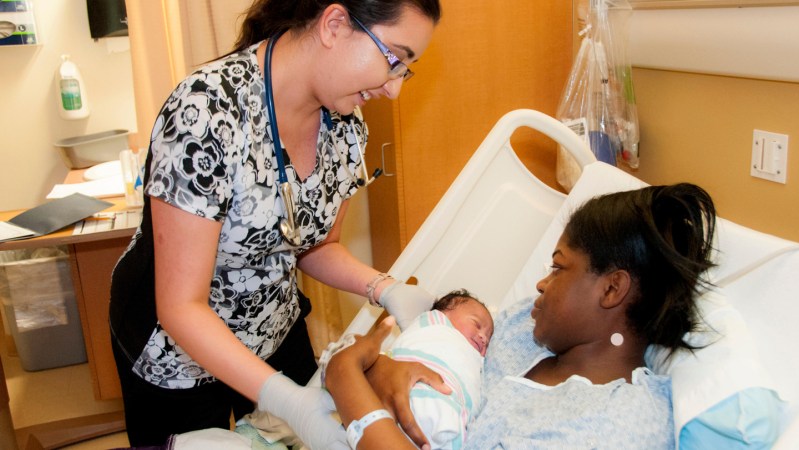
UPDATE: The CDC’s Advisory Committee on Immunization Practices (ACIP) has just announced a shocking decision to limit universal hepatitis B vaccination for newborns. In a contentious vote of 8–3, the committee will no longer recommend administering the vaccine at birth, now advising that only infants born to mothers who test positive for the virus should receive it immediately.
This critical shift means that for mothers who test negative during pregnancy, the first dose will now be recommended at two months of age, despite no new data justifying this significant change. The implications are dire, as pediatric experts warn that delaying the birth dose could leave newborns vulnerable during a critical window of their lives.
“We’ve heard ‘do no harm’ is a moral imperative,” stated Dr. Cody Meissner, a pediatric infectious disease specialist and one of the few ACIP members with relevant experience, who voted against the change. He added that with this decision, “we are doing harm.”
Physician Jason Goldman, the ACIP liaison for the American College of Physicians, expressed grave concerns, stating that this change “will only endanger children.” The vote followed a chaotic two-day meeting, during which some ACIP members, reportedly influenced by Health and Human Services Secretary and anti-vaccine advocate Robert F. Kennedy Jr., attempted to undermine vaccine safety and downplay the risks of hepatitis B infection.
Data reveals the dangers are very real. A review from the University of Minnesota’s Vaccine Integrity Project, released on December 2, highlighted the harm hepatitis B poses to newborns and confirmed that the birth dose is both safe and effective. Dr. José Romero, a former ACIP chair, stated, “The science is unequivocal: Hepatitis B remains a real and serious risk to infants.”
Currently, the U.S. remains an outlier in its approach to universal newborn vaccination against hepatitis B. While many European countries only vaccinate infants born to hepatitis B-positive mothers, they also have higher screening rates and universal health care, a safety net that the U.S. lacks. As it stands, 18 percent of pregnant individuals do not get tested for hepatitis B, leaving newborns at risk from potential exposure during delivery or from caregivers.
The hepatitis B virus is highly contagious and can survive on surfaces for over a week. Four out of five infants infected at birth often go on to develop chronic hepatitis B, a lifelong condition with no cure. Alarmingly, one in four children with chronic infection may die prematurely due to complications. Dr. Romero warned, “Delaying the birth dose would leave newborns unprotected during a critical window in their lives. Children will die preventable deaths without timely access to the hepatitis B vaccine.”
Prior to the vaccine’s licensing in 1981, hepatitis B vaccination was primarily directed at high-risk groups. However, as cases did not decline significantly, ACIP expanded its recommendations. By 1991, universal hepatitis B vaccination for infants was implemented, drastically reducing cases by 99 percent—from approximately 16,000 cases in the early 1990s to fewer than 20 perinatal infections annually in recent years.
Physician Su Wang, who lives with chronic hepatitis B and spoke at the ACIP meeting, shared her personal experience. She was born before the vaccine was introduced and suspects she contracted the virus from a caregiver. Wang emphasized the necessity for universal vaccination, stating, “We cannot predict the child’s future risk.”
The ACIP’s decision has sparked outrage among health professionals and advocates alike, igniting fears that this change could reverse decades of progress in preventing hepatitis B infections in newborns. As the debate continues, parents, healthcare providers, and advocates are urged to stay informed and consider the implications of this decision.
The situation remains fluid, and the community is closely monitoring the fallout from this significant policy change. For updates on this evolving story, stay tuned.

Cosmic Mystery Deepens: Where Are the Universe’s Defects?

Lady Bulldogs Shine in Postseason Awards Following Final Four Run

CALV Hosts Essential Class for Local Real Estate Professionals

Urgent Alert: “Spaving” Surges as Shoppers Overspend Online

Jefferies Initiates Coverage on Insmed with “Buy” Rating

Three Dog Night to Perform with Ambrosia at Mayo Civic Center

Urgent Announcement: Charles M. Payment Passes Away at 78

Houston Education Foundation Donates $4,592 for Student Programs

Beeks Financial Cloud Shares Drop 7% Amid Increased Trading Volume

Foreign Inflows into Japan Stocks Surge to ¥1.34 Trillion

University of Hawaiʻi Joins $25.6M AI Project to Monitor Disasters

Sydney Sweeney Embraces Body Positivity Amid Hollywood Challenges

Hudson Williams Gains Popularity as Breakout Star on Heated Rivalry

Urgent Farewell: Joleen Chaney Leaves Legacy at KFOR

Boeing’s Merger with McDonnell Douglas: A Strategic Move Explained

$1.25M Grant Advances Hawaiʻi’s Real-Time Hazard Monitoring

Derrick Dove and ABAC Band Set for Free Americana Concert

BOYNEXTDOOR’s Jaehyun Faces Backlash Amid BTS-TWICE Controversy
-
Business9 months ago
Foreign Inflows into Japan Stocks Surge to ¥1.34 Trillion
-
Science8 months ago
University of Hawaiʻi Joins $25.6M AI Project to Monitor Disasters
-
 Entertainment9 months ago
Sydney Sweeney Embraces Body Positivity Amid Hollywood Challenges
-
 Entertainment7 months ago
Hudson Williams Gains Popularity as Breakout Star on Heated Rivalry
-
 Top Stories8 months ago
Urgent Farewell: Joleen Chaney Leaves Legacy at KFOR
-
 World9 months ago
Boeing’s Merger with McDonnell Douglas: A Strategic Move Explained
-
 Science7 months ago
$1.25M Grant Advances Hawaiʻi’s Real-Time Hazard Monitoring
-
 Entertainment8 months ago
Derrick Dove and ABAC Band Set for Free Americana Concert
-
 Top Stories9 months ago
BOYNEXTDOOR’s Jaehyun Faces Backlash Amid BTS-TWICE Controversy
-

 Health6 months ago
Bodybuilder Eugene Teo Transitions to Mindful Movement for Health
-

 World6 months ago
San Francisco Airport to Host 16 Nonstop Airlines to Europe in 2026
-

 Top Stories7 months ago
National Coast Guard Museum Set to Open in 2027 After Funding Secured