
Sports
College Football Playoff Rankings Spark Controversy and Debate

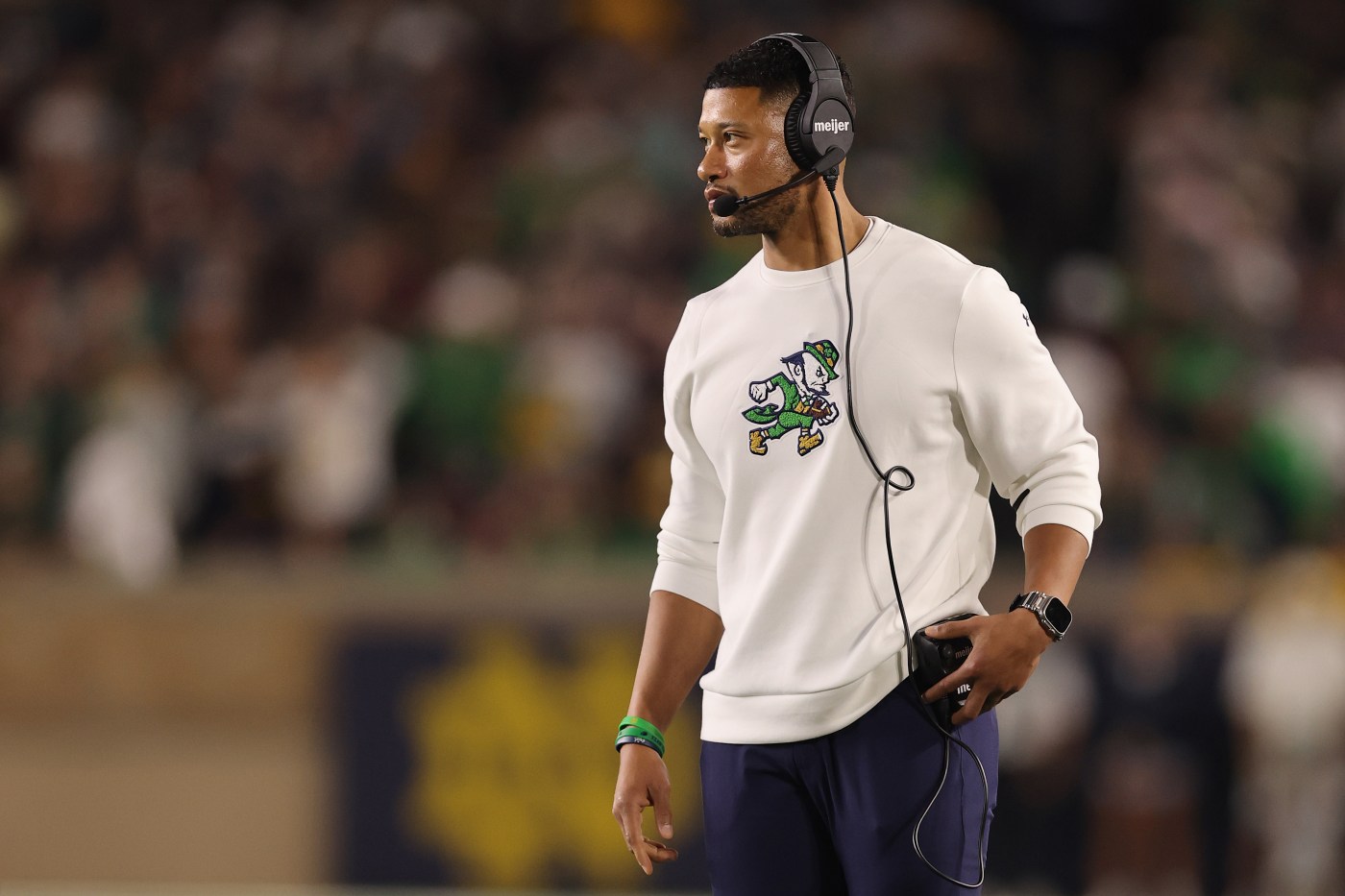
The final rankings of the College Football Playoff (CFP) selection committee have ignited intense discussions about potential changes to the playoff format. While many focused on who made the 12-team field, significant attention has turned to the teams that did not qualify, particularly the surprising jump of **Miami** over **Notre Dame**. Despite neither team playing over the weekend, Miami moved ahead in the rankings, even though Notre Dame had consistently ranked higher for the previous five weeks.
The CFP rankings produced other controversies as well. **BYU**, with a record of **11-2**, slipped one position after a lopsided loss in the Big 12 championship game. In contrast, **Alabama** (10-3), which suffered a similar fate in the SEC title game, remained unchanged in the rankings. Notably, **Texas** (9-3) missed the playoff despite impressive victories over three top-10 teams, including a challenging matchup against **Ohio State**. Furthermore, **Vanderbilt** (10-2), which had a solid SEC record, was also excluded from the playoff picture.
The final two playoff slots went to **No. 20 Tulane** and **No. 24 James Madison** after both teams secured automatic bids as the highest-ranked conference champions. This decision has raised questions about the fairness of the selection process, especially considering Tulane and James Madison’s lower national rankings compared to excluded teams like Notre Dame.
Calls for Reform in Playoff Selection
The selection committee’s decisions have led to strong reactions. Notre Dame athletic director **Pete Bevacqua** criticized the rankings process, describing earlier rankings as “an absolute joke and a waste of time.” He expressed concern about the emotional toll on student-athletes when their playoff hopes were dashed without the chance to compete. This incident underscores a growing sentiment that the traditional bowl game format is becoming obsolete in the era of the College Football Playoff.
In addressing these issues, committee chair **Hunter Yurachek** noted that the head-to-head matchup between Miami and Notre Dame played a role in the final rankings, though it was not initially considered until Miami surpassed **BYU**. The current format has sparked debates about whether conference championship games should continue, as they often pose additional risks for teams looking to secure playoff positions.
For example, **BYU** fell from **No. 11** to **No. 12** after its defeat, while **Ohio State** dropped from **No. 1** to **No. 2** after losing to **Indiana**. In contrast, several playoff-bound teams that did not compete in conference championships, including **Oregon** and **Ole Miss**, maintained their rankings despite not playing.
Another contentious issue concerns the inclusion of teams from Group of Five conferences. Critics question whether it is appropriate for teams like Tulane and James Madison, which won their conferences but lack significant ranked victories, to take spots that might otherwise go to higher-ranked teams. The absence of a top representative from the **Atlantic Coast Conference** (ACC) this year further highlights the discrepancies in the current playoff structure.
Future of Scheduling and Competitive Balance
The ramifications of the CFP rankings could also impact future scheduling decisions by power-conference schools. For instance, **Texas** faced criticism for scheduling a challenging non-conference game against Ohio State, which they lost. Coach **Steve Sarkisian** emphasized the need for clarity on what message the CFP wants to send regarding scheduling high-profile matchups. He indicated that if Texas had chosen an easier opponent, they might have qualified for the playoff with a **10-2** record.
As the College Football Playoff prepares for its expansion from four to 12 teams in **2024**, discussions around potential rule changes are becoming more pressing. The upcoming adjustments will grant first-round byes to the four highest-ranked teams rather than the top conference champions. With the playoff format set to evolve further by **2026**, the ongoing debates surrounding its fairness and effectiveness are likely to persist, leaving many in the college football community eager for answers.

Cosmic Mystery Deepens: Where Are the Universe’s Defects?

Lady Bulldogs Shine in Postseason Awards Following Final Four Run

CALV Hosts Essential Class for Local Real Estate Professionals

Urgent Alert: “Spaving” Surges as Shoppers Overspend Online

Jefferies Initiates Coverage on Insmed with “Buy” Rating

Three Dog Night to Perform with Ambrosia at Mayo Civic Center

Urgent Announcement: Charles M. Payment Passes Away at 78

Houston Education Foundation Donates $4,592 for Student Programs

Beeks Financial Cloud Shares Drop 7% Amid Increased Trading Volume

Foreign Inflows into Japan Stocks Surge to ¥1.34 Trillion

University of Hawaiʻi Joins $25.6M AI Project to Monitor Disasters

Sydney Sweeney Embraces Body Positivity Amid Hollywood Challenges

Hudson Williams Gains Popularity as Breakout Star on Heated Rivalry

Urgent Farewell: Joleen Chaney Leaves Legacy at KFOR

Boeing’s Merger with McDonnell Douglas: A Strategic Move Explained

$1.25M Grant Advances Hawaiʻi’s Real-Time Hazard Monitoring

Derrick Dove and ABAC Band Set for Free Americana Concert

BOYNEXTDOOR’s Jaehyun Faces Backlash Amid BTS-TWICE Controversy
-
Business9 months ago
Foreign Inflows into Japan Stocks Surge to ¥1.34 Trillion
-
Science9 months ago
University of Hawaiʻi Joins $25.6M AI Project to Monitor Disasters
-
 Entertainment9 months ago
Sydney Sweeney Embraces Body Positivity Amid Hollywood Challenges
-
 Entertainment7 months ago
Hudson Williams Gains Popularity as Breakout Star on Heated Rivalry
-
 Top Stories8 months ago
Urgent Farewell: Joleen Chaney Leaves Legacy at KFOR
-
 World9 months ago
Boeing’s Merger with McDonnell Douglas: A Strategic Move Explained
-
 Science7 months ago
$1.25M Grant Advances Hawaiʻi’s Real-Time Hazard Monitoring
-
 Entertainment8 months ago
Derrick Dove and ABAC Band Set for Free Americana Concert
-
 Top Stories9 months ago
BOYNEXTDOOR’s Jaehyun Faces Backlash Amid BTS-TWICE Controversy
-

 Health6 months ago
Bodybuilder Eugene Teo Transitions to Mindful Movement for Health
-

 World6 months ago
San Francisco Airport to Host 16 Nonstop Airlines to Europe in 2026
-

 Top Stories7 months ago
National Coast Guard Museum Set to Open in 2027 After Funding Secured