
Science
Scientists Discover Ancient Human Population, Cosmic Structures, and More

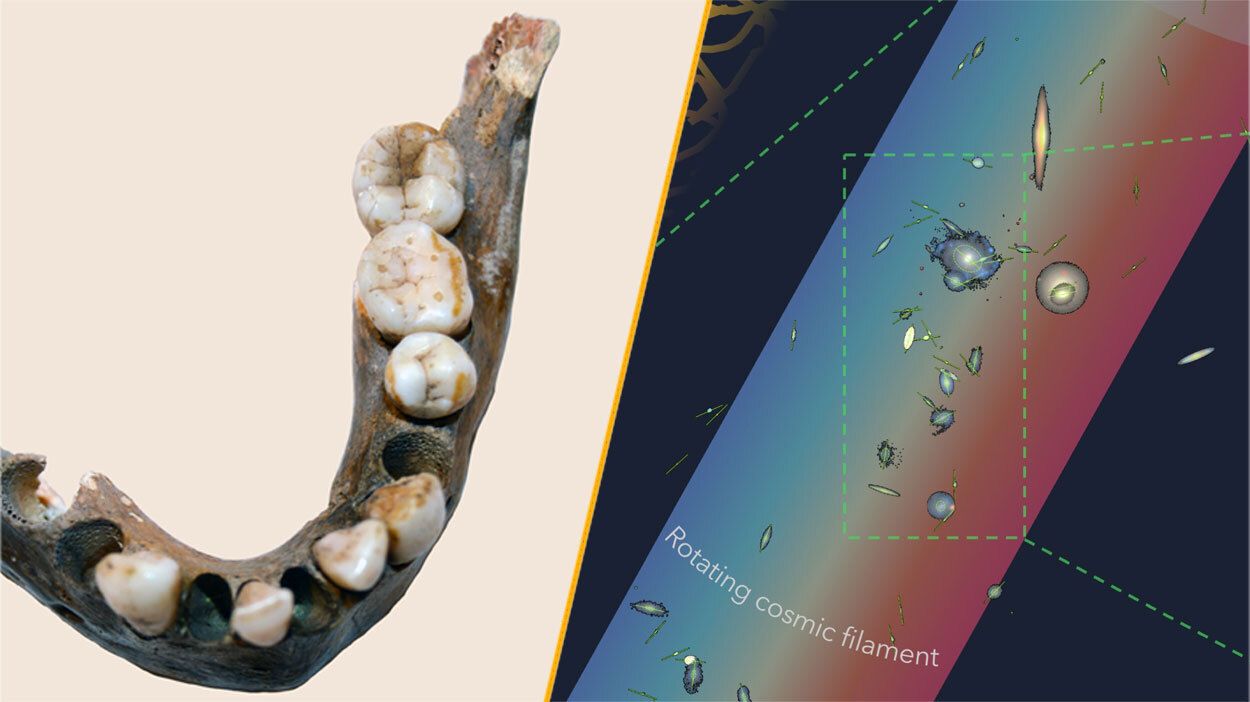
This week, scientists made significant discoveries spanning from ancient human populations to cosmic phenomena. In southern Africa, researchers identified a human population that remained genetically isolated for an astonishing 100,000 years. In a separate revelation, astronomers have located the largest spinning structure in the known universe, situated 140 million light-years away, while a massive pit of skulls was unearthed in China, prompting questions about ancient human practices.
In southern Africa, a study examined human skeletons dated up to 10,000 years old, discovered south of the Limpopo River. The remains showed a genetic makeup dramatically different from modern humans, suggesting that this group formed “an extreme end of human genetic variation,” according to the researchers involved in the study. This finding provides invaluable insights into human evolution and migration patterns.
Meanwhile, astronomers have made headlines with the discovery of a colossal rotating filament, the largest spinning object known to date. This structure, which is wider than the Milky Way, is connected to a chain of 14 galaxies and spins at around 68 miles per second (approximately 110 kilometers per second). The filament’s discovery underlines the vastness and complexity of the universe.
In China, archaeologists uncovered a large pit filled with skulls near the gates of a 4,000-year-old city. The intriguing aspect of this find is that nearly all the skulls belonged to males, diverging from the typical sacrificial patterns observed in other nearby settlements. This discovery raises questions about the social practices of ancient populations in the region.
Further, in Greece, researchers found a 2,700-year-old elaborate tomb containing a woman wearing an upside-down crown, adding another layer of mystery to ancient burial customs. Archaeologists continue to piece together the significance of these finds as they explore the social structures of ancient societies.
On a more contemporary note, a major ecosystem engineering initiative in China, known as the Great Green Wall, has yielded unintended consequences. Originally aimed at combating desertification through extensive tree-planting, recent analyses indicate that the project has altered rainfall and evaporation patterns, resulting in lower water levels in some densely populated areas.
In a related environmental concern, new research suggests that the record temperature set in Death Valley in 1913 may have involved human error. This finding prompts a reevaluation of historical temperature records and their implications for climate science. Additionally, the potential collapse of a critical Atlantic current could lead to centuries of drought across Europe, highlighting the fragility of global weather systems.
In the realm of space exploration, interstellar comet 3I/ATLAS has captured the attention of scientists with its dramatic activity. Recent observations using the Joan Oró Telescope in northeastern Spain revealed that the comet is exhibiting signs of “ice volcanoes,” with spiral jets shooting off its surface. This phenomenon indicates that ice is sublimating from the comet, suggesting it shares characteristics with other celestial bodies in our solar system.
Innovations in technology are also making headlines this week. Engineers at MIT have developed a method to extract drinking water from the air using ultrasound, which could revolutionize water access, especially in arid regions. This technique is said to be 45 times more efficient than traditional evaporation methods, although it requires a power source. Researchers are exploring ways to integrate solar cells to overcome this challenge.
Lastly, in a significant paleontological discovery, scientists in Bolivia’s Carreras Pampa have documented over 18,000 fossilized dinosaur tracks, establishing the site as one of the premier dinosaur track locations in the world. This vast area of footprints expands our understanding of the behaviors and movements of these ancient creatures.
These diverse discoveries illustrate the continuing advancement of human knowledge across various fields of science, from the depths of history to the far reaches of space. As researchers delve into the mysteries of our past and the universe, they contribute to a deeper understanding of our world and beyond.

Cosmic Mystery Deepens: Where Are the Universe’s Defects?

Lady Bulldogs Shine in Postseason Awards Following Final Four Run

CALV Hosts Essential Class for Local Real Estate Professionals

Urgent Alert: “Spaving” Surges as Shoppers Overspend Online

Jefferies Initiates Coverage on Insmed with “Buy” Rating

Three Dog Night to Perform with Ambrosia at Mayo Civic Center

Urgent Announcement: Charles M. Payment Passes Away at 78

Houston Education Foundation Donates $4,592 for Student Programs

Beeks Financial Cloud Shares Drop 7% Amid Increased Trading Volume

Foreign Inflows into Japan Stocks Surge to ¥1.34 Trillion

University of Hawaiʻi Joins $25.6M AI Project to Monitor Disasters

Sydney Sweeney Embraces Body Positivity Amid Hollywood Challenges

Hudson Williams Gains Popularity as Breakout Star on Heated Rivalry

Urgent Farewell: Joleen Chaney Leaves Legacy at KFOR

Boeing’s Merger with McDonnell Douglas: A Strategic Move Explained

$1.25M Grant Advances Hawaiʻi’s Real-Time Hazard Monitoring

Derrick Dove and ABAC Band Set for Free Americana Concert

BOYNEXTDOOR’s Jaehyun Faces Backlash Amid BTS-TWICE Controversy
-
Business9 months ago
Foreign Inflows into Japan Stocks Surge to ¥1.34 Trillion
-
Science9 months ago
University of Hawaiʻi Joins $25.6M AI Project to Monitor Disasters
-
 Entertainment9 months ago
Sydney Sweeney Embraces Body Positivity Amid Hollywood Challenges
-
 Entertainment7 months ago
Hudson Williams Gains Popularity as Breakout Star on Heated Rivalry
-
 Top Stories8 months ago
Urgent Farewell: Joleen Chaney Leaves Legacy at KFOR
-
 World9 months ago
Boeing’s Merger with McDonnell Douglas: A Strategic Move Explained
-
 Science7 months ago
$1.25M Grant Advances Hawaiʻi’s Real-Time Hazard Monitoring
-
 Entertainment8 months ago
Derrick Dove and ABAC Band Set for Free Americana Concert
-
 Top Stories9 months ago
BOYNEXTDOOR’s Jaehyun Faces Backlash Amid BTS-TWICE Controversy
-

 Health6 months ago
Bodybuilder Eugene Teo Transitions to Mindful Movement for Health
-

 World6 months ago
San Francisco Airport to Host 16 Nonstop Airlines to Europe in 2026
-

 Top Stories7 months ago
National Coast Guard Museum Set to Open in 2027 After Funding Secured