
Science
Researchers Enhance Genetic Tools for Sulfolobus islandicus Applications

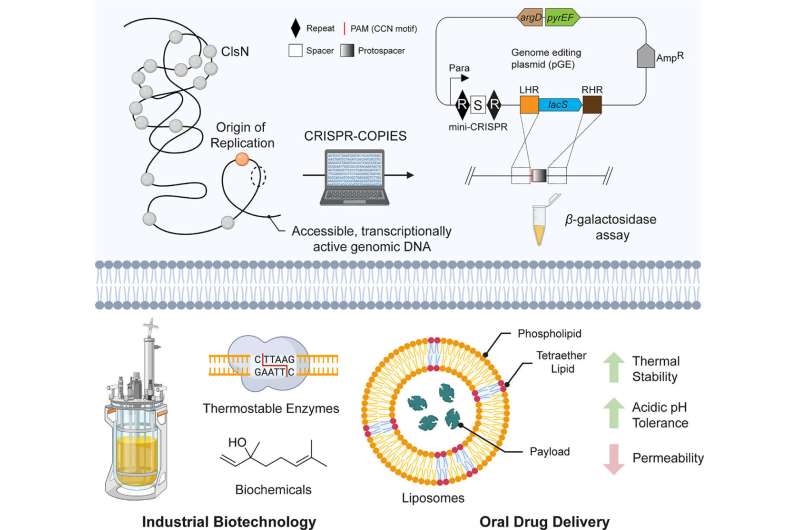
Research conducted at the University of Illinois at Urbana-Champaign has made significant strides in enhancing the genetic toolkit for the archaeal model organism Sulfolobus islandicus. This organism is known for its resilience, thriving in extreme environments characterized by low pH and high temperatures. The findings, published on January 7, 2026, in the journal Trends in Biotechnology, reveal advancements that could expand the use of this organism in metabolic engineering and synthetic biology.
Despite existing genetic tools, the lack of well-defined chromosomal integration sites has posed challenges in utilizing Sulfolobus islandicus as a cellular factory. To address this limitation, the research team implemented the CRISPR-COPIES pipeline combined with a multi-omics strategy, integrating genomics and epigenomics. This innovative approach guided the selection of suitable genomic regions for integration.
In a systematic characterization process, the researchers utilized the endogenous Type I-A CRISPR-Cas system alongside a lacS reporter system to identify potential integration sites. The team successfully identified 66 crRNAs targeting 21 intergenic regions that showed promise for gene integration. They functionally validated 13 of these crRNAs corresponding to eight sites through a β-galactosidase activity assay.
This research not only identifies viable integration sites but also demonstrates the practical application of these sites. The overexpression of GrsB, a key enzyme involved in the synthesis of glycerol dibiphytanyl glycerol tetraether (GDGT), at one of the validated sites resulted in a modification of lipid ether composition. Specifically, this alteration increased the number of cyclopentane moieties, showcasing the potential for engineered metabolic pathways.
The implications of this work are significant, as they broaden the genetic toolbox available for non-conventional hosts like Sulfolobus islandicus. This advancement paves the way for creating robust platforms applicable in synthetic biology and industrial biotechnology, opening new avenues for research and development.
The study, led by Aashutosh Girish Boob and colleagues, underscores the importance of genetic integration strategies in enhancing the utility of extremophiles in scientific and commercial applications. The integration of these innovative techniques could lead to breakthroughs in various biotechnological fields.
For further details, the complete study is available in Trends in Biotechnology, providing insights into the discovery and characterization of chromosomal integration sites in Sulfolobus islandicus. This research represents a critical step forward in the ongoing exploration of microbial applications in biotechnology.

Cosmic Mystery Deepens: Where Are the Universe’s Defects?

Lady Bulldogs Shine in Postseason Awards Following Final Four Run

CALV Hosts Essential Class for Local Real Estate Professionals

Urgent Alert: “Spaving” Surges as Shoppers Overspend Online

Jefferies Initiates Coverage on Insmed with “Buy” Rating

Three Dog Night to Perform with Ambrosia at Mayo Civic Center

Urgent Announcement: Charles M. Payment Passes Away at 78

Houston Education Foundation Donates $4,592 for Student Programs

Beeks Financial Cloud Shares Drop 7% Amid Increased Trading Volume

Foreign Inflows into Japan Stocks Surge to ¥1.34 Trillion

University of Hawaiʻi Joins $25.6M AI Project to Monitor Disasters

Sydney Sweeney Embraces Body Positivity Amid Hollywood Challenges

Hudson Williams Gains Popularity as Breakout Star on Heated Rivalry

Urgent Farewell: Joleen Chaney Leaves Legacy at KFOR

Boeing’s Merger with McDonnell Douglas: A Strategic Move Explained

$1.25M Grant Advances Hawaiʻi’s Real-Time Hazard Monitoring

Derrick Dove and ABAC Band Set for Free Americana Concert

BOYNEXTDOOR’s Jaehyun Faces Backlash Amid BTS-TWICE Controversy
-
Business9 months ago
Foreign Inflows into Japan Stocks Surge to ¥1.34 Trillion
-
Science9 months ago
University of Hawaiʻi Joins $25.6M AI Project to Monitor Disasters
-
 Entertainment9 months ago
Sydney Sweeney Embraces Body Positivity Amid Hollywood Challenges
-
 Entertainment7 months ago
Hudson Williams Gains Popularity as Breakout Star on Heated Rivalry
-
 Top Stories8 months ago
Urgent Farewell: Joleen Chaney Leaves Legacy at KFOR
-
 World9 months ago
Boeing’s Merger with McDonnell Douglas: A Strategic Move Explained
-
 Science7 months ago
$1.25M Grant Advances Hawaiʻi’s Real-Time Hazard Monitoring
-
 Entertainment8 months ago
Derrick Dove and ABAC Band Set for Free Americana Concert
-
 Top Stories9 months ago
BOYNEXTDOOR’s Jaehyun Faces Backlash Amid BTS-TWICE Controversy
-

 Health6 months ago
Bodybuilder Eugene Teo Transitions to Mindful Movement for Health
-

 World6 months ago
San Francisco Airport to Host 16 Nonstop Airlines to Europe in 2026
-

 Top Stories7 months ago
National Coast Guard Museum Set to Open in 2027 After Funding Secured