
Science
Australian Firm Plans Unique Satellite Flyby of Asteroid Apophis

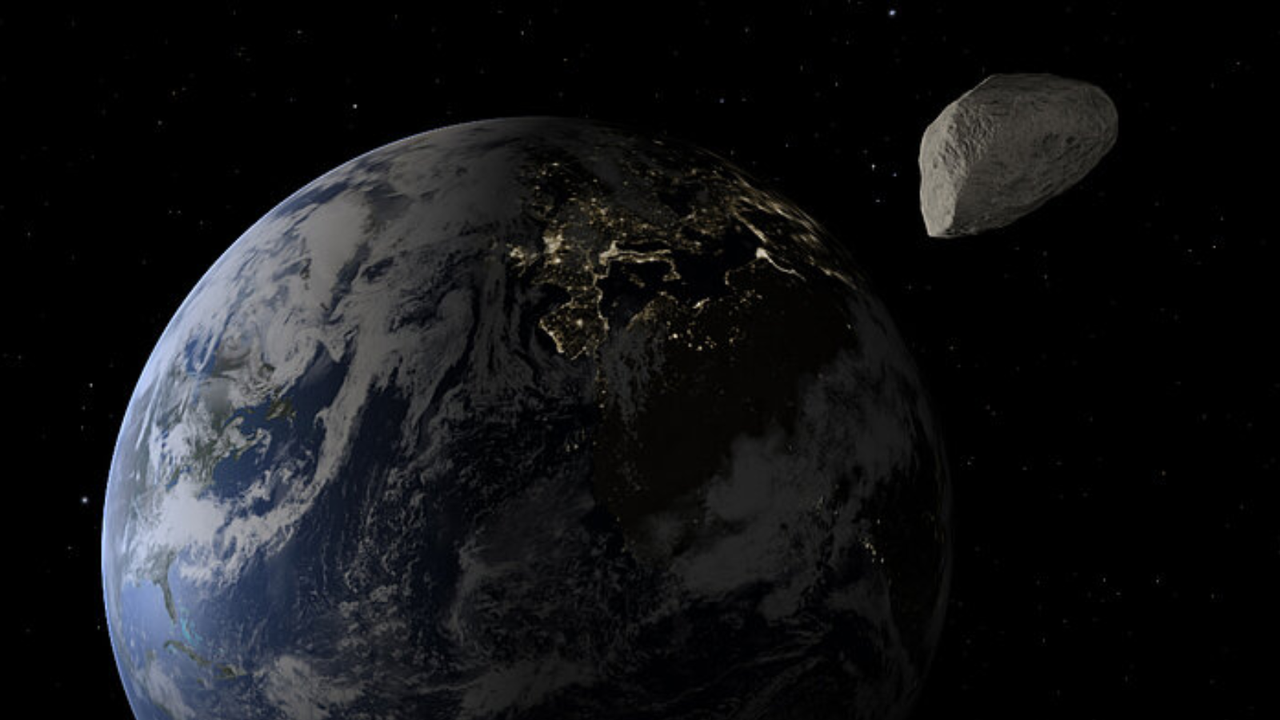
Australian company HEO Robotics is preparing to conduct a groundbreaking flyby of the asteroid Apophis during its close approach to Earth on April 13, 2029. This initiative aims to enhance scientific understanding of the asteroid, which measures approximately 340 meters (1,115 feet) in width, as it passes within a mere 5.9 Earth radii of our planet.
Based in Sydney, HEO Robotics specializes in commercial satellite-to-satellite imagery and intends to acquire a satellite nearing the end of its operational life. This satellite, currently in geostationary orbit at an altitude of 22,236 miles (35,786 kilometers) above the equator, will utilize its remaining fuel to adjust its trajectory for the flyby. Satellites in this orbit typically enter a “graveyard orbit” to avoid interfering with operational satellites, but HEO plans to divert it towards Apophis instead.
The close approach of Apophis presents a rare opportunity for scientific inquiry, as asteroids of this size only pass this close to Earth approximately once every 7,500 years. Although classified as a potentially hazardous asteroid, Apophis poses no threat during this encounter. Instead, scientists view the flyby as a chance to study how an asteroid behaves when influenced by a planet’s gravitational pull.
HEO Robotics will not be alone in this venture. Major space agencies, including NASA, the European Space Agency, and Japan, are each preparing their own missions—specifically OSIRIS-APEX, RAMSES, and DESTINY+, respectively—to observe Apophis before, during, and after the flyby. Collectively, these missions could provide insights that reach up to 2 billion people worldwide, as the event is expected to be visible from various locations on Earth. Additionally, a probe from China may also join the efforts.
Will Crowe, co-founder and chief executive of HEO, expressed his excitement about the mission. Speaking at the International Astronautical Congress in Sydney earlier this month, he noted that while Apophis may not be the easiest asteroid to visit, there has been a lack of imagination in pursuing such missions.
“We’re starting with just the ones that are coming through the Earth-moon system,” Crowe stated. “But there’s no reason why we can’t enable it for everything—the asteroid belt or all the other weird asteroid classes. It should be possible.”
This ambitious endeavor marks a significant expansion of HEO’s capabilities beyond providing non-Earth imagery in low Earth orbit. The company aims to eventually offer on-demand images from across the solar system, positioning itself as a key player in the growing field of asteroid research and exploration.
As the world eagerly anticipates the close approach of Apophis, HEO Robotics is set to make its mark in space exploration, turning the final moments of an aging satellite into a unique opportunity for scientific discovery.

Cosmic Mystery Deepens: Where Are the Universe’s Defects?

Lady Bulldogs Shine in Postseason Awards Following Final Four Run

CALV Hosts Essential Class for Local Real Estate Professionals

Urgent Alert: “Spaving” Surges as Shoppers Overspend Online

Jefferies Initiates Coverage on Insmed with “Buy” Rating

Three Dog Night to Perform with Ambrosia at Mayo Civic Center

Urgent Announcement: Charles M. Payment Passes Away at 78

Houston Education Foundation Donates $4,592 for Student Programs

Beeks Financial Cloud Shares Drop 7% Amid Increased Trading Volume

Foreign Inflows into Japan Stocks Surge to ¥1.34 Trillion

University of Hawaiʻi Joins $25.6M AI Project to Monitor Disasters

Sydney Sweeney Embraces Body Positivity Amid Hollywood Challenges

Hudson Williams Gains Popularity as Breakout Star on Heated Rivalry

Urgent Farewell: Joleen Chaney Leaves Legacy at KFOR

Boeing’s Merger with McDonnell Douglas: A Strategic Move Explained

$1.25M Grant Advances Hawaiʻi’s Real-Time Hazard Monitoring

Derrick Dove and ABAC Band Set for Free Americana Concert

BOYNEXTDOOR’s Jaehyun Faces Backlash Amid BTS-TWICE Controversy
-
Business9 months ago
Foreign Inflows into Japan Stocks Surge to ¥1.34 Trillion
-
Science8 months ago
University of Hawaiʻi Joins $25.6M AI Project to Monitor Disasters
-
 Entertainment9 months ago
Sydney Sweeney Embraces Body Positivity Amid Hollywood Challenges
-
 Entertainment7 months ago
Hudson Williams Gains Popularity as Breakout Star on Heated Rivalry
-
 Top Stories8 months ago
Urgent Farewell: Joleen Chaney Leaves Legacy at KFOR
-
 World9 months ago
Boeing’s Merger with McDonnell Douglas: A Strategic Move Explained
-
 Science7 months ago
$1.25M Grant Advances Hawaiʻi’s Real-Time Hazard Monitoring
-
 Entertainment8 months ago
Derrick Dove and ABAC Band Set for Free Americana Concert
-
 Top Stories9 months ago
BOYNEXTDOOR’s Jaehyun Faces Backlash Amid BTS-TWICE Controversy
-

 Health6 months ago
Bodybuilder Eugene Teo Transitions to Mindful Movement for Health
-

 World6 months ago
San Francisco Airport to Host 16 Nonstop Airlines to Europe in 2026
-

 Top Stories7 months ago
National Coast Guard Museum Set to Open in 2027 After Funding Secured