
Science
Ancient Observations Illuminate Earth’s Rotational History

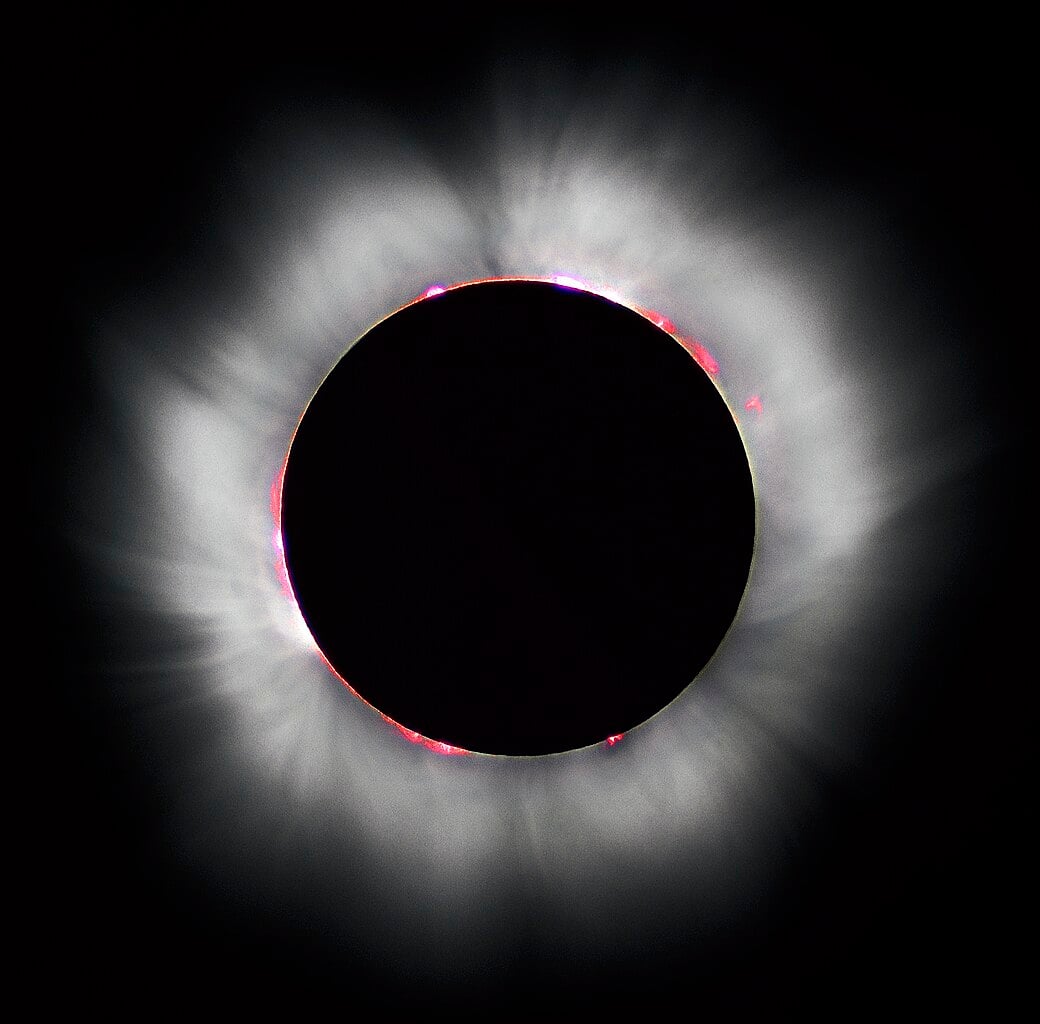
On a summer day in 709 BCE, scribes at the Lu Duchy Court in ancient China recorded an extraordinary event: a total solar eclipse. They described the phenomenon as the Sun vanishing from the sky, replaced by a ghostly halo. This ancient observation, preserved in the Spring and Autumn Annals, has provided modern scientists with crucial insights into Earth’s rotational speed and solar activity from nearly three millennia ago.
The significance of this ancient record extends beyond its historical value. Researchers faced a challenge when attempting to verify the eclipse’s visibility from Qufu, the ancient capital where the scribes made their observations. Initial calculations indicated that a total eclipse should not have been visible from that location. This discrepancy puzzled scientists until a research team led by Hisashi Hayakawa from Nagoya University unearthed a surprising solution through archaeological evidence.
The team discovered that earlier studies had relied on incorrect geographical coordinates for Qufu. By consulting excavation reports, they identified that the previous researchers had mistakenly focused on a site located eight kilometers from the actual position of the Lu Court. This minor error had compromised the accuracy of all subsequent calculations regarding the eclipse.
With the correct coordinates established, the researchers recalibrated their calculations. They determined that during the eclipse, Earth was rotating slightly faster than it does today. The current average rotation speed is gradually slowed by tidal friction caused by the Moon’s gravitational pull, a process that has been ongoing for millennia.
The ancient description of the Sun appearing “completely yellow above and below” during totality is particularly compelling. This language likely refers to the solar corona, the Sun’s faint outer atmosphere, which is only visible during total eclipses. If this interpretation holds true, it represents one of the earliest written descriptions of this celestial phenomenon.
The morphology described by the ancient observers also suggests significant insights into solar activity during that time. The Sun operates on approximately 11-year cycles of varying activity, occasionally punctuated by longer periods known as grand minima, characterized by a near absence of sunspots. Radiocarbon measurements from tree rings indicate that the Sun had just emerged from a quiet period lasting from 808 BCE to 717 BCE and was returning to its regular activity cycles by 709 BCE.
This correlation between ancient observations and modern scientific analysis illustrates the value of both historical records and natural data. The description of the solar corona aligns with tree ring data, which reflects cosmic ray levels that decline as solar activity increases. The convergence of these findings validates both the ancient records and contemporary scientific methods.
China’s remarkable astronomical documentation can be traced back to ancient dynasties that employed experts to monitor celestial events. These observations were believed to reflect the state of the empire, leading to systematic record keeping that has provided modern scientists with invaluable data spanning centuries.
Overall, this study highlights how ancient scribes inadvertently contributed to our understanding of Earth’s rotation and solar dynamics. Through meticulous documentation, they have left a legacy that continues to enlighten our scientific inquiries today.

Cosmic Mystery Deepens: Where Are the Universe’s Defects?

Lady Bulldogs Shine in Postseason Awards Following Final Four Run

CALV Hosts Essential Class for Local Real Estate Professionals

Urgent Alert: “Spaving” Surges as Shoppers Overspend Online

Jefferies Initiates Coverage on Insmed with “Buy” Rating

Three Dog Night to Perform with Ambrosia at Mayo Civic Center

Urgent Announcement: Charles M. Payment Passes Away at 78

Houston Education Foundation Donates $4,592 for Student Programs

Beeks Financial Cloud Shares Drop 7% Amid Increased Trading Volume

Foreign Inflows into Japan Stocks Surge to ¥1.34 Trillion

University of Hawaiʻi Joins $25.6M AI Project to Monitor Disasters

Sydney Sweeney Embraces Body Positivity Amid Hollywood Challenges

Hudson Williams Gains Popularity as Breakout Star on Heated Rivalry

Urgent Farewell: Joleen Chaney Leaves Legacy at KFOR

Boeing’s Merger with McDonnell Douglas: A Strategic Move Explained

$1.25M Grant Advances Hawaiʻi’s Real-Time Hazard Monitoring

Derrick Dove and ABAC Band Set for Free Americana Concert

BOYNEXTDOOR’s Jaehyun Faces Backlash Amid BTS-TWICE Controversy
-
Business9 months ago
Foreign Inflows into Japan Stocks Surge to ¥1.34 Trillion
-
Science8 months ago
University of Hawaiʻi Joins $25.6M AI Project to Monitor Disasters
-
 Entertainment9 months ago
Sydney Sweeney Embraces Body Positivity Amid Hollywood Challenges
-
 Entertainment7 months ago
Hudson Williams Gains Popularity as Breakout Star on Heated Rivalry
-
 Top Stories8 months ago
Urgent Farewell: Joleen Chaney Leaves Legacy at KFOR
-
 World9 months ago
Boeing’s Merger with McDonnell Douglas: A Strategic Move Explained
-
 Science7 months ago
$1.25M Grant Advances Hawaiʻi’s Real-Time Hazard Monitoring
-
 Entertainment8 months ago
Derrick Dove and ABAC Band Set for Free Americana Concert
-
 Top Stories9 months ago
BOYNEXTDOOR’s Jaehyun Faces Backlash Amid BTS-TWICE Controversy
-

 Health6 months ago
Bodybuilder Eugene Teo Transitions to Mindful Movement for Health
-

 World6 months ago
San Francisco Airport to Host 16 Nonstop Airlines to Europe in 2026
-

 Top Stories7 months ago
National Coast Guard Museum Set to Open in 2027 After Funding Secured