
Science
Agricultural Drones Revolutionize Farming Worldwide

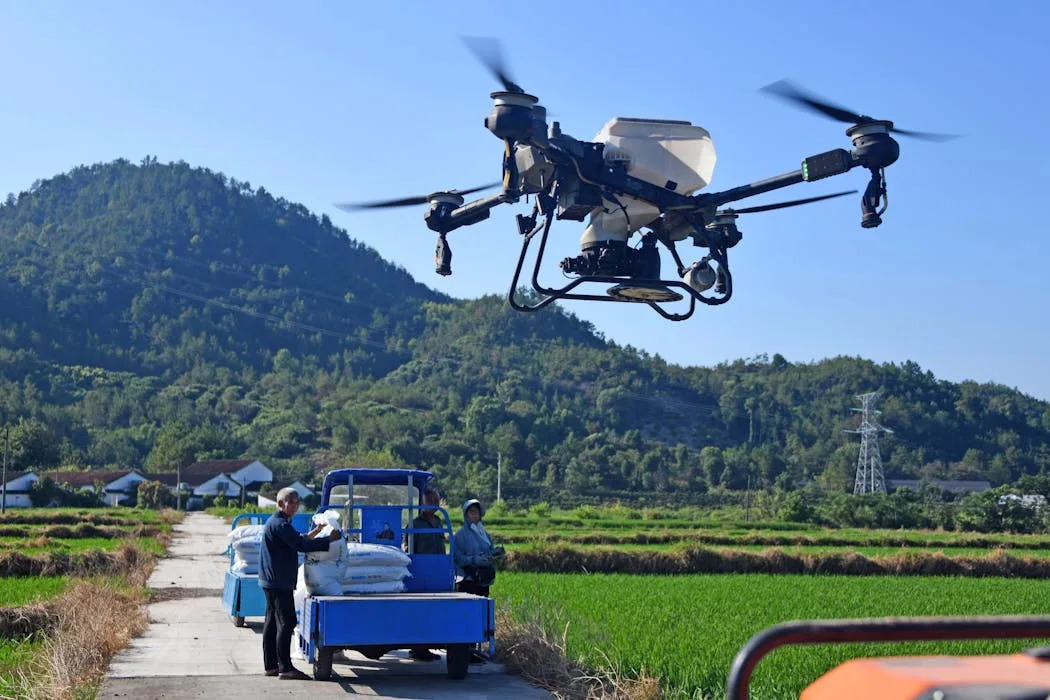
The adoption of agricultural drones is rapidly transforming farming practices around the globe, enabling farmers to save both time and money. A recent study published in the journal Science highlights the swift integration of these technologies into agricultural sectors, documenting their impact on farming efficiency and environmental sustainability.
The evolution of agricultural drones has been remarkable. Initially, these devices were costly and complex, deterring many potential users. Today’s models are user-friendly, capable of carrying loads of up to 220 pounds (100 kg) and can be operated immediately after purchase. Prices vary widely; for instance, a drone in the United States can cost between US$20,000 and US$30,000, while a similar model may be available in China for under US$10,000. Many farmers opt to hire service providers, making drone technology accessible to a broader audience.
Transformative Capabilities of Drones
Agricultural drones are often likened to flying tractors, equipped with various attachments that allow them to perform diverse tasks. Common applications include crop spraying, fertilizer distribution, seed sowing, and monitoring livestock. This versatility has made them invaluable across different types of farms, enhancing productivity and efficiency.
The rapid spread of drone technology has also been facilitated by its geographical trajectory. Historically, agricultural innovations have flowed from high-income nations to lower-income ones over extended periods. Drones, however, are reversing this trend, initially proliferating from East Asia to Southeast Asia, then extending to Latin America, and now reaching North America and Europe. As of 2023, it is estimated that over 250,000 agricultural drones are in operation in China alone.
In Thailand, drone usage surged to cover 30% of farmland in 2023, a significant increase from negligible use in 2019. In the United States, the number of registered agricultural drones increased dramatically, growing from approximately 1,000 in January 2024 to around 5,500 by mid-2025. Industry reports suggest these figures may underestimate actual drone usage, as some owners avoid the registration process.
Implications for Farmers and the Environment
The shift from manual agrochemical application to drone technology significantly reduces the risk of exposure to harmful substances for farmers. In countries like China, Thailand, and Vietnam, smallholder farmers are moving away from labor-intensive practices to more efficient, less hazardous methods. Drones operate from heights of at least 6 feet (2 meters), which can inadvertently lead to pesticide drift affecting neighboring farms and water sources if not used correctly.
The introduction of drones offers both opportunities and challenges for the agricultural workforce. While drones reduce the physical burden on smallholders—particularly those farming less than 2 hectares—there is a concern about potential job displacement. For example, one estimate indicates that drones can efficiently cover between 10 and 25 acres (4 to 10 hectares) per hour during pesticide spraying, equating to the work of up to 100 manual workers. This raises questions about how governments can support displaced workers in finding new employment.
Drones also contribute to sustainable agricultural practices by reducing waste through precise application of fertilizers and seeds. This efficiency not only minimizes resource consumption but also has the potential to increase yields per acre, a goal that agricultural scientists refer to as “sustainable intensification.”
As the drone revolution in agriculture accelerates, early indicators point to notable benefits, including enhanced efficiency, safer working conditions, and improved livelihoods for rural communities. The full impact of drone technology on global agriculture, however, remains to be fully understood as the industry continues to evolve.
This article is based on research conducted by Ben Belton and Leo Baldiga from Michigan State University, emphasizing the transformative potential of drones in modern farming practices.

Cosmic Mystery Deepens: Where Are the Universe’s Defects?

Lady Bulldogs Shine in Postseason Awards Following Final Four Run

CALV Hosts Essential Class for Local Real Estate Professionals

Urgent Alert: “Spaving” Surges as Shoppers Overspend Online

Jefferies Initiates Coverage on Insmed with “Buy” Rating

Three Dog Night to Perform with Ambrosia at Mayo Civic Center

Urgent Announcement: Charles M. Payment Passes Away at 78

Houston Education Foundation Donates $4,592 for Student Programs

Beeks Financial Cloud Shares Drop 7% Amid Increased Trading Volume

Foreign Inflows into Japan Stocks Surge to ¥1.34 Trillion

University of Hawaiʻi Joins $25.6M AI Project to Monitor Disasters

Hudson Williams Gains Popularity as Breakout Star on Heated Rivalry

Sydney Sweeney Embraces Body Positivity Amid Hollywood Challenges

Urgent Farewell: Joleen Chaney Leaves Legacy at KFOR

Boeing’s Merger with McDonnell Douglas: A Strategic Move Explained

$1.25M Grant Advances Hawaiʻi’s Real-Time Hazard Monitoring

BOYNEXTDOOR’s Jaehyun Faces Backlash Amid BTS-TWICE Controversy

Bodybuilder Eugene Teo Transitions to Mindful Movement for Health
-
Business6 months ago
Foreign Inflows into Japan Stocks Surge to ¥1.34 Trillion
-
Science5 months ago
University of Hawaiʻi Joins $25.6M AI Project to Monitor Disasters
-
 Entertainment4 months ago
Hudson Williams Gains Popularity as Breakout Star on Heated Rivalry
-
 Entertainment6 months ago
Sydney Sweeney Embraces Body Positivity Amid Hollywood Challenges
-
 Top Stories5 months ago
Urgent Farewell: Joleen Chaney Leaves Legacy at KFOR
-
 World6 months ago
Boeing’s Merger with McDonnell Douglas: A Strategic Move Explained
-
 Science4 months ago
$1.25M Grant Advances Hawaiʻi’s Real-Time Hazard Monitoring
-
 Top Stories6 months ago
BOYNEXTDOOR’s Jaehyun Faces Backlash Amid BTS-TWICE Controversy
-
 Health3 months ago
Bodybuilder Eugene Teo Transitions to Mindful Movement for Health
-

 Health3 months ago
Hartford’s Abandoned Tower Faces Growing Safety Concerns
-

 World6 months ago
French Film Explores Group Therapy in ‘Group – The Schopenhauer Project’
-

 World4 months ago
Nicolas Maduro’s Surprising Tenure: Defiance and Controversy