
World
Nicolas Maduro’s Surprising Tenure: Defiance and Controversy

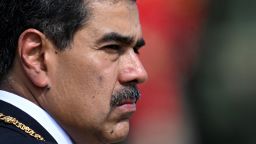
Nicolás Maduro, the President of Venezuela, has remained a controversial figure since taking office in 2013, defying numerous predictions of his political demise. Over twelve years, he transformed from a mocked successor of the late Hugo Chávez into the longest-serving president in Latin America. Despite facing international isolation, economic collapse, and widespread criticism, Maduro has demonstrated a remarkable ability to navigate the treacherous waters of Venezuelan politics.
Maduro’s presidency began under a cloud of skepticism. After Chávez’s death in December 2012, Maduro inherited a deeply divided political landscape. He secured his position amid significant internal tensions within the United Socialist Party of Venezuela (PSUV), particularly with Diosdado Cabello, the then-president of the National Assembly. Chávez’s endorsement of Maduro as his successor was decisive, yet many doubted his capacity to lead.
Despite initial minority support, Maduro’s governance has endured through various challenges, including accusations of electoral fraud, civil unrest, and international sanctions. Remarkably, he has remained in power for over twelve years, a tenure marked by a significant decline in Venezuela’s economy and a humanitarian crisis that has driven millions into exile.
Political Maneuvering and Cuban Support
Maduro’s relationship with Cuba has played a vital role in his political survival. His ties with the Castro regime date back to Chávez’s presidency and have only strengthened over time. Maduro assumed the role of foreign minister in 2006, deepening diplomatic and strategic connections that have proven crucial for his administration. According to analysts, this alliance has enabled him to counter opposition movements effectively, notably during the attempted uprising in April 2019.
Yet, Maduro’s presidency has not been without controversy. His electoral victories have often been marred by allegations of fraud. In the 2013 elections, he secured the presidency with a mere 1.59% margin against opposition leader Henrique Capriles, who has consistently questioned the legitimacy of the electoral process. This pattern of contested elections continues to define Maduro’s rule, with significant backlash from both domestic and international communities.
The Human Cost of Maduro’s Regime
The implications of Maduro’s survival tactics have had devastating consequences for the Venezuelan populace. Reports from the United Nations and the International Criminal Court (ICC) have highlighted systemic human rights violations under his administration. These include excessive force against dissenters, arbitrary detentions, and allegations of crimes against humanity.
In a report, UN rapporteur Marta Valiñas stated, “The mission found reasonable grounds to believe that authorities and security forces have planned and executed large-scale human rights violations since 2014.” Despite these findings, Maduro’s government has consistently dismissed international criticism, framing it as part of a broader anti-Venezuelan agenda.
The economic landscape during Maduro’s tenure has been equally grim. The Venezuelan economy has contracted significantly, now at just 28% of its 2013 size according to the International Monetary Fund (IMF). The collapse of the state-run oil company, PDVSA, has severely impacted the nation, exacerbating poverty and leading to one of the largest migration crises globally, with nearly eight million Venezuelans seeking refuge abroad.
Maduro’s strategy has involved distributing power among military leaders and political allies to maintain control. This balance has allowed him to navigate internal dissent and external pressures, including sanctions imposed by the United States. His administration has often blamed these sanctions for the country’s economic turmoil, despite evidence suggesting that mismanagement has played a significant role.
As the geopolitical landscape shifts, Maduro now faces increased military pressure from the US, which has implemented a significant blockade in the Caribbean. The current political climate raises the question of whether he can continue to defy expectations and maintain his grip on power amid mounting challenges.
Maduro’s presidency remains a complex narrative of resilience and controversy, characterized by a deepening humanitarian crisis and an unyielding grip on power. As he continues to navigate these turbulent waters, the implications for both Venezuela and the broader region remain profound.

Cosmic Mystery Deepens: Where Are the Universe’s Defects?

Lady Bulldogs Shine in Postseason Awards Following Final Four Run

CALV Hosts Essential Class for Local Real Estate Professionals

Urgent Alert: “Spaving” Surges as Shoppers Overspend Online

Jefferies Initiates Coverage on Insmed with “Buy” Rating

Three Dog Night to Perform with Ambrosia at Mayo Civic Center

Urgent Announcement: Charles M. Payment Passes Away at 78

Houston Education Foundation Donates $4,592 for Student Programs

Beeks Financial Cloud Shares Drop 7% Amid Increased Trading Volume

Foreign Inflows into Japan Stocks Surge to ¥1.34 Trillion

University of Hawaiʻi Joins $25.6M AI Project to Monitor Disasters

Sydney Sweeney Embraces Body Positivity Amid Hollywood Challenges

Hudson Williams Gains Popularity as Breakout Star on Heated Rivalry

Urgent Farewell: Joleen Chaney Leaves Legacy at KFOR

Boeing’s Merger with McDonnell Douglas: A Strategic Move Explained

$1.25M Grant Advances Hawaiʻi’s Real-Time Hazard Monitoring

Derrick Dove and ABAC Band Set for Free Americana Concert

BOYNEXTDOOR’s Jaehyun Faces Backlash Amid BTS-TWICE Controversy
-
Business9 months ago
Foreign Inflows into Japan Stocks Surge to ¥1.34 Trillion
-
Science8 months ago
University of Hawaiʻi Joins $25.6M AI Project to Monitor Disasters
-
 Entertainment9 months ago
Sydney Sweeney Embraces Body Positivity Amid Hollywood Challenges
-
 Entertainment7 months ago
Hudson Williams Gains Popularity as Breakout Star on Heated Rivalry
-
 Top Stories8 months ago
Urgent Farewell: Joleen Chaney Leaves Legacy at KFOR
-
 World9 months ago
Boeing’s Merger with McDonnell Douglas: A Strategic Move Explained
-
 Science7 months ago
$1.25M Grant Advances Hawaiʻi’s Real-Time Hazard Monitoring
-
 Entertainment8 months ago
Derrick Dove and ABAC Band Set for Free Americana Concert
-
 Top Stories9 months ago
BOYNEXTDOOR’s Jaehyun Faces Backlash Amid BTS-TWICE Controversy
-

 Health6 months ago
Bodybuilder Eugene Teo Transitions to Mindful Movement for Health
-

 World6 months ago
San Francisco Airport to Host 16 Nonstop Airlines to Europe in 2026
-

 Top Stories7 months ago
National Coast Guard Museum Set to Open in 2027 After Funding Secured