
Politics
Zelenskyy Addresses Territorial Disputes in U.S.-Led Peace Talks

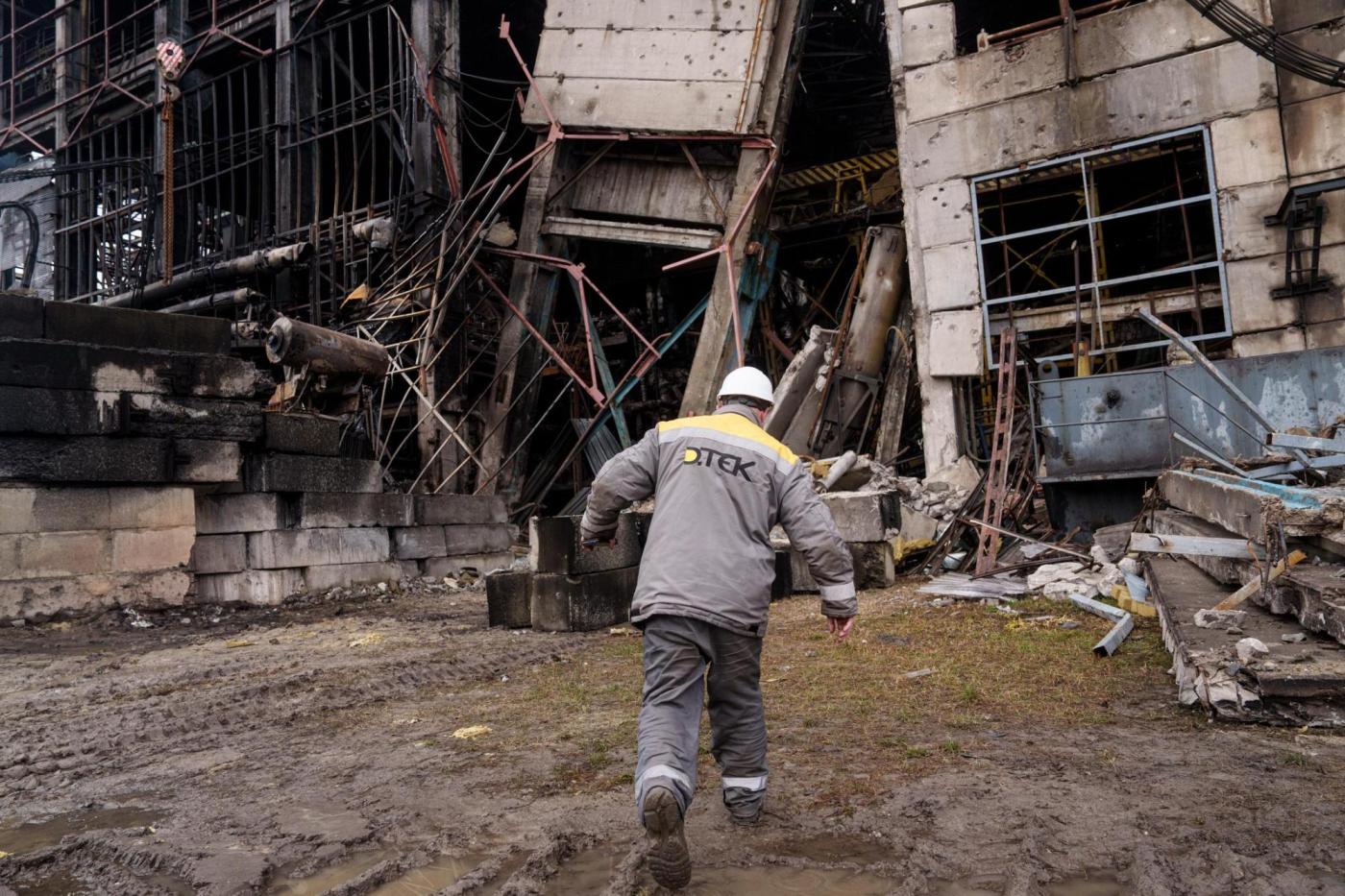
Ukrainian President Volodymyr Zelenskyy confirmed on Thursday that ongoing peace negotiations, led by the United States, are grappling with complex territorial issues central to the conflict with Russia. Key points of contention include the future of Ukraine’s eastern Donetsk region and the status of the Zaporizhzhia nuclear power plant, one of the largest nuclear plants globally.
In a press briefing prior to urgent discussions with leaders from approximately 30 supportive nations, Zelenskyy outlined Ukraine’s recent submission of a 20-point plan to U.S. officials. Each proposal may be supplemented by additional documents detailing specific settlement terms. “We are grateful that the U.S. is working with us and trying to take a balanced position,” Zelenskyy stated, noting the challenges in predicting the final form of any agreements.
The conflict over territorial control has intensified, particularly as Russia aims to consolidate its hold over Donetsk and the adjacent Luhansk region, both critical to Ukraine’s industrial output. Zelenskyy emphasized that Ukraine will not concede to Russian demands for the surrender of these areas, suggesting that an equitable resolution would involve both sides maintaining their current positions along the front lines.
Negotiators from the United States have proposed a model for a “free economic zone” in the Donbas area, which Russia refers to as a “demilitarized zone.” Zelenskyy indicated that any withdrawal of Ukrainian forces should be matched by a similar retreat of Russian troops, highlighting the need for clarity regarding territorial governance in the Donbas.
The status of the Zaporizhzhia plant remains a major sticking point. Russia seeks to maintain its control over the facility, which is currently non-operational. According to Zelenskyy, U.S. negotiators have floated the idea of a joint management structure for the plant, and discussions are ongoing to determine the feasibility of this arrangement.
International Coordination on Peace Efforts
The meeting of Ukraine’s allies, dubbed the Coalition of the Willing, featured prominent leaders such as German Chancellor Friedrich Merz, British Prime Minister Keir Starmer, and French President Emmanuel Macron participating via video link. Zelenskyy noted the urgency of these talks to prevent the Ukrainian situation from being overshadowed by shifting dynamics in U.S. politics, particularly with Donald Trump advocating for a swift resolution to the conflict.
As European nations emphasize their security interests, they seek to guide the peace discussions. Merz, Starmer, and Macron proposed that they collaborate with U.S. officials over the weekend to finalize the peace proposals. Possible further negotiations in Berlin could occur next week, independent of American participation.
Amid these deliberations, Russia has introduced new security proposals aimed at reinforcing its influence in the negotiations. Sergey Lavrov, Russia’s Foreign Minister, indicated that the Kremlin has communicated “additional proposals concerning collective security guarantees” to Washington.
Zelenskyy mentioned the necessity of bilateral coordination with European countries in the coming week, coinciding with a scheduled European Union summit in Brussels. This cooperation underscores the critical moment for peace negotiations as the war enters its fourth year.
Conflict Developments and Military Actions
As the diplomatic efforts unfold, military actions continue to escalate on the ground. NATO Secretary-General Jens Stoltenberg reported that Russia has deployed over 46,000 drones and missiles against Ukraine in 2023. He warned European allies that they could be potential targets of Russian aggression.
In a recent call with military leaders, Russian President Vladimir Putin claimed that Russian forces are maintaining strategic initiative in the ongoing conflict. Despite these assertions, Ukrainian officials denied reports of Russian advances in the Donetsk city of Siversk, which has been the site of intense fighting.
In a notable military engagement, Ukrainian long-range drones reportedly struck a Russian oil rig in the Caspian Sea, disrupting operations across over 20 wells. This action marks a significant escalation in Ukraine’s capability to target Russian assets far from the front lines. Additionally, a substantial drone assault caused significant disruptions at Moscow’s airports, halting flights for several hours and affecting travel across multiple cities.
As the situation evolves, both diplomatic and military fronts remain intertwined, with the implications of these negotiations and actions reverberating throughout the international community.

Cosmic Mystery Deepens: Where Are the Universe’s Defects?

Lady Bulldogs Shine in Postseason Awards Following Final Four Run

CALV Hosts Essential Class for Local Real Estate Professionals

Urgent Alert: “Spaving” Surges as Shoppers Overspend Online

Jefferies Initiates Coverage on Insmed with “Buy” Rating

Three Dog Night to Perform with Ambrosia at Mayo Civic Center

Urgent Announcement: Charles M. Payment Passes Away at 78

Houston Education Foundation Donates $4,592 for Student Programs

Beeks Financial Cloud Shares Drop 7% Amid Increased Trading Volume

Foreign Inflows into Japan Stocks Surge to ¥1.34 Trillion

University of Hawaiʻi Joins $25.6M AI Project to Monitor Disasters

Sydney Sweeney Embraces Body Positivity Amid Hollywood Challenges

Hudson Williams Gains Popularity as Breakout Star on Heated Rivalry

Urgent Farewell: Joleen Chaney Leaves Legacy at KFOR

Boeing’s Merger with McDonnell Douglas: A Strategic Move Explained

$1.25M Grant Advances Hawaiʻi’s Real-Time Hazard Monitoring

Derrick Dove and ABAC Band Set for Free Americana Concert

BOYNEXTDOOR’s Jaehyun Faces Backlash Amid BTS-TWICE Controversy
-
Business9 months ago
Foreign Inflows into Japan Stocks Surge to ¥1.34 Trillion
-
Science9 months ago
University of Hawaiʻi Joins $25.6M AI Project to Monitor Disasters
-
 Entertainment9 months ago
Sydney Sweeney Embraces Body Positivity Amid Hollywood Challenges
-
 Entertainment8 months ago
Hudson Williams Gains Popularity as Breakout Star on Heated Rivalry
-
 Top Stories9 months ago
Urgent Farewell: Joleen Chaney Leaves Legacy at KFOR
-
 World9 months ago
Boeing’s Merger with McDonnell Douglas: A Strategic Move Explained
-
 Science8 months ago
$1.25M Grant Advances Hawaiʻi’s Real-Time Hazard Monitoring
-
 Entertainment8 months ago
Derrick Dove and ABAC Band Set for Free Americana Concert
-
 Top Stories9 months ago
BOYNEXTDOOR’s Jaehyun Faces Backlash Amid BTS-TWICE Controversy
-

 Health6 months ago
Bodybuilder Eugene Teo Transitions to Mindful Movement for Health
-

 World6 months ago
San Francisco Airport to Host 16 Nonstop Airlines to Europe in 2026
-

 Top Stories7 months ago
National Coast Guard Museum Set to Open in 2027 After Funding Secured