
Politics
Alabama Supreme Court Weighs Police Authority to Demand ID

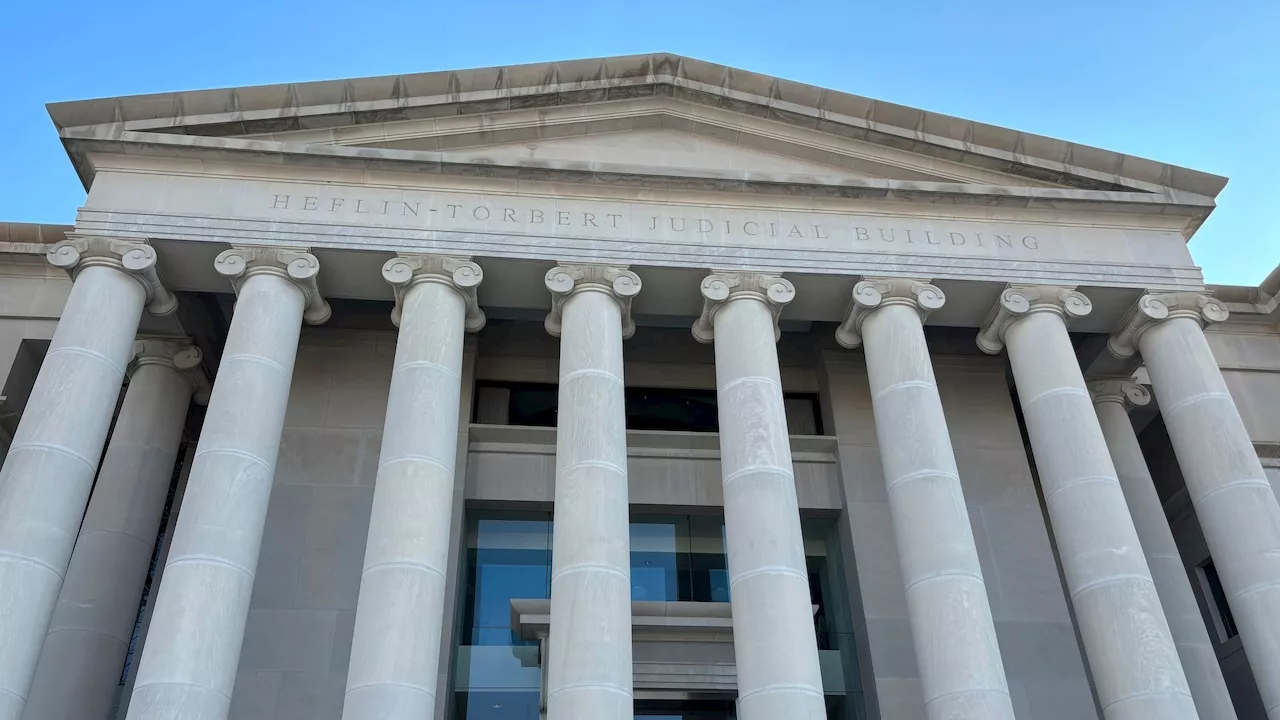
The Alabama Supreme Court is currently deliberating on whether police officers possess the authority to demand identification from individuals who do not provide sufficient identification information. The court heard oral arguments on this contentious issue on February 21, 2024, as it considers the implications of a case involving Pastor Michael Jennings, who was arrested in 2022 for allegedly obstructing government operations.
The legal dispute began when Jennings was watering his neighbor’s flowers in Childersburg, Alabama. Police approached him based on a neighbor’s report describing a “younger Black male” at the property. Jennings identified himself as “Pastor Jennings” and stated that he lived across the street. However, he declined to show identification, leading to his arrest for obstruction.
The case was initially dismissed by a district judge in 2023, but the U.S. Court of Appeals for the Eleventh Circuit later ruled in 2024 that the officers lacked probable cause for Jennings’ arrest. This ruling prompted the lower court to seek guidance from the Alabama Supreme Court regarding the necessity of physical identification when a person provides an incomplete or unsatisfactory response.
During the arguments, Ed Haden, attorney for the City of Childersburg and several police officers, asserted that state law grants officers the authority to verify identities once they have probable cause. He emphasized that without proper identification, officers cannot ascertain who they are dealing with, stating, “If you can’t determine that it’s his name, then the officer doesn’t know who he’s dealing with.”
Conversely, Jennings’ attorney, Henry Daniels, contended that state law does not empower officers to demand identification from every individual. He argued that “freedom cannot thrive under the capricious demand of the state” and highlighted the fundamental right to live free from unwarranted government interference.
The case has garnered significant attention, with organizations such as the American Civil Liberties Union, the Southern Poverty Law Center, the Cato Institute, and The Woods Foundation filing an amicus brief in support of Jennings. These groups argue that the case raises important questions regarding civil liberties and the limits of police authority.
As the Alabama Supreme Court considers this pivotal case, its ruling may have far-reaching implications for law enforcement practices in the state and beyond. The decision could redefine the balance between individual rights and police powers, impacting how officers interact with the public in various situations.
The court’s decision is expected to be issued in the coming months, making it a crucial point of interest for legal experts and civil rights advocates alike.

Cosmic Mystery Deepens: Where Are the Universe’s Defects?

Lady Bulldogs Shine in Postseason Awards Following Final Four Run

CALV Hosts Essential Class for Local Real Estate Professionals

Urgent Alert: “Spaving” Surges as Shoppers Overspend Online

Jefferies Initiates Coverage on Insmed with “Buy” Rating

Three Dog Night to Perform with Ambrosia at Mayo Civic Center

Urgent Announcement: Charles M. Payment Passes Away at 78

Houston Education Foundation Donates $4,592 for Student Programs

Beeks Financial Cloud Shares Drop 7% Amid Increased Trading Volume

Foreign Inflows into Japan Stocks Surge to ¥1.34 Trillion

University of Hawaiʻi Joins $25.6M AI Project to Monitor Disasters

Sydney Sweeney Embraces Body Positivity Amid Hollywood Challenges

Hudson Williams Gains Popularity as Breakout Star on Heated Rivalry

Urgent Farewell: Joleen Chaney Leaves Legacy at KFOR

Boeing’s Merger with McDonnell Douglas: A Strategic Move Explained

$1.25M Grant Advances Hawaiʻi’s Real-Time Hazard Monitoring

Derrick Dove and ABAC Band Set for Free Americana Concert

BOYNEXTDOOR’s Jaehyun Faces Backlash Amid BTS-TWICE Controversy
-
Business9 months ago
Foreign Inflows into Japan Stocks Surge to ¥1.34 Trillion
-
Science9 months ago
University of Hawaiʻi Joins $25.6M AI Project to Monitor Disasters
-
 Entertainment9 months ago
Sydney Sweeney Embraces Body Positivity Amid Hollywood Challenges
-
 Entertainment8 months ago
Hudson Williams Gains Popularity as Breakout Star on Heated Rivalry
-
 Top Stories9 months ago
Urgent Farewell: Joleen Chaney Leaves Legacy at KFOR
-
 World9 months ago
Boeing’s Merger with McDonnell Douglas: A Strategic Move Explained
-
 Science8 months ago
$1.25M Grant Advances Hawaiʻi’s Real-Time Hazard Monitoring
-
 Entertainment8 months ago
Derrick Dove and ABAC Band Set for Free Americana Concert
-
 Top Stories9 months ago
BOYNEXTDOOR’s Jaehyun Faces Backlash Amid BTS-TWICE Controversy
-

 Health6 months ago
Bodybuilder Eugene Teo Transitions to Mindful Movement for Health
-

 World6 months ago
San Francisco Airport to Host 16 Nonstop Airlines to Europe in 2026
-

 Top Stories7 months ago
National Coast Guard Museum Set to Open in 2027 After Funding Secured