
Lifestyle
Venezuelan Exile in Seattle Reacts to U.S. Operation Against Maduro

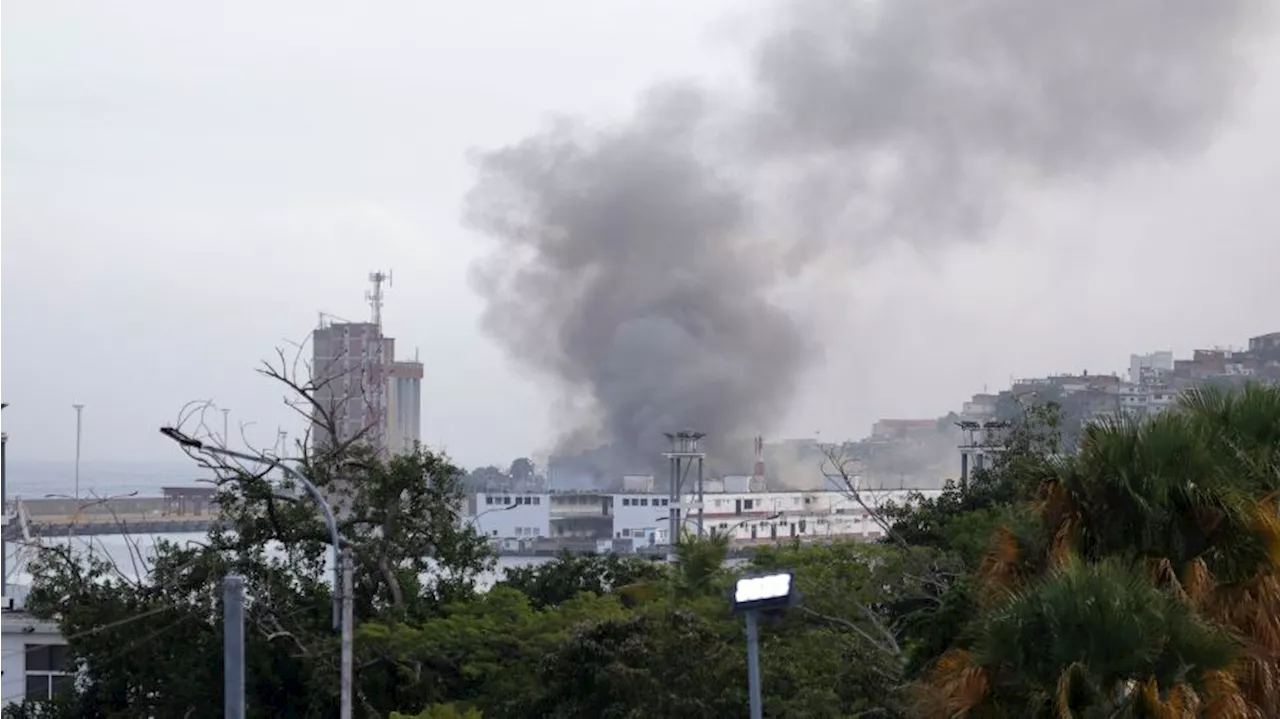
A dramatic military operation unfolded in Venezuela on January 3, 2026, with U.S. forces entering the country to extract Nicolás Maduro. Explosions illuminated the night sky over Caracas as the long-standing leader, who had ruled for over a decade, was removed from power. This event sent shockwaves through the Venezuelan diaspora, prompting emotional responses from those who have lived through the challenges of the Maduro regime.
Paula Lamas, a former news anchor from Seattle and a Venezuelan exile, shared her reaction to the unfolding events. Lamas, who fled Venezuela more than 20 years ago with her mother to escape the oppressive rule of Hugo Chávez, expressed her disbelief and hope during an interview with KIRO Newsradio. “My mom thought she would die without ever seeing a day like Saturday morning,” Lamas stated, reflecting on the significance of the moment.
Lamas’s journey began when she and her mother traveled to California and Nevada for a holiday celebration. After receiving a warning about their safety, what was intended to be a brief vacation turned into a permanent exile. Lamas eventually settled in Seattle, where she excelled in broadcast journalism, earning an Emmy Award nomination for her work at KUNS Univision.
As she watched the regime that forced her family out come to an end, Lamas conveyed a mixture of hope and caution. “We are hopeful that at some point, when things are stable and secure, we can go back and hug our family,” she said.
The U.S. military operation has ignited a fierce debate among lawmakers and citizens alike. Some Democrats have labeled the action as unconstitutional, drawing parallels to the Iraq War and suggesting it could lead to a costly occupation. In contrast, many Republicans have praised the operation as decisive leadership against what they characterize as a narco-terrorist regime.
Lamas, while not fully aligning herself with the current administration, acknowledged the long-overdue nature of the U.S. intervention. “I’m not a big fan of this administration, let’s be clear,” she remarked. “But what happened early Saturday morning was something we could have done years ago if we had wanted to help Venezuelans.”
With the political landscape in Venezuela shifting, Lamas pointed out that Maduro was never a legitimate leader. “He is not a president,” she asserted, citing the loss of the 2024 election to opposition leaders Edmundo González and María Corina Machado. Lamas emphasized that over 70 percent of Venezuelans voted for González, arguing that Maduro’s rise to power was undemocratic.
The discussion surrounding the legality of the U.S. operation has been intense. Critics raise concerns about a potential quagmire similar to past military interventions, while supporters argue that Maduro’s removal was necessary to restore justice. Lamas countered claims that international law was violated, invoking the Responsibility to Protect doctrine. “This doctrine exists because the world failed in Rwanda, in Bosnia, and in many places where non-intervention became an excuse for indifference,” she explained.
Lamas emphasized that the U.S. intervention should not be viewed as an act of war against a nation, but rather as a necessary step to dismantle a regime that had taken a country hostage. “There were no U.S. troops invading Caracas. There were no bombs dropped on the population,” she clarified.
Looking ahead, Lamas expressed cautious optimism about Venezuela’s future. “We have lived through this kind of disappointment before, where we thought the situation would get fixed and it didn’t happen,” she said. Yet she acknowledged this moment as a potential turning point. “It’s really the beginning of the end of a dark time,” she stated.
The rebuilding process for Venezuela will be monumental. “They tore down an entire country,” Lamas observed. “We need to rebuild it from the ashes, pretty much.”
In her closing remarks, Lamas addressed those who have maintained neutrality in the face of oppression. “To anyone who pretended to be neutral in this situation, let me tell you: you were supporting the dictator,” she said, urging a deeper understanding of the human cost of political indifference.
As the world watches the unfolding situation in Venezuela, Lamas’s voice serves as a poignant reminder of the personal stakes involved in international politics, emphasizing the urgent need for compassion and action in the face of suffering.

Cosmic Mystery Deepens: Where Are the Universe’s Defects?

Lady Bulldogs Shine in Postseason Awards Following Final Four Run

CALV Hosts Essential Class for Local Real Estate Professionals

Urgent Alert: “Spaving” Surges as Shoppers Overspend Online

Jefferies Initiates Coverage on Insmed with “Buy” Rating

Three Dog Night to Perform with Ambrosia at Mayo Civic Center

Urgent Announcement: Charles M. Payment Passes Away at 78

Houston Education Foundation Donates $4,592 for Student Programs

Beeks Financial Cloud Shares Drop 7% Amid Increased Trading Volume

Foreign Inflows into Japan Stocks Surge to ¥1.34 Trillion

University of Hawaiʻi Joins $25.6M AI Project to Monitor Disasters

Sydney Sweeney Embraces Body Positivity Amid Hollywood Challenges

Hudson Williams Gains Popularity as Breakout Star on Heated Rivalry

Urgent Farewell: Joleen Chaney Leaves Legacy at KFOR

Boeing’s Merger with McDonnell Douglas: A Strategic Move Explained

$1.25M Grant Advances Hawaiʻi’s Real-Time Hazard Monitoring

Derrick Dove and ABAC Band Set for Free Americana Concert

BOYNEXTDOOR’s Jaehyun Faces Backlash Amid BTS-TWICE Controversy
-
Business9 months ago
Foreign Inflows into Japan Stocks Surge to ¥1.34 Trillion
-
Science8 months ago
University of Hawaiʻi Joins $25.6M AI Project to Monitor Disasters
-
 Entertainment9 months ago
Sydney Sweeney Embraces Body Positivity Amid Hollywood Challenges
-
 Entertainment7 months ago
Hudson Williams Gains Popularity as Breakout Star on Heated Rivalry
-
 Top Stories8 months ago
Urgent Farewell: Joleen Chaney Leaves Legacy at KFOR
-
 World9 months ago
Boeing’s Merger with McDonnell Douglas: A Strategic Move Explained
-
 Science7 months ago
$1.25M Grant Advances Hawaiʻi’s Real-Time Hazard Monitoring
-
 Entertainment8 months ago
Derrick Dove and ABAC Band Set for Free Americana Concert
-
 Top Stories9 months ago
BOYNEXTDOOR’s Jaehyun Faces Backlash Amid BTS-TWICE Controversy
-

 Health6 months ago
Bodybuilder Eugene Teo Transitions to Mindful Movement for Health
-
 World6 months ago
San Francisco Airport to Host 16 Nonstop Airlines to Europe in 2026
-

 Top Stories7 months ago
National Coast Guard Museum Set to Open in 2027 After Funding Secured