
Health
New Molecule Shows Promise in Reversing Alzheimer’s in Rats

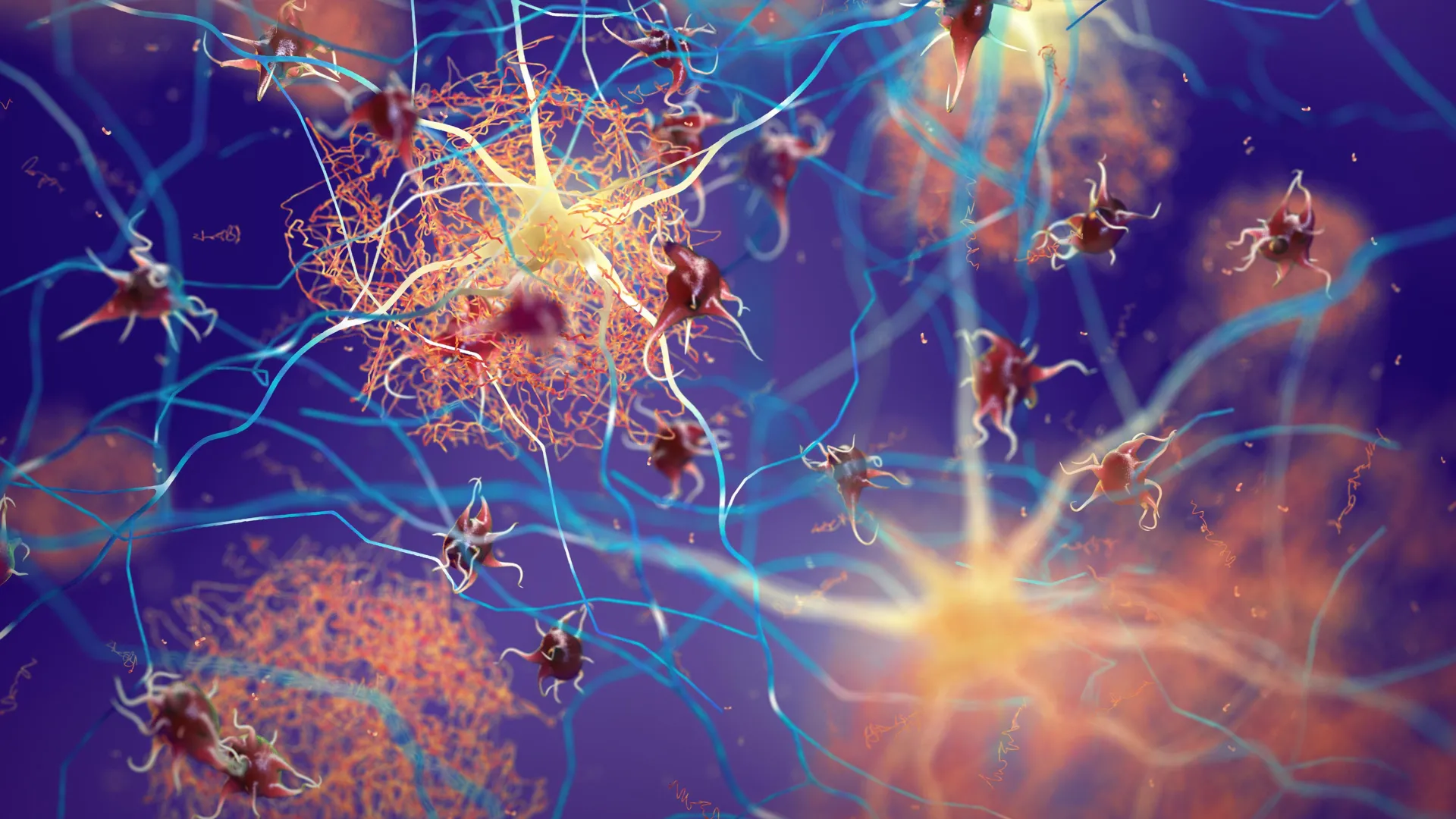
A research team at the Federal University of ABC (UFABC) in Brazil has developed a novel molecule that demonstrates significant potential in reversing symptoms associated with Alzheimer’s disease in rats. This breakthrough, announced on November 19, 2025, involves a compound that effectively breaks down beta-amyloid plaques by targeting excess copper in the brain, leading to restored memory and reduced inflammation.
Utilizing a combination of advanced computer modeling, laboratory tests, and animal experiments, the researchers have shown that their compound not only protects the brain but also crosses the blood-brain barrier, making it a viable candidate for human trials. The team is actively seeking partnerships with pharmaceutical companies to advance toward clinical testing.
Mechanism of Action: Targeting Copper
The findings, published in the journal ACS Chemical Neuroscience, reveal that the molecule acts as a copper chelator. By binding to excess copper found in beta-amyloid plaques, this compound aids in degrading these toxic structures, which are known to contribute to the cognitive decline seen in Alzheimer’s patients.
Research indicates that copper ions play a crucial role in the aggregation of beta-amyloid plaques, and dysregulation of copper homeostasis can exacerbate the condition. Giselle Cerchiaro, a professor at UFABC and lead researcher, stated, “About a decade ago, international studies began to point to the influence of copper ions as an aggregator of beta-amyloid plaques. Thus, the regulation of copper homeostasis has become one of the focuses for the treatment of Alzheimer’s.”
Development and Testing of the Compound
The research team synthesized ten candidate molecules, with three advancing to in vivo testing in rats with induced Alzheimer’s disease. One compound, in particular, exhibited strong efficacy and safety profiles, forming the basis for the doctoral thesis of Mariana L. M. Camargo, along with the master’s work of Giovana Bertazzo and the undergraduate project of Augusto Farias. Collaborators from the Federal University of São Carlos (UFSCar), led by Kleber Thiago de Oliveira, contributed to the synthesis of one of the key compounds.
In the rat experiments, the treated animals displayed improvements in neuroinflammation and oxidative stress levels. They also showed notable enhancements in spatial navigation and memory tasks. Biochemical analyses confirmed a reversal in beta-amyloid plaque patterns, providing a promising indication of the compound’s potential impact on brain health.
Looking Forward: A Cost-Effective Alternative
With approximately 50 million people globally affected by Alzheimer’s disease and current treatment options often limited and costly, this new molecule could represent a significant advancement in therapy. Current drugs tend to focus on symptom management rather than addressing underlying causes, and many rely on expensive monoclonal antibodies.
The UFABC research team has already filed a patent application for their discovery and is eager to secure industry partnerships to initiate human trials. Cerchiaro emphasized the implications of their work, stating, “It’s an extremely simple, safe, and effective molecule. The compound we’ve developed is much less expensive than available drugs. Therefore, even if it only works for part of the population, it would represent a huge advance over current options.”
As the team moves forward, the medical community watches closely, hopeful that this innovative approach could lead to a breakthrough in the fight against Alzheimer’s disease.

Cosmic Mystery Deepens: Where Are the Universe’s Defects?

Lady Bulldogs Shine in Postseason Awards Following Final Four Run

CALV Hosts Essential Class for Local Real Estate Professionals

Urgent Alert: “Spaving” Surges as Shoppers Overspend Online

Jefferies Initiates Coverage on Insmed with “Buy” Rating

Three Dog Night to Perform with Ambrosia at Mayo Civic Center

Urgent Announcement: Charles M. Payment Passes Away at 78

Houston Education Foundation Donates $4,592 for Student Programs

Beeks Financial Cloud Shares Drop 7% Amid Increased Trading Volume

Foreign Inflows into Japan Stocks Surge to ¥1.34 Trillion

University of Hawaiʻi Joins $25.6M AI Project to Monitor Disasters

Sydney Sweeney Embraces Body Positivity Amid Hollywood Challenges

Hudson Williams Gains Popularity as Breakout Star on Heated Rivalry

Urgent Farewell: Joleen Chaney Leaves Legacy at KFOR

Boeing’s Merger with McDonnell Douglas: A Strategic Move Explained

$1.25M Grant Advances Hawaiʻi’s Real-Time Hazard Monitoring

Derrick Dove and ABAC Band Set for Free Americana Concert

BOYNEXTDOOR’s Jaehyun Faces Backlash Amid BTS-TWICE Controversy
-
Business7 months ago
Foreign Inflows into Japan Stocks Surge to ¥1.34 Trillion
-
Science7 months ago
University of Hawaiʻi Joins $25.6M AI Project to Monitor Disasters
-
 Entertainment7 months ago
Sydney Sweeney Embraces Body Positivity Amid Hollywood Challenges
-
 Entertainment5 months ago
Hudson Williams Gains Popularity as Breakout Star on Heated Rivalry
-
 Top Stories6 months ago
Urgent Farewell: Joleen Chaney Leaves Legacy at KFOR
-
 World7 months ago
Boeing’s Merger with McDonnell Douglas: A Strategic Move Explained
-
 Science5 months ago
$1.25M Grant Advances Hawaiʻi’s Real-Time Hazard Monitoring
-
 Entertainment6 months ago
Derrick Dove and ABAC Band Set for Free Americana Concert
-
 Top Stories7 months ago
BOYNEXTDOOR’s Jaehyun Faces Backlash Amid BTS-TWICE Controversy
-

 Health4 months ago
Bodybuilder Eugene Teo Transitions to Mindful Movement for Health
-

 Health4 months ago
Hartford’s Abandoned Tower Faces Growing Safety Concerns
-

 Top Stories5 months ago
National Coast Guard Museum Set to Open in 2027 After Funding Secured