
Health
AI Revolutionizes Cancer Screening at MUSC with New System

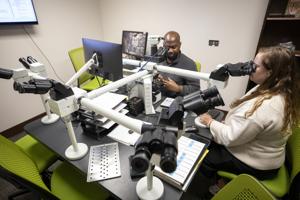
Artificial Intelligence is transforming cancer prevention efforts at the Medical University of South Carolina (MUSC) with the introduction of the Genius system. This innovative technology has become the first AI tool approved by the Food and Drug Administration (FDA) to assist in the analysis of cervical cancer screening tests.
The Genius system enhances the efficiency of reviewing Pap smear tests, which involve examining cell samples from the cervix for any cancerous or precancerous changes. Traditionally, this review process is conducted by trained cytologists who analyze slides using a microscope. With the introduction of this AI technology, MUSC aims to streamline the process, ultimately improving patient care.
AI’s Growing Role in Cancer Detection
While the adoption of AI in healthcare is slower than in other sectors, its integration is noticeably increasing. A recent study published in the *JAMA Health Forum* indicated that only 8.3 percent of healthcare businesses utilize AI, compared to 11.6 percent in finance and insurance, and over 23 percent in information services. Yet, the authors noted that “AI adoption in healthcare lags behind other sectors, it has been rapidly increasing since 2023.”
The U.S. Department of Health and Human Services recently unveiled its Artificial Intelligence Strategy, encouraging greater use of AI technology across various healthcare functions, from drug approvals at the FDA to Medicare claims processing. Deputy Secretary Jim O’Neill emphasized the commitment to advancing AI innovation to enhance patient outcomes.
AI has already shown significant promise in various areas, including mammography for breast cancer. Marylyn Ritchie, MUSC’s first chief artificial intelligence officer, highlighted how AI can expedite processes like segmentation in radiation therapy. This process, which typically takes weeks, could be reduced to hours, thus alleviating anxiety for patients awaiting treatment.
The Impact of Genius on Pap Smear Analysis
The Genius system is designed to improve the review of Pap smear slides, which can contain up to 100,000 cells. According to Dr. Jack Yang, director of the Cytopathology Section at MUSC, the AI software assists cytologists by identifying and organizing representative cells for review. This allows cytologists to focus on clinically relevant cells without extensive searches.
Each cytologist is subject to regulations set by the Clinical Laboratory Improvement Amendments (CLIA) of 1988, which limit the number of slides examined in a day to no more than 100. The Genius system enables the review of up to 400 slides in approximately two to three hours, effectively doubling the capacity for individual cytologists.
MUSC averages approximately 20,000 Pap smear tests annually, making the efficiency gained from the Genius system particularly vital. Patricia Houser, manager of cytopathology at MUSC, noted that the demand for Pap smears is increasing, yet the supply of trained cytologists is limited. The new system helps bridge this gap.
Despite these advancements, there remains a cautious approach to adopting AI technology fully. Concerns persist regarding the accuracy of AI in detecting abnormalities. Dr. Yang reassured that the abnormal detection rate of the Genius system aligns with previous years’ findings, providing a sense of reassurance for the staff and patients alike.
The integration of AI in healthcare is not without its challenges. Many healthcare professionals remain hesitant about fully trusting AI systems. Ritchie pointed out that this hesitance stems from the limited understanding of AI capabilities and a lack of successful case studies that demonstrate reliability.
Ultimately, while AI systems like Genius can significantly aid in cancer screening, human oversight remains crucial. Dr. Yang stated, “It will still take a human to ultimately make the call on what is cancerous or abnormal,” suggesting that while AI is a powerful tool, it is not yet ready to replace human expertise in diagnostics.
As the technology continues to evolve, the hope is that increased familiarity and successful outcomes will lead to greater acceptance among healthcare professionals, paving the way for even more innovative applications in the future.

Cosmic Mystery Deepens: Where Are the Universe’s Defects?

Lady Bulldogs Shine in Postseason Awards Following Final Four Run

CALV Hosts Essential Class for Local Real Estate Professionals

Urgent Alert: “Spaving” Surges as Shoppers Overspend Online

Jefferies Initiates Coverage on Insmed with “Buy” Rating

Three Dog Night to Perform with Ambrosia at Mayo Civic Center

Urgent Announcement: Charles M. Payment Passes Away at 78

Houston Education Foundation Donates $4,592 for Student Programs

Beeks Financial Cloud Shares Drop 7% Amid Increased Trading Volume

Foreign Inflows into Japan Stocks Surge to ¥1.34 Trillion

University of Hawaiʻi Joins $25.6M AI Project to Monitor Disasters

Sydney Sweeney Embraces Body Positivity Amid Hollywood Challenges

Hudson Williams Gains Popularity as Breakout Star on Heated Rivalry

Urgent Farewell: Joleen Chaney Leaves Legacy at KFOR

Boeing’s Merger with McDonnell Douglas: A Strategic Move Explained

$1.25M Grant Advances Hawaiʻi’s Real-Time Hazard Monitoring

Derrick Dove and ABAC Band Set for Free Americana Concert

BOYNEXTDOOR’s Jaehyun Faces Backlash Amid BTS-TWICE Controversy
-
Business9 months ago
Foreign Inflows into Japan Stocks Surge to ¥1.34 Trillion
-
Science8 months ago
University of Hawaiʻi Joins $25.6M AI Project to Monitor Disasters
-
 Entertainment9 months ago
Sydney Sweeney Embraces Body Positivity Amid Hollywood Challenges
-
 Entertainment7 months ago
Hudson Williams Gains Popularity as Breakout Star on Heated Rivalry
-
 Top Stories8 months ago
Urgent Farewell: Joleen Chaney Leaves Legacy at KFOR
-
 World9 months ago
Boeing’s Merger with McDonnell Douglas: A Strategic Move Explained
-
 Science7 months ago
$1.25M Grant Advances Hawaiʻi’s Real-Time Hazard Monitoring
-
 Entertainment8 months ago
Derrick Dove and ABAC Band Set for Free Americana Concert
-
 Top Stories9 months ago
BOYNEXTDOOR’s Jaehyun Faces Backlash Amid BTS-TWICE Controversy
-

 Health6 months ago
Bodybuilder Eugene Teo Transitions to Mindful Movement for Health
-

 World6 months ago
San Francisco Airport to Host 16 Nonstop Airlines to Europe in 2026
-

 Top Stories7 months ago
National Coast Guard Museum Set to Open in 2027 After Funding Secured