
Business
Venezuela’s Hidden $60B Bitcoin Reserve Could Shake Markets

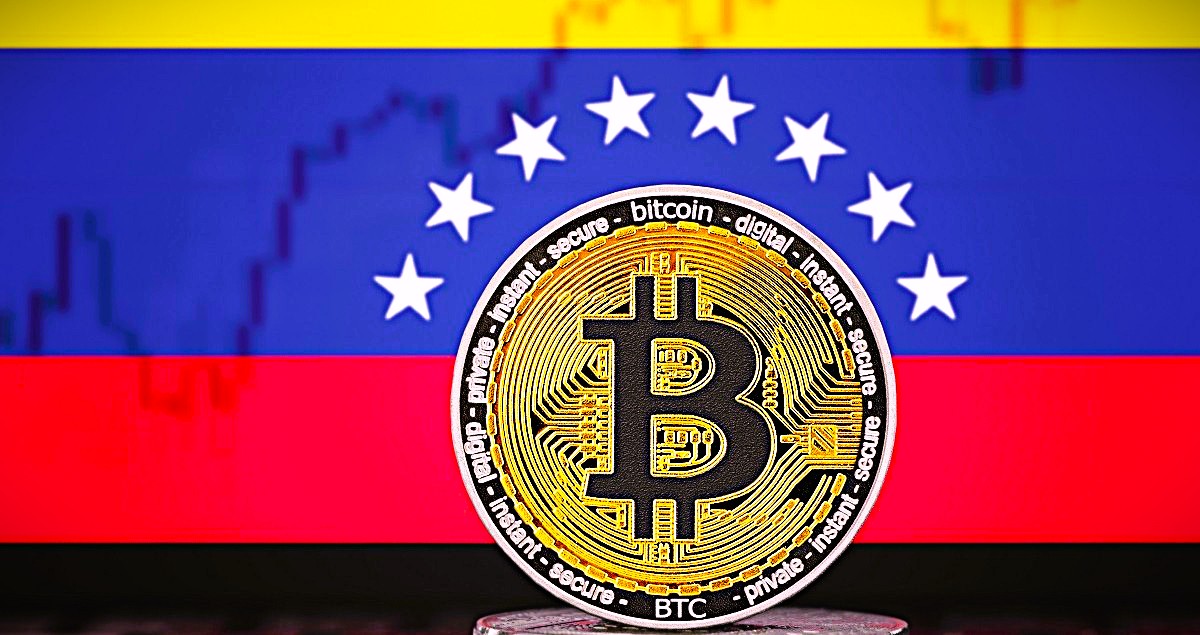
Recent intelligence reports indicate that Venezuela has amassed a substantial Bitcoin reserve valued at up to $60 billion. This revelation, if confirmed, could significantly impact Bitcoin supply and price volatility on a global scale. The potential effects could extend into 2026, as markets brace for the implications of such a large reserve.
According to research by Whale Hunting, authored by analysts Bradley Hope and Clara Preve, the Venezuelan government may have built a clandestine reserve of Bitcoin and stablecoins worth between $56 billion and $67 billion. The accumulation reportedly began around 2018 when Venezuela started liquidating gold from the Orinoco Mining Arc, converting part of the proceeds into Bitcoin. Estimates suggest that approximately $2 billion in gold may have been exchanged for Bitcoin at prices near $5,000, resulting in around 400,000 BTC. At projected early 2026 prices near $90,000, that portion alone would now be valued at about $36 billion.
As U.S. sanctions intensified, Venezuela reportedly began requiring oil buyers to settle transactions using USDT (Tether). Over time, intelligence suggests that some of this USDT was converted into Bitcoin to mitigate the risk of address freezes. Additional sources of cryptocurrency accumulation may include seized mining operations and crude-for-crypto arrangements established between 2023 and 2025. Combined estimates indicate that Venezuela may hold over 600,000 BTC, positioning it among the largest Bitcoin holders globally, alongside firms like BlackRock and MicroStrategy.
The implications of this reserve are profound for Bitcoin supply and prices. For context, when Germany sold 50,000 BTC in 2024, it triggered a 15% to 20% market correction. A reserve twelve times larger could lead to vastly different market dynamics. Analysts predict three possible outcomes regarding the seized assets:
1. **Frozen Assets**: The U.S. government could seize the Bitcoin, placing it under Treasury control, where it would be immobilized and unable to be sold or transferred.
2. **Strategic Reserve**: Alternatively, the U.S. may opt to retain the seized Bitcoin as a strategic reserve, which would likely support Bitcoin prices in the long term.
3. **Fire Sale**: The least likely scenario involves emergency liquidation, where the U.S. Department of Justice might quickly sell the assets through platforms such as Coinbase Prime or U.S. Marshals auctions.
The impact on cryptocurrency markets in 2026 could be significant. If the assets are frozen or maintained as a strategic reserve, this would effectively lock up a substantial portion of Bitcoin supply, resembling a long-term institutional hold. Such a development could support higher Bitcoin prices in the first quarter of 2026, despite potential short-term volatility.
While uncertainty typically leads to sharp price fluctuations, many analysts view this situation as structurally bullish for Bitcoin. Compared to traditional market reactions during conflicts, the potential influence of Venezuela may extend beyond oil, establishing a new paradigm in which Bitcoin plays a central role. As the global cryptocurrency market digests these developments, it may soon recognize the importance of Venezuela’s hidden Bitcoin reserve.

Cosmic Mystery Deepens: Where Are the Universe’s Defects?

Lady Bulldogs Shine in Postseason Awards Following Final Four Run

CALV Hosts Essential Class for Local Real Estate Professionals

Urgent Alert: “Spaving” Surges as Shoppers Overspend Online

Jefferies Initiates Coverage on Insmed with “Buy” Rating

Three Dog Night to Perform with Ambrosia at Mayo Civic Center

Urgent Announcement: Charles M. Payment Passes Away at 78

Houston Education Foundation Donates $4,592 for Student Programs

Beeks Financial Cloud Shares Drop 7% Amid Increased Trading Volume

Foreign Inflows into Japan Stocks Surge to ¥1.34 Trillion

University of Hawaiʻi Joins $25.6M AI Project to Monitor Disasters

Sydney Sweeney Embraces Body Positivity Amid Hollywood Challenges

Hudson Williams Gains Popularity as Breakout Star on Heated Rivalry

Urgent Farewell: Joleen Chaney Leaves Legacy at KFOR

Boeing’s Merger with McDonnell Douglas: A Strategic Move Explained

$1.25M Grant Advances Hawaiʻi’s Real-Time Hazard Monitoring

Derrick Dove and ABAC Band Set for Free Americana Concert

BOYNEXTDOOR’s Jaehyun Faces Backlash Amid BTS-TWICE Controversy
-
Business9 months ago
Foreign Inflows into Japan Stocks Surge to ¥1.34 Trillion
-
Science8 months ago
University of Hawaiʻi Joins $25.6M AI Project to Monitor Disasters
-
 Entertainment9 months ago
Sydney Sweeney Embraces Body Positivity Amid Hollywood Challenges
-
 Entertainment7 months ago
Hudson Williams Gains Popularity as Breakout Star on Heated Rivalry
-
 Top Stories8 months ago
Urgent Farewell: Joleen Chaney Leaves Legacy at KFOR
-
 World9 months ago
Boeing’s Merger with McDonnell Douglas: A Strategic Move Explained
-
 Science7 months ago
$1.25M Grant Advances Hawaiʻi’s Real-Time Hazard Monitoring
-
 Entertainment8 months ago
Derrick Dove and ABAC Band Set for Free Americana Concert
-
 Top Stories9 months ago
BOYNEXTDOOR’s Jaehyun Faces Backlash Amid BTS-TWICE Controversy
-

 Health6 months ago
Bodybuilder Eugene Teo Transitions to Mindful Movement for Health
-

 World6 months ago
San Francisco Airport to Host 16 Nonstop Airlines to Europe in 2026
-

 Top Stories7 months ago
National Coast Guard Museum Set to Open in 2027 After Funding Secured