
Business
Former McKinsey Consultant Embraces Startup Risks with AI Venture

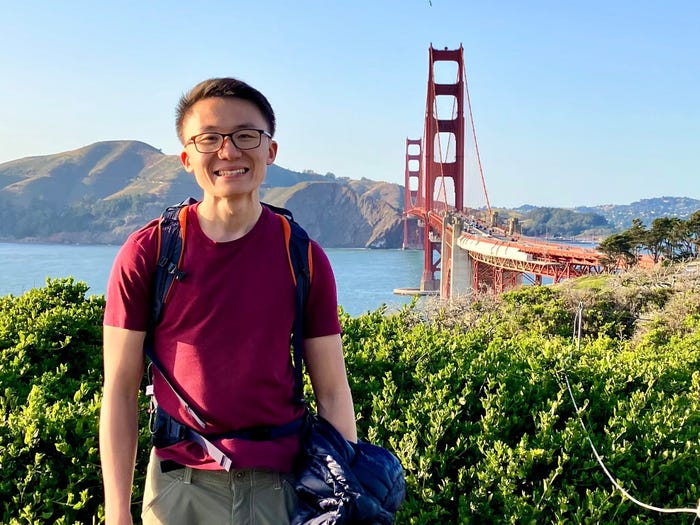
Nathan Wangliao, a former consultant at McKinsey, made the bold decision to transition into the startup world, ultimately launching his own AI company, Havana, based in Singapore. This shift, which began in 2021, has taught him valuable lessons about decision-making and risk-taking in a dynamic business environment.
After completing his university education, Wangliao joined McKinsey in the UK in 2018. During his nearly three-year tenure, he was inspired by colleagues from diverse backgrounds, including a former doctor and a veteran of the US Marines. These interactions motivated him to pursue different ventures beyond traditional consulting.
As the COVID-19 pandemic reshaped work culture, Wangliao found the remote environment at McKinsey less fulfilling. The camaraderie that he valued began to wane, leading him to reflect on his career path. He recognized a desire to create something of his own but hesitated to act during the uncertain times of the pandemic.
In 2021, at the age of 27, Wangliao left McKinsey to work at a Singapore-based AI startup, where he led the go-to-market strategy for two years. This transition involved moving from a large corporate office to a coworking space with just two colleagues. Initially, the uncertainty was daunting. He even considered returning to McKinsey, fearing that the startup might not survive.
The startup was eventually acquired in 2023, and Wangliao then co-founded Havana, which specializes in AI agents designed for student recruitment and enrollment teams. The journey has been marked by a significant focus on managing his own psychology, which he considers a crucial aspect of startup success. He explains that the real challenge lies not in developing a product or sales strategy but in maintaining morale amidst uncertainty and distractions.
Wangliao emphasizes the importance of resilience, stating, “If you are able to manage your psychology, then you will have the morale to learn all these things.” He acknowledges that many individuals encounter moments of doubt, especially when comparing their entrepreneurial journey to others.
One of the essential skills Wangliao gained at McKinsey was the ability to navigate complex client environments. He learned how to efficiently run meetings and understand varying stakeholder needs, a skill that has proved beneficial in engaging with universities as clients at Havana.
While he values the organizational and structured approach he developed as a consultant, Wangliao also recognized the need to unlearn some habits. In consulting, he often relied heavily on data to make decisions. In contrast, the startup environment necessitated a more instinctive approach, where waiting for complete information can hinder progress.
Reflecting on his early days in the startup world, he recalls spending extensive time on customer interviews to identify pain points. This phase involved ambiguity and uncertainty, but as they began to build their product and acquire customers, a rhythm emerged, allowing him to become more comfortable with risk-taking and decision-making.
Additionally, Wangliao has found his voice as a leader. At McKinsey, he received feedback to be more vocal in meetings, a skill that has become essential in his current role as a non-technical co-founder. Engaging with customers daily requires him to express clear opinions and insights confidently.
The experience of transitioning from a prominent consulting firm to the uncertain yet exhilarating world of startups has reshaped Nathan Wangliao’s professional identity. His journey illustrates the blend of risk and opportunity that defines entrepreneurship, particularly in the fast-evolving field of artificial intelligence.

Cosmic Mystery Deepens: Where Are the Universe’s Defects?

Lady Bulldogs Shine in Postseason Awards Following Final Four Run

CALV Hosts Essential Class for Local Real Estate Professionals

Urgent Alert: “Spaving” Surges as Shoppers Overspend Online

Jefferies Initiates Coverage on Insmed with “Buy” Rating

Three Dog Night to Perform with Ambrosia at Mayo Civic Center

Urgent Announcement: Charles M. Payment Passes Away at 78

Houston Education Foundation Donates $4,592 for Student Programs

Beeks Financial Cloud Shares Drop 7% Amid Increased Trading Volume

Foreign Inflows into Japan Stocks Surge to ¥1.34 Trillion

University of Hawaiʻi Joins $25.6M AI Project to Monitor Disasters

Sydney Sweeney Embraces Body Positivity Amid Hollywood Challenges

Hudson Williams Gains Popularity as Breakout Star on Heated Rivalry

Urgent Farewell: Joleen Chaney Leaves Legacy at KFOR

Boeing’s Merger with McDonnell Douglas: A Strategic Move Explained

$1.25M Grant Advances Hawaiʻi’s Real-Time Hazard Monitoring

Derrick Dove and ABAC Band Set for Free Americana Concert

BOYNEXTDOOR’s Jaehyun Faces Backlash Amid BTS-TWICE Controversy
-
Business9 months ago
Foreign Inflows into Japan Stocks Surge to ¥1.34 Trillion
-
Science8 months ago
University of Hawaiʻi Joins $25.6M AI Project to Monitor Disasters
-
 Entertainment9 months ago
Sydney Sweeney Embraces Body Positivity Amid Hollywood Challenges
-
 Entertainment7 months ago
Hudson Williams Gains Popularity as Breakout Star on Heated Rivalry
-
 Top Stories8 months ago
Urgent Farewell: Joleen Chaney Leaves Legacy at KFOR
-
 World9 months ago
Boeing’s Merger with McDonnell Douglas: A Strategic Move Explained
-
 Science7 months ago
$1.25M Grant Advances Hawaiʻi’s Real-Time Hazard Monitoring
-
 Entertainment8 months ago
Derrick Dove and ABAC Band Set for Free Americana Concert
-
 Top Stories9 months ago
BOYNEXTDOOR’s Jaehyun Faces Backlash Amid BTS-TWICE Controversy
-

 Health6 months ago
Bodybuilder Eugene Teo Transitions to Mindful Movement for Health
-

 World6 months ago
San Francisco Airport to Host 16 Nonstop Airlines to Europe in 2026
-

 Top Stories7 months ago
National Coast Guard Museum Set to Open in 2027 After Funding Secured