
Business
Mitchell City Council Approves New Property Tax Incentive Districts

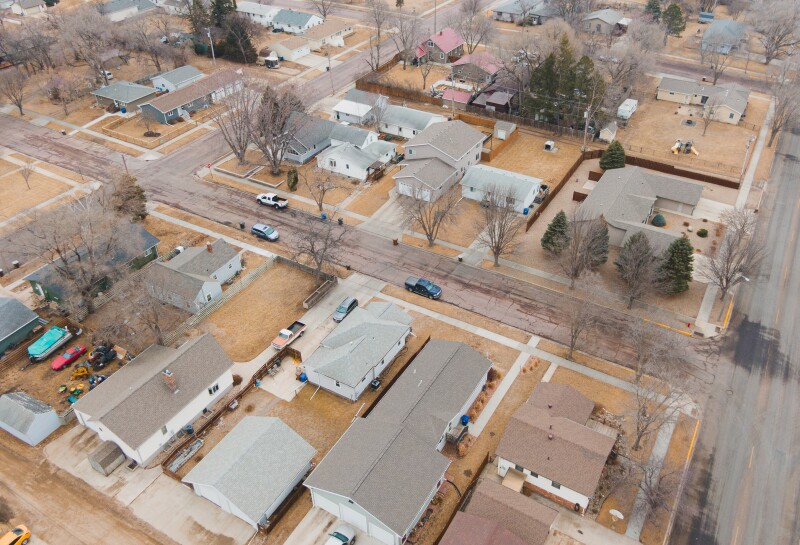
The Mitchell City Council has taken a significant step toward revitalizing blighted areas by approving the first reading of an ordinance that creates new property tax incentive districts. Despite this progress, there are concerns about the lack of redevelopment activity within the county.
During its regular meeting on January 5, 2024, the council voted in favor of establishing three redevelopment neighborhood districts for discretionary formula purposes. These districts are specifically designed to address areas deemed blighted, with the aim of encouraging property improvements and renovations. The administration of these property tax incentives will be handled by the Davison County Department of Equalization.
City Attorney Justin Johnson explained that many structures within the designated areas meet the state’s definition of blighted, which generally requires properties to show signs of disrepair or to be of a certain age. Johnson emphasized the necessity of creating multiple districts rather than a single, all-encompassing one, stating, “You can’t just make one district that covers the whole town because everything doesn’t fall into that category.”
The new ordinance effectively repeals an earlier redevelopment district and replaces it with the proposed three districts, which will encompass a broader range of older residential structures in the downtown core of Mitchell.
Despite the council’s efforts, there has been little to no uptake of previous tax incentives. Leah Vissia, director of the Davison County Department of Equalization, reported that her office has not observed any redevelopment activities following the approval of a similar district in 2023. County Assessor Jared Olsen expressed skepticism regarding future developments, stating, “I don’t think it’s going to generate anything. If people are going to build it, they’re going to build it when they can afford it.”
The new discretionary formula requires property improvements to result in an increase of at least $5,000 in assessed value. The tax incentive, which applies to renovations that enhance property value, is structured to gradually reduce the tax burden over five years. For example, the first year would see a tax rate of 20% on the added value, climbing to full taxation by the fifth year.
Vissia clarified that the formula is about the assessed value rather than the actual cost of improvements. “It isn’t what you spent. It’s the value that we put on it,” she noted. She acknowledged that while the discretionary formula is intended to motivate property owners to undertake renovations, many might still hesitate to start projects due to economic constraints.
Property owners do not need to submit applications to benefit from the discretionary formula; the Department of Equalization automatically assesses eligible properties based on building permits and annual evaluations. However, only completed structures qualify for the tax incentive, meaning ongoing projects will not receive benefits until finished.
The newly established districts will encompass areas defined by boundaries from North Ohlman Street to Havens Avenue and portions of Charles Street, among others. Council member Mike Bathke inquired whether new constructions would qualify for the incentives, to which Johnson confirmed eligibility under the new guidelines.
City Administrator Stephanie Ellwein reiterated that while property taxes must still be paid, the discretionary formula only affects the additional value resulting from improvements. She also stated that the city does not require county approval for these districts, as they will be enacted within the city limits of Mitchell.
Vissia expressed concern that the city did not consult her office prior to establishing the districts, although officials are not legally obligated to do so. Both the Davison County Commission and the Mitchell City Council cannot dictate the price for the discretionary formula, which is established by state statute.
In conclusion, while the Mitchell City Council’s approval of new property tax incentive districts marks an effort to stimulate redevelopment, local officials remain cautious about the potential impact on property improvement activities within the county. The effectiveness of these incentives will ultimately depend on property owners’ willingness to invest in renovations amidst current economic challenges.

Cosmic Mystery Deepens: Where Are the Universe’s Defects?

Lady Bulldogs Shine in Postseason Awards Following Final Four Run

CALV Hosts Essential Class for Local Real Estate Professionals

Urgent Alert: “Spaving” Surges as Shoppers Overspend Online

Jefferies Initiates Coverage on Insmed with “Buy” Rating

Three Dog Night to Perform with Ambrosia at Mayo Civic Center

Urgent Announcement: Charles M. Payment Passes Away at 78

Houston Education Foundation Donates $4,592 for Student Programs

Beeks Financial Cloud Shares Drop 7% Amid Increased Trading Volume

Foreign Inflows into Japan Stocks Surge to ¥1.34 Trillion

University of Hawaiʻi Joins $25.6M AI Project to Monitor Disasters

Sydney Sweeney Embraces Body Positivity Amid Hollywood Challenges

Hudson Williams Gains Popularity as Breakout Star on Heated Rivalry

Urgent Farewell: Joleen Chaney Leaves Legacy at KFOR

Boeing’s Merger with McDonnell Douglas: A Strategic Move Explained

$1.25M Grant Advances Hawaiʻi’s Real-Time Hazard Monitoring

Derrick Dove and ABAC Band Set for Free Americana Concert

BOYNEXTDOOR’s Jaehyun Faces Backlash Amid BTS-TWICE Controversy
-
Business9 months ago
Foreign Inflows into Japan Stocks Surge to ¥1.34 Trillion
-
Science9 months ago
University of Hawaiʻi Joins $25.6M AI Project to Monitor Disasters
-
 Entertainment9 months ago
Sydney Sweeney Embraces Body Positivity Amid Hollywood Challenges
-
 Entertainment8 months ago
Hudson Williams Gains Popularity as Breakout Star on Heated Rivalry
-
 Top Stories9 months ago
Urgent Farewell: Joleen Chaney Leaves Legacy at KFOR
-
 World9 months ago
Boeing’s Merger with McDonnell Douglas: A Strategic Move Explained
-
 Science8 months ago
$1.25M Grant Advances Hawaiʻi’s Real-Time Hazard Monitoring
-
 Entertainment8 months ago
Derrick Dove and ABAC Band Set for Free Americana Concert
-
 Top Stories9 months ago
BOYNEXTDOOR’s Jaehyun Faces Backlash Amid BTS-TWICE Controversy
-

 Health6 months ago
Bodybuilder Eugene Teo Transitions to Mindful Movement for Health
-

 World7 months ago
San Francisco Airport to Host 16 Nonstop Airlines to Europe in 2026
-

 Top Stories7 months ago
National Coast Guard Museum Set to Open in 2027 After Funding Secured