
Health
Transform Your Core: A Week of Flutter Kicks Surprised Me

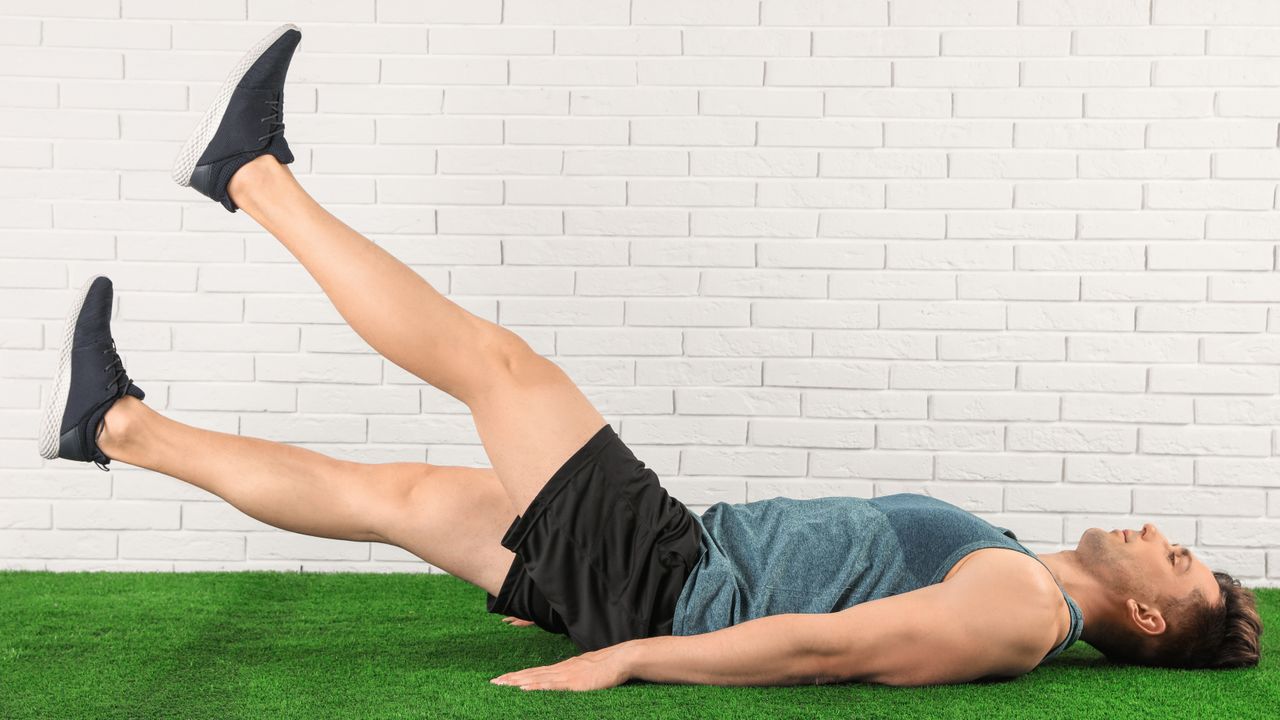
A week-long experiment with flutter kicks has revealed surprising results for core strength and awareness. The challenge, initiated by my editor, required daily engagement with this core exercise, which involved raising straight legs and fluttering them while lying on the ground. Initially perceived as a gentle start to the exercise year, the reality proved to be quite different.
The flutter kick, while technically simple, engages various core muscles effectively. To perform it, one lies flat on their back, lifts their legs around eight inches off the ground, and alternates kicking them up and down. The intention is to maintain pressure on the lower back against the floor, a crucial aspect that enhances the exercise’s effectiveness. Although the movement may seem straightforward, the effort required quickly became apparent, especially for the lower core and the rectus abdominus, commonly referred to as the six-pack muscle.
The Challenge Begins
On the first day, I approached the flutter kick with optimism, completing three sets of 30 seconds. Surprisingly, I felt little strain, leading me to question if I was executing the movement correctly. The instruction to “move your legs up and down” seemed too simple, prompting me to slow down my pace on day two. This shift transformed the exercise from easy to challenging; I struggled during a 45-second set, culminating in actual grunting as I fought to keep my heels from touching the ground.
Day three introduced notable changes. Despite only performing the move for two and a half minutes, I felt newfound engagement in my lower abdominal muscles. This awareness extended beyond the workout; I noticed improved posture at my desk. The flutter kick had begun to impact my daily life positively.
Core Strength and Overall Health
Various exercises, such as the hollow hold, dead bug, scissor kicks, and leg raises, effectively target the lower core, but flutter kicks stand out. Throughout the week, I noted muscle engagement spanning from my hips to my sternum. Each set intensified as I strategically pressed my lower back into the floor while performing the kicks.
By day four, I increased my sets to one minute each, with 30 seconds of rest. Unlike other fitness challenges, progress plateaued by the final day, where I remained at three sets of one minute. As I neared the end of each set, I found myself glancing at my timer, eager for the alarm to signal the completion of my workout.
The flutter kick is deceptively simple yet incredibly effective. It also works the hip flexors and quadriceps, but the primary focus remains on the core. For anyone looking to enhance core stability, posture, and overall health, incorporating flutter kicks into your routine is advisable.
This exercise serves as a reminder that core strength is essential for good health, with the added bonus of aesthetic benefits. However, achieving those results requires a holistic approach that includes proper nutrition, cardiovascular exercise, and genetics. The flutter kick challenge proved not only effective but also enlightening, encouraging a focus on core health that extends beyond the gym.
For those looking to bolster their fitness regimen, flutter kicks provide an engaging and impactful option. As I reflect on my week of fluttering, I’m convinced that this simple movement is worth integrating into any fitness routine.

Cosmic Mystery Deepens: Where Are the Universe’s Defects?

Lady Bulldogs Shine in Postseason Awards Following Final Four Run

CALV Hosts Essential Class for Local Real Estate Professionals

Urgent Alert: “Spaving” Surges as Shoppers Overspend Online

Jefferies Initiates Coverage on Insmed with “Buy” Rating

Three Dog Night to Perform with Ambrosia at Mayo Civic Center

Urgent Announcement: Charles M. Payment Passes Away at 78

Houston Education Foundation Donates $4,592 for Student Programs

Beeks Financial Cloud Shares Drop 7% Amid Increased Trading Volume

Foreign Inflows into Japan Stocks Surge to ¥1.34 Trillion

University of Hawaiʻi Joins $25.6M AI Project to Monitor Disasters

Sydney Sweeney Embraces Body Positivity Amid Hollywood Challenges

Hudson Williams Gains Popularity as Breakout Star on Heated Rivalry

Urgent Farewell: Joleen Chaney Leaves Legacy at KFOR

Boeing’s Merger with McDonnell Douglas: A Strategic Move Explained

$1.25M Grant Advances Hawaiʻi’s Real-Time Hazard Monitoring

Derrick Dove and ABAC Band Set for Free Americana Concert

BOYNEXTDOOR’s Jaehyun Faces Backlash Amid BTS-TWICE Controversy
-
Business9 months ago
Foreign Inflows into Japan Stocks Surge to ¥1.34 Trillion
-
Science8 months ago
University of Hawaiʻi Joins $25.6M AI Project to Monitor Disasters
-
 Entertainment9 months ago
Sydney Sweeney Embraces Body Positivity Amid Hollywood Challenges
-
 Entertainment7 months ago
Hudson Williams Gains Popularity as Breakout Star on Heated Rivalry
-
 Top Stories8 months ago
Urgent Farewell: Joleen Chaney Leaves Legacy at KFOR
-
 World9 months ago
Boeing’s Merger with McDonnell Douglas: A Strategic Move Explained
-
 Science7 months ago
$1.25M Grant Advances Hawaiʻi’s Real-Time Hazard Monitoring
-
 Entertainment8 months ago
Derrick Dove and ABAC Band Set for Free Americana Concert
-
 Top Stories9 months ago
BOYNEXTDOOR’s Jaehyun Faces Backlash Amid BTS-TWICE Controversy
-

 Health6 months ago
Bodybuilder Eugene Teo Transitions to Mindful Movement for Health
-

 World6 months ago
San Francisco Airport to Host 16 Nonstop Airlines to Europe in 2026
-

 Top Stories7 months ago
National Coast Guard Museum Set to Open in 2027 After Funding Secured