
Science
Researchers Uncover Secrets of Armenia’s Ancient Dragon Stones

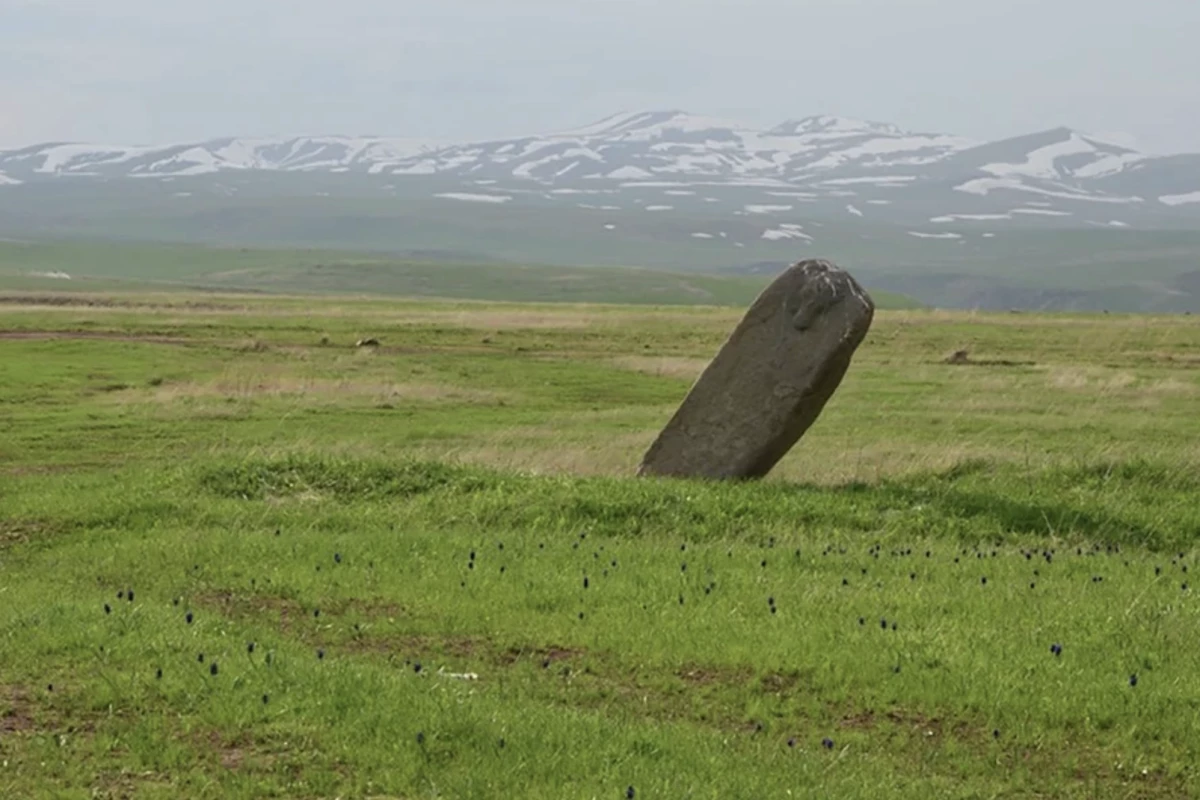
Archeologists have made significant progress in understanding the origins of Armenia’s ancient “dragon stones,” known as vishaps. These massive carved monoliths, estimated to be around 6,000 years old, are situated across high-altitude volcanic slopes and pastures where no ancient settlements have been identified. Recent research conducted by Yerevan State University and the Institute of Archaeology and Ethnography offers the first comprehensive statistical and spatial analysis of 115 known dragon stones, suggesting they were not mere territorial markers or mythological symbols, but part of a sophisticated early “water cult.”
The findings indicate that these monuments were strategically placed near water sources, such as melting snow streams and alpine springs, to reflect the cultural significance of water in the lives of ancient herding societies. The debate surrounding the purpose of the dragon stones has persisted since their study began in the 20th century, but this new analysis sheds light on their true meaning and function.
Insights from Radiocarbon Dating and Landscape Analysis
Each dragon stone is characterized by its polished surfaces, with all faces carefully carved except for the “tail” end, hinting at their original upright positioning. The research team noted, “The majority of vishaps are either collapsed or placed horizontally on the ground. However, all three typological groups of vishaps exhibit carving and polishing on all faces, with the ‘tail’ invariably left uncarved.” This consistent feature strongly suggests that they were initially erected in a vertical stance.
Using techniques such as radiocarbon dating, elevation mapping, and assessments of the stones’ typology, researchers identified two distinct altitude bands where the vishaps are located: approximately 1,900 m (6,200 ft) and 2,700 m (8,900 ft). These elevations correlate with different phases of the annual herding cycle and showcase varying environmental conditions.
Rather than placing the heaviest stones in more accessible lower areas, the builders transported these massive monoliths into the challenging mountainous terrain. The researchers emphasize that this required intense coordination and effort, particularly within the limited timeframe when the area was free of snow.
At the higher elevations, where natural springs are abundant and snowmelt flows down to the valleys, fish-shaped imagery dominates the stones. Conversely, lower elevations, where water management was crucial for agriculture, feature more cow-hide-shaped stones. This pattern aligns with the seasonal movement of both people and livestock in search of water.
Ritual Significance and Cultural Insights
The researchers argue that the placement of the vishaps, coupled with the immense effort required to move them, signifies their ritual importance. The correlation between the stones and water sources, their polished appearances, and their strategic locations in harsh alpine zones point to a widespread belief system in which water was revered. The analysis posits that these monoliths served as totems to commemorate and protect the sacred nature of water.
Radiocarbon dating from the key archaeological site of Tirinkatar on Mount Aragats indicates that some stones date back to between 4200-4000 BCE. This finding suggests that the water-centric rituals emerged during the Chalcolithic period, predating megalithic constructions like Stonehenge by over a millennium.
Researchers clarify that the vishaps diverge from other megalithic sites due to their focus on the behavior of water rather than geometric alignments. The act of positioning a carved monolith at a spring exemplified reverence and protection for this essential resource.
Their analysis revealed that the construction of these stones was a labor-intensive endeavor, likely supported by communal or spiritual guidance. The researchers noted, “The first statistical analysis of their elevation distribution and size reveals that their construction was intentionally labor-intensive rather than arbitrary.”
In summation, this study presents a compelling case for the origins of the dragon stones, establishing them as integral components of a prehistoric water cult. The presence of these monuments in high altitudes underscores significant cultural motivations, offering valuable insights into the social structures that influenced ancient Armenian communities.

Cosmic Mystery Deepens: Where Are the Universe’s Defects?

Lady Bulldogs Shine in Postseason Awards Following Final Four Run

CALV Hosts Essential Class for Local Real Estate Professionals

Urgent Alert: “Spaving” Surges as Shoppers Overspend Online

Jefferies Initiates Coverage on Insmed with “Buy” Rating

Three Dog Night to Perform with Ambrosia at Mayo Civic Center

Urgent Announcement: Charles M. Payment Passes Away at 78

Houston Education Foundation Donates $4,592 for Student Programs

Beeks Financial Cloud Shares Drop 7% Amid Increased Trading Volume

Foreign Inflows into Japan Stocks Surge to ¥1.34 Trillion

University of Hawaiʻi Joins $25.6M AI Project to Monitor Disasters

Sydney Sweeney Embraces Body Positivity Amid Hollywood Challenges

Hudson Williams Gains Popularity as Breakout Star on Heated Rivalry

Urgent Farewell: Joleen Chaney Leaves Legacy at KFOR

Boeing’s Merger with McDonnell Douglas: A Strategic Move Explained

$1.25M Grant Advances Hawaiʻi’s Real-Time Hazard Monitoring

Derrick Dove and ABAC Band Set for Free Americana Concert

BOYNEXTDOOR’s Jaehyun Faces Backlash Amid BTS-TWICE Controversy
-
Business9 months ago
Foreign Inflows into Japan Stocks Surge to ¥1.34 Trillion
-
Science9 months ago
University of Hawaiʻi Joins $25.6M AI Project to Monitor Disasters
-
 Entertainment9 months ago
Sydney Sweeney Embraces Body Positivity Amid Hollywood Challenges
-
 Entertainment8 months ago
Hudson Williams Gains Popularity as Breakout Star on Heated Rivalry
-
 Top Stories9 months ago
Urgent Farewell: Joleen Chaney Leaves Legacy at KFOR
-
 World9 months ago
Boeing’s Merger with McDonnell Douglas: A Strategic Move Explained
-
 Science8 months ago
$1.25M Grant Advances Hawaiʻi’s Real-Time Hazard Monitoring
-
 Entertainment8 months ago
Derrick Dove and ABAC Band Set for Free Americana Concert
-
 Top Stories9 months ago
BOYNEXTDOOR’s Jaehyun Faces Backlash Amid BTS-TWICE Controversy
-

 Health6 months ago
Bodybuilder Eugene Teo Transitions to Mindful Movement for Health
-

 World6 months ago
San Francisco Airport to Host 16 Nonstop Airlines to Europe in 2026
-

 Top Stories7 months ago
National Coast Guard Museum Set to Open in 2027 After Funding Secured