
Science
Volcanic Eruptions Triggered Climate Crisis Preceding Black Death

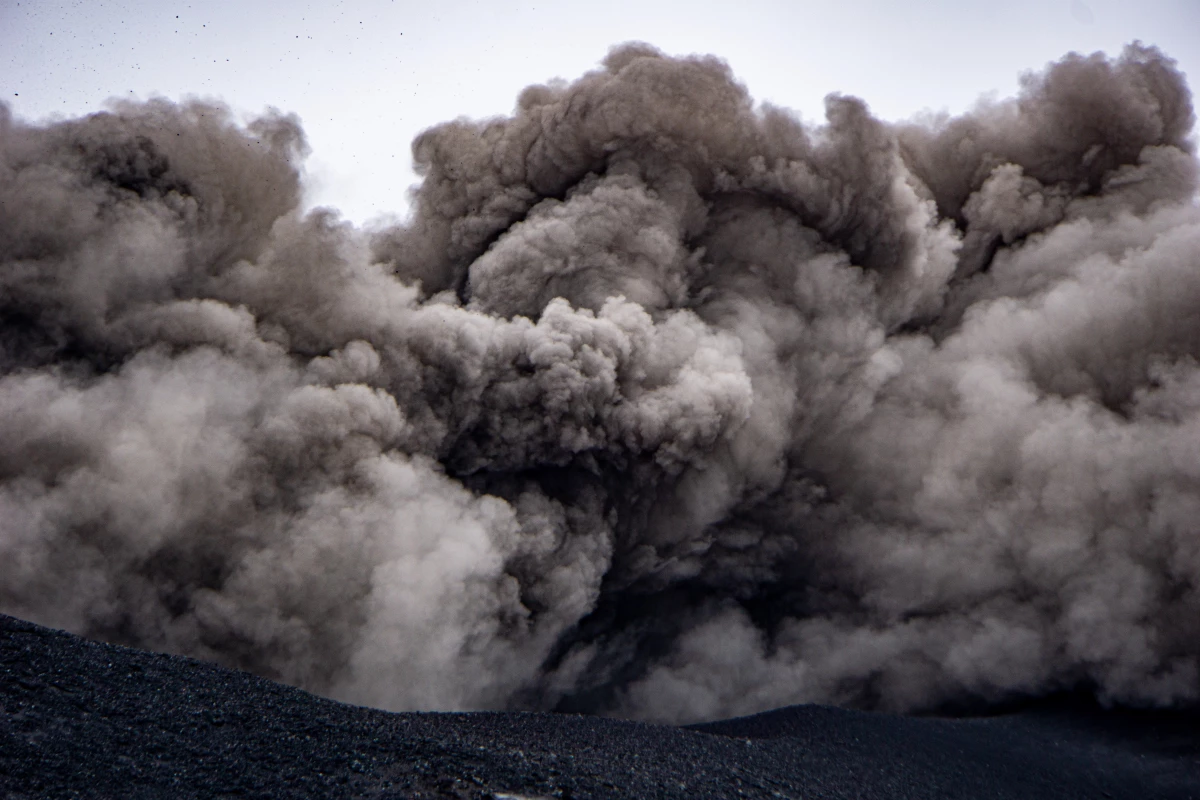
Researchers have uncovered a significant link between volcanic eruptions and the onset of the Black Death in Europe, providing insights into how environmental factors contributed to one of history’s most devastating pandemics. A study conducted by the University of Cambridge and the Leibniz Institute for the History and Culture of Eastern Europe (GWZO) in Leipzig suggests that a series of climatic shocks triggered by volcanic activity around 1345 set in motion the conditions that led to the plague’s arrival in Europe, which claimed tens of millions of lives between 1347 and 1353.
The research is groundbreaking as it combines high-resolution climate reconstructions with medieval records. It argues that the Black Death was not merely the result of a single pathogen but a complex interplay of environmental and human stressors, described by researchers as a “perfect storm.” Specifically, the study indicates that volcanic eruptions created several years of unusually cold and wet summers across southern Europe, severely impacting agriculture.
Professor Ulf Büntgen from Cambridge’s Department of Geography stated, “This is something I’ve wanted to understand for a long time. What were the drivers of the onset and transmission of the Black Death, and how unusual were they?” The findings illustrate how environmental conditions recorded in the distinct “blue rings” of tree trunks from the Spanish Pyrenees indicate a marked reduction in growth during 1345, 1346, and 1347.
Contemporary accounts from the period describe persistent cloudiness and dark lunar eclipses, further supporting the theory of significant volcanic activity. The adverse weather conditions led to widespread harvest failures across the Mediterranean region, prompting cities such as Venice, Genoa, and Pisa to activate their long-distance trade networks to secure grain from the Mongol territories near the Sea of Azov.
These trade routes, built over a century, were successful in preventing mass starvation but inadvertently facilitated the spread of the plague. Researchers believe that ships arriving with grain also transported fleas infected with the bacterium Yersinia pestis, which once disembarked in Mediterranean ports, transitioned from rodents to humans, igniting the first wave of the pandemic.
The research team examined the timeline by pairing environmental data with evidence of food-security systems and trade behavior before and after 1345. They discovered that cities forced to import grain during the climate-driven shortages were the same regions that experienced early and intense outbreaks of the Black Death. Conversely, major cities that did not rely on imports largely escaped the initial deadly wave.
“Many Italian cities, even large ones like Milan and Rome, were most probably not affected by the Black Death, apparently because they did not need to import grain after 1345,” noted Bauch. This climate-famine-grain connection has potential implications for understanding other plague waves throughout history.
The researchers emphasized that the Black Death was not instigated by a single factor but rather a combination of climatic, agricultural, trade, ecological, and human decision-making elements. This serves as an early example of how global systems can amplify biological risks, drawing parallels to contemporary issues such as the rapid spread of COVID-19.
As climate change continues to reshape ecosystems and threaten food security, the likelihood of zoonotic pathogens emerging and spreading through global trade networks is increasing. “Although the coincidence of factors that contributed to the Black Death seems rare, the probability of zoonotic diseases emerging under climate change and translating into pandemics is likely to increase in a globalized world,” Professor Büntgen explained.
The researchers advocate for modern pandemic risk assessments to incorporate knowledge from historical interactions between climate, disease, and society, even those from nearly 700 years ago. The Black Death not only decimated Europe’s population but profoundly altered the continent’s social and political landscape.
With mortality rates estimated at 30–50%, labor shortages allowed surviving workers to demand higher wages and greater mobility, accelerating the breakdown of feudal systems and diminishing the power of the elite class. Agricultural practices shifted and inheritance laws were transformed as vast amounts of property changed hands in a single generation.
The collapse of traditional authority also triggered religious upheaval, social unrest, and the eventual emergence of new institutions. In many regions, the demographic shock paved the way for substantial economic restructuring and urban growth, ultimately setting the stage for the Renaissance.
The findings were published in the journal Communications Earth & Environment.

Cosmic Mystery Deepens: Where Are the Universe’s Defects?

Lady Bulldogs Shine in Postseason Awards Following Final Four Run

CALV Hosts Essential Class for Local Real Estate Professionals

Urgent Alert: “Spaving” Surges as Shoppers Overspend Online

Jefferies Initiates Coverage on Insmed with “Buy” Rating

Three Dog Night to Perform with Ambrosia at Mayo Civic Center

Urgent Announcement: Charles M. Payment Passes Away at 78

Houston Education Foundation Donates $4,592 for Student Programs

Beeks Financial Cloud Shares Drop 7% Amid Increased Trading Volume

Foreign Inflows into Japan Stocks Surge to ¥1.34 Trillion

University of Hawaiʻi Joins $25.6M AI Project to Monitor Disasters

Sydney Sweeney Embraces Body Positivity Amid Hollywood Challenges

Hudson Williams Gains Popularity as Breakout Star on Heated Rivalry

Urgent Farewell: Joleen Chaney Leaves Legacy at KFOR

Boeing’s Merger with McDonnell Douglas: A Strategic Move Explained

$1.25M Grant Advances Hawaiʻi’s Real-Time Hazard Monitoring

Derrick Dove and ABAC Band Set for Free Americana Concert

BOYNEXTDOOR’s Jaehyun Faces Backlash Amid BTS-TWICE Controversy
-
Business9 months ago
Foreign Inflows into Japan Stocks Surge to ¥1.34 Trillion
-
Science9 months ago
University of Hawaiʻi Joins $25.6M AI Project to Monitor Disasters
-
 Entertainment9 months ago
Sydney Sweeney Embraces Body Positivity Amid Hollywood Challenges
-
 Entertainment8 months ago
Hudson Williams Gains Popularity as Breakout Star on Heated Rivalry
-
 Top Stories9 months ago
Urgent Farewell: Joleen Chaney Leaves Legacy at KFOR
-
 World9 months ago
Boeing’s Merger with McDonnell Douglas: A Strategic Move Explained
-
 Science8 months ago
$1.25M Grant Advances Hawaiʻi’s Real-Time Hazard Monitoring
-
 Entertainment8 months ago
Derrick Dove and ABAC Band Set for Free Americana Concert
-
 Top Stories9 months ago
BOYNEXTDOOR’s Jaehyun Faces Backlash Amid BTS-TWICE Controversy
-

 Health6 months ago
Bodybuilder Eugene Teo Transitions to Mindful Movement for Health
-

 World6 months ago
San Francisco Airport to Host 16 Nonstop Airlines to Europe in 2026
-

 Top Stories7 months ago
National Coast Guard Museum Set to Open in 2027 After Funding Secured