
Science
New Research Reveals Prairie Strips Boost Soil Health Rapidly

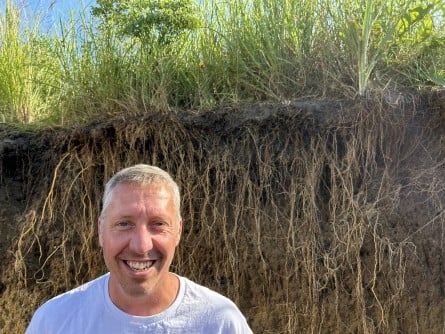
A recent study conducted by scientists at Iowa State University, in collaboration with the Soil Health Institute, has found that implementing prairie strips can lead to significant improvements in soil health within a surprisingly short time frame. These strips, consisting of 30-100 ft sections of perennial plants planted within agricultural fields, are designed to mimic the ecological benefits of Iowa’s native prairies while minimally impacting crop yields.
The findings, published in the September 2023 issue of the Journal of Soil and Water Conservation, demonstrate that prairie strips can enhance several key indicators of soil health in as little as 10 to 12 years. Specifically, the study showed that eight out of twelve soil health indicators improved significantly, with notable increases in soil aggregate stability, microbial biomass, soil organic matter, and maximum water-holding capacity.
Key Findings on Soil Health Indicators
The research revealed that soil aggregate stability, which measures the soil’s ability to resist erosion, improved by up to 80%. Additionally, microbial biomass, the mass of microscopic organisms crucial for nutrient cycling and carbon sequestration, increased by up to 54%. Soil organic matter, a vital component for healthy soil, saw an increase of up to 23%, while the soil’s maximum water-holding capacity improved by up to 7%.
Marshall McDaniel, an associate professor of agronomy at Iowa State and the study coordinator, expressed his excitement regarding the speed of these changes. “It was an exciting surprise to see the degree of these changes over just a decade or so,” he stated. He noted that the progress in soil organic matter and maximum water-holding capacity was particularly unexpected.
The study utilized a “paired chronoscope” approach, comparing 15 control and treatment sites where prairie strips ranged from 2 to 13 years old. These sites were selected from four of Iowa’s seven major landforms, and most were situated on private farmland. Researchers measured six aspects of soil health within the top six inches of soil, with a more comprehensive analysis conducted at the Neal Smith National Wildlife Refuge near Prairie City, Iowa.
Broader Implications for Agriculture
Cole Dutter, who completed his doctorate in sustainable agriculture and soil science as part of the project, was the lead author of the study. His research indicates that prairie strips not only enhance soil health but also positively impact microbial communities, extending their benefits into adjacent cropland. The study found that changes in microbial communities led to higher levels of enzymes that improve nutrient cycling and carbon storage, potentially increasing nutrient availability to crops.
Moreover, the prairie strips’ influence on soil moisture and nutrients extended up to 3 feet (approximately 1 meter) beyond the strips, all while maintaining minimal impacts on crop yields. These findings suggest that prairie strips can be an effective strategy for farmers looking to enhance soil health without sacrificing productivity.
Lisa Schulte Moore, director of ISU’s Bioeconomy Institute and a collaborator on the study, noted the interest among farmers in rotating prairie strips every ten years to maximize soil health benefits across their fields. She highlighted ongoing research into this rotation strategy and its potential for improving long-term soil health and crop yields.
As Dutter prepares to transition to a faculty position at California State University, Stanislaus, he plans to continue his investigation into prairie strips. “Our related projects show that prairie strips are a relatively quick way to build soil health in the top of the soil profile,” he commented. He emphasized the need for further research, particularly concerning the potential for deeper carbon storage in the soil profile.
The researchers also stressed that the methods used to measure soil health, particularly aggregate stability and water-holding capacity, are accessible to non-scientists. McDaniel pointed out that landowners can utilize simple, inexpensive techniques to assess soil health on their own properties after implementing management changes like prairie strips. For instance, aggregate stability can be measured using a smartphone app created by the Soil Health Institute, while maximum water-holding capacity can be assessed using basic household items.
Funding for this research was primarily provided by the Foundation for Food and Agriculture Research and the USDA Farm Service Agency, with additional support from the National Science Foundation and USDA Hatch funds. The study underscores the potential of prairie strips as a practical solution for enhancing soil health in agricultural settings.

Cosmic Mystery Deepens: Where Are the Universe’s Defects?

Lady Bulldogs Shine in Postseason Awards Following Final Four Run

CALV Hosts Essential Class for Local Real Estate Professionals

Urgent Alert: “Spaving” Surges as Shoppers Overspend Online

Jefferies Initiates Coverage on Insmed with “Buy” Rating

Three Dog Night to Perform with Ambrosia at Mayo Civic Center

Urgent Announcement: Charles M. Payment Passes Away at 78

Houston Education Foundation Donates $4,592 for Student Programs

Beeks Financial Cloud Shares Drop 7% Amid Increased Trading Volume

Foreign Inflows into Japan Stocks Surge to ¥1.34 Trillion

University of Hawaiʻi Joins $25.6M AI Project to Monitor Disasters

Sydney Sweeney Embraces Body Positivity Amid Hollywood Challenges

Hudson Williams Gains Popularity as Breakout Star on Heated Rivalry

Urgent Farewell: Joleen Chaney Leaves Legacy at KFOR

Boeing’s Merger with McDonnell Douglas: A Strategic Move Explained

$1.25M Grant Advances Hawaiʻi’s Real-Time Hazard Monitoring

Derrick Dove and ABAC Band Set for Free Americana Concert

BOYNEXTDOOR’s Jaehyun Faces Backlash Amid BTS-TWICE Controversy
-
Business9 months ago
Foreign Inflows into Japan Stocks Surge to ¥1.34 Trillion
-
Science9 months ago
University of Hawaiʻi Joins $25.6M AI Project to Monitor Disasters
-
 Entertainment9 months ago
Sydney Sweeney Embraces Body Positivity Amid Hollywood Challenges
-
 Entertainment7 months ago
Hudson Williams Gains Popularity as Breakout Star on Heated Rivalry
-
 Top Stories8 months ago
Urgent Farewell: Joleen Chaney Leaves Legacy at KFOR
-
 World9 months ago
Boeing’s Merger with McDonnell Douglas: A Strategic Move Explained
-
 Science7 months ago
$1.25M Grant Advances Hawaiʻi’s Real-Time Hazard Monitoring
-
 Entertainment8 months ago
Derrick Dove and ABAC Band Set for Free Americana Concert
-
 Top Stories9 months ago
BOYNEXTDOOR’s Jaehyun Faces Backlash Amid BTS-TWICE Controversy
-

 Health6 months ago
Bodybuilder Eugene Teo Transitions to Mindful Movement for Health
-

 World6 months ago
San Francisco Airport to Host 16 Nonstop Airlines to Europe in 2026
-

 Top Stories7 months ago
National Coast Guard Museum Set to Open in 2027 After Funding Secured