
Science
MIT Launches Innovative Manufacturing Education Program Nationwide

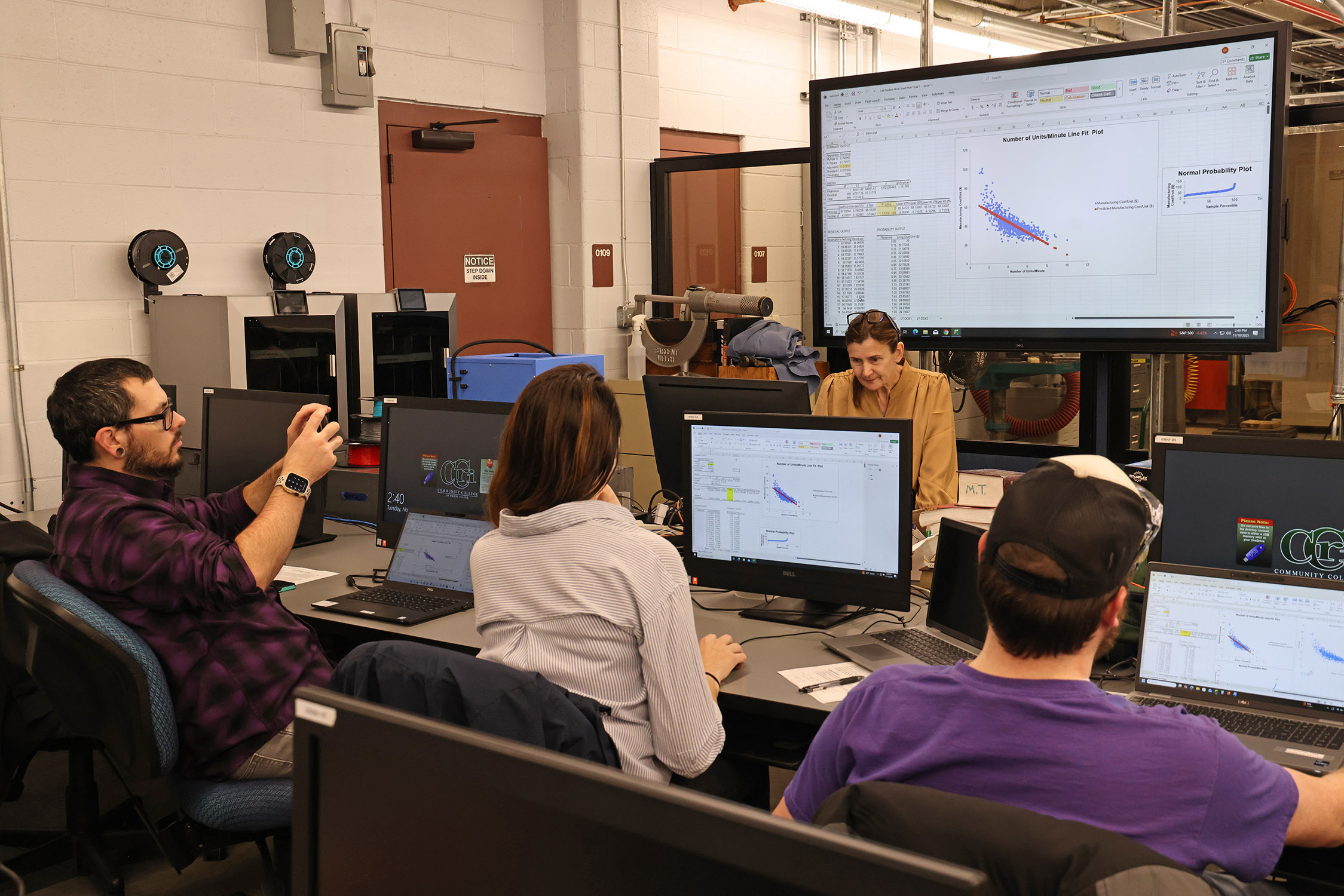
The Massachusetts Institute of Technology (MIT) has introduced a groundbreaking educational initiative aimed at enhancing U.S. manufacturing capabilities. This fall, the Institute launched the Technician Advanced Manufacturing Program (TechAMP), designed to equip workers with essential production skills. Funded by the U.S. Department of Defense, this program features a blend of in-person lab instruction, online lectures by MIT faculty, and interactive simulations, addressing the pressing need for a skilled manufacturing workforce.
TechAMP is structured as a 12-month certificate program, integrating hands-on training with theoretical knowledge. Participants will engage in capstone projects that tackle real manufacturing challenges, aiming to deliver tangible benefits for their companies. As John Liu, a principal research scientist at MIT’s Department of Mechanical Engineering and co-principal investigator of TechAMP, explained, “We think there’s a gap between the traditional worker categories of engineer and technician, and this technologist training fills it.” The program seeks to formalize the pathway to becoming a technologist, which could facilitate career advancement for workers and help firms cultivate a more capable workforce.
Collaborative Approach to Skill Development
Launched in collaboration with multiple institutions, including Ohio State University and the Community College of Rhode Island, TechAMP has already attracted more than 70 students in its inaugural cohort. Julie Diop, executive director of MIT’s Initiative for New Manufacturing (INM), emphasized the importance of reaching diverse learners through this initiative. TechAMP is a crucial component of INM, which aims to revitalize U.S. manufacturing, a mission highlighted by MIT President Sally A. Kornbluth during the initiative’s announcement in May 2025.
By collaborating with community colleges and industry partners, MIT aims to extend its reach beyond traditional educational boundaries. John Hart, head of the Department of Mechanical Engineering at MIT, stated, “We hope that the program equips manufacturing technologists to be innovators and problem-solvers in their organizations.” This approach not only enhances individual skills but also prepares firms to implement new technologies, improving overall productivity.
The TechAMP curriculum is built around a “hub-and-spoke” model. The hub focuses on fundamental manufacturing principles, including process controls, system understanding, leadership skills, and operations management. The spokes cover specialized areas such as mechatronics, automation programming, and digital manufacturing. This comprehensive framework ensures that students grasp essential concepts applicable across various manufacturing sectors.
Real-World Impact and Future Prospects
The capstone project aspect of TechAMP allows students to analyze challenges within their own firms, promoting direct value capture. As Diop put it, “That could be a form of impact — direct value capture for the firm.” The program is designed to require approximately 10 to 14 hours of work per week over the year, making it a manageable commitment for working professionals.
The response from the industry has been positive. Michael Trotta, CEO of Crystal Engineering, highlighted the necessity of high-skill manufacturing roles that do not require a four-year degree. He sees TechAMP as a vital step in developing a sustainable workforce. Trotta noted that the goal is to help workers transition from technician roles to technologists, enhancing their earning potential and enabling them to contribute more effectively to their organizations.
As the concept of the technologist gains traction, MIT is exploring partnerships with educational networks in manufacturing-centric states. The initiative has the potential to expand significantly, with additional manufacturers showing interest in aligning with TechAMP. Liu remarked on the enthusiasm surrounding the program, stating, “There’s been a lot of excitement so far, we think. And it’s coming from organizations and people who are eager to learn more.”
TechAMP represents a significant move towards bridging the skills gap in manufacturing. By fostering a new generation of technologists, MIT aims to redefine career pathways in the industry, ultimately contributing to the revitalization of American manufacturing.

Cosmic Mystery Deepens: Where Are the Universe’s Defects?

Lady Bulldogs Shine in Postseason Awards Following Final Four Run

CALV Hosts Essential Class for Local Real Estate Professionals

Urgent Alert: “Spaving” Surges as Shoppers Overspend Online

Jefferies Initiates Coverage on Insmed with “Buy” Rating

Three Dog Night to Perform with Ambrosia at Mayo Civic Center

Urgent Announcement: Charles M. Payment Passes Away at 78

Houston Education Foundation Donates $4,592 for Student Programs

Beeks Financial Cloud Shares Drop 7% Amid Increased Trading Volume

Foreign Inflows into Japan Stocks Surge to ¥1.34 Trillion

University of Hawaiʻi Joins $25.6M AI Project to Monitor Disasters

Sydney Sweeney Embraces Body Positivity Amid Hollywood Challenges

Hudson Williams Gains Popularity as Breakout Star on Heated Rivalry

Urgent Farewell: Joleen Chaney Leaves Legacy at KFOR

Boeing’s Merger with McDonnell Douglas: A Strategic Move Explained

$1.25M Grant Advances Hawaiʻi’s Real-Time Hazard Monitoring

Derrick Dove and ABAC Band Set for Free Americana Concert

BOYNEXTDOOR’s Jaehyun Faces Backlash Amid BTS-TWICE Controversy
-
Business9 months ago
Foreign Inflows into Japan Stocks Surge to ¥1.34 Trillion
-
Science9 months ago
University of Hawaiʻi Joins $25.6M AI Project to Monitor Disasters
-
 Entertainment9 months ago
Sydney Sweeney Embraces Body Positivity Amid Hollywood Challenges
-
 Entertainment7 months ago
Hudson Williams Gains Popularity as Breakout Star on Heated Rivalry
-
 Top Stories8 months ago
Urgent Farewell: Joleen Chaney Leaves Legacy at KFOR
-
 World9 months ago
Boeing’s Merger with McDonnell Douglas: A Strategic Move Explained
-
 Science7 months ago
$1.25M Grant Advances Hawaiʻi’s Real-Time Hazard Monitoring
-
 Entertainment8 months ago
Derrick Dove and ABAC Band Set for Free Americana Concert
-
 Top Stories9 months ago
BOYNEXTDOOR’s Jaehyun Faces Backlash Amid BTS-TWICE Controversy
-

 Health6 months ago
Bodybuilder Eugene Teo Transitions to Mindful Movement for Health
-

 World6 months ago
San Francisco Airport to Host 16 Nonstop Airlines to Europe in 2026
-

 Top Stories7 months ago
National Coast Guard Museum Set to Open in 2027 After Funding Secured