
World
Japan and Australia Call for Calm After Radar Incident with China

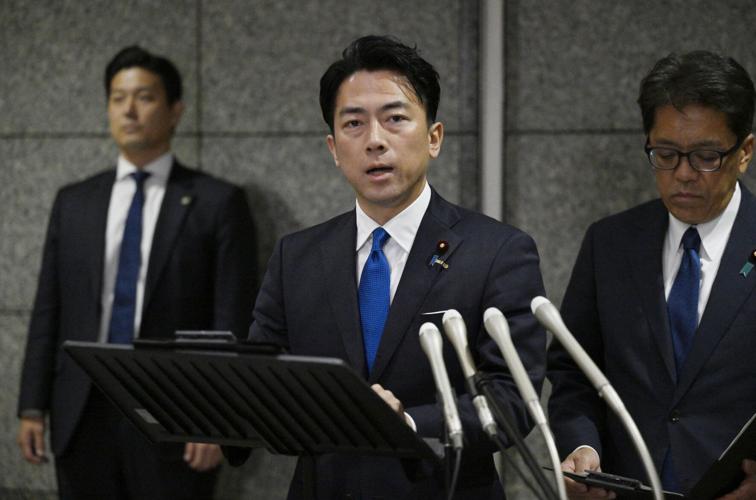
Japan and Australia have called for calm following an incident in which Chinese military aircraft locked radar onto Japanese fighter jets. This event occurred shortly after remarks by Japan’s Prime Minister, Sanae Takaichi, regarding Taiwan, which have heightened tensions between Tokyo and Beijing. On Sunday, Japanese Defense Minister Shinjiro Koizumi condemned the incident, labeling it “an extremely regrettable” act that posed risks to safe aircraft operations.
Koizumi stated that Japan had lodged a formal protest with China, demanding strict preventive measures against such occurrences. According to Japan’s Defense Ministry, a Chinese J-15 aircraft took off from the Chinese aircraft carrier Liaoning near the southern island of Okinawa on Saturday. The Chinese aircraft reportedly locked its radar on Japanese F-15 jets on two separate occasions, first for three minutes in the late afternoon and then for about 30 minutes in the evening. It remains unclear if the same J-15 was involved in both incidents.
Japanese fighter jets had been deployed to monitor Chinese aircraft conducting takeoff and landing exercises in the Pacific. Defense officials indicated that the Japanese jets maintained a safe distance and did not engage in any actions that could be perceived as provocative when the radar lock occurred. Fortunately, there were no breaches of Japanese airspace, and no injuries or damages were reported.
In response, Senior Colonel Wang Xuemeng, a spokesperson for the Chinese Navy, defended the flight training operations near Miyako Island. He stated that China had announced the exercises in advance and accused Japanese aircraft of harassment. Wang emphasized that China would take necessary measures to protect its security and interests, urging Japan to cease what he described as slanderous comments.
Tensions between Japan and China have been escalating since early November, when Prime Minister Takaichi suggested that Japan’s military could intervene if China acted against Taiwan, a self-governing island that Beijing claims. During a joint news conference following talks with Koizumi, Australian Defense Minister Richard Marles expressed concern over China’s recent actions, stating, “We are deeply concerned by the actions of China in the last 24 hours.” He reiterated Australia’s commitment to ensuring safe and professional interactions in the region and emphasized the importance of maintaining the status quo across the Taiwan Straits.
Japan and Australia have agreed to strengthen military ties as part of their regional defense cooperation strategy. The two defense ministers discussed forming a comprehensive framework for strategic defense coordination during their meeting in Tokyo. This partnership reflects Japan’s ongoing military buildup and its desire to expand defense ties beyond its traditional ally, the United States, with Australia now considered a semi-ally.
In related developments, Marles visited a Mitsubishi Heavy Industries shipyard in Nagasaki, where he observed the production of upgraded Mogami-class frigates, which Australia selected in September to replace its aging naval fleet.
The radar lock incident marks a significant moment in military interactions between Japan and China. Previously, in 2013, a Chinese warship targeted a radar on a Japanese destroyer, highlighting ongoing tensions in the region. In another related incident, the Philippine coast guard reported that Chinese forces fired three flares at a fisheries bureau plane patrolling the South China Sea, an area where China asserts control over disputed waters.
The situation remains fluid as Japan and Australia navigate their defense strategies amid increasing military activities in the region.

Cosmic Mystery Deepens: Where Are the Universe’s Defects?

Lady Bulldogs Shine in Postseason Awards Following Final Four Run

CALV Hosts Essential Class for Local Real Estate Professionals

Urgent Alert: “Spaving” Surges as Shoppers Overspend Online

Jefferies Initiates Coverage on Insmed with “Buy” Rating

Three Dog Night to Perform with Ambrosia at Mayo Civic Center

Urgent Announcement: Charles M. Payment Passes Away at 78

Houston Education Foundation Donates $4,592 for Student Programs

Beeks Financial Cloud Shares Drop 7% Amid Increased Trading Volume

Foreign Inflows into Japan Stocks Surge to ¥1.34 Trillion

University of Hawaiʻi Joins $25.6M AI Project to Monitor Disasters

Sydney Sweeney Embraces Body Positivity Amid Hollywood Challenges

Hudson Williams Gains Popularity as Breakout Star on Heated Rivalry

Urgent Farewell: Joleen Chaney Leaves Legacy at KFOR

Boeing’s Merger with McDonnell Douglas: A Strategic Move Explained

$1.25M Grant Advances Hawaiʻi’s Real-Time Hazard Monitoring

Derrick Dove and ABAC Band Set for Free Americana Concert

BOYNEXTDOOR’s Jaehyun Faces Backlash Amid BTS-TWICE Controversy
-
Business9 months ago
Foreign Inflows into Japan Stocks Surge to ¥1.34 Trillion
-
Science8 months ago
University of Hawaiʻi Joins $25.6M AI Project to Monitor Disasters
-
 Entertainment9 months ago
Sydney Sweeney Embraces Body Positivity Amid Hollywood Challenges
-
 Entertainment7 months ago
Hudson Williams Gains Popularity as Breakout Star on Heated Rivalry
-
 Top Stories8 months ago
Urgent Farewell: Joleen Chaney Leaves Legacy at KFOR
-
 World9 months ago
Boeing’s Merger with McDonnell Douglas: A Strategic Move Explained
-
 Science7 months ago
$1.25M Grant Advances Hawaiʻi’s Real-Time Hazard Monitoring
-
 Entertainment8 months ago
Derrick Dove and ABAC Band Set for Free Americana Concert
-
 Top Stories9 months ago
BOYNEXTDOOR’s Jaehyun Faces Backlash Amid BTS-TWICE Controversy
-

 Health6 months ago
Bodybuilder Eugene Teo Transitions to Mindful Movement for Health
-

 World6 months ago
San Francisco Airport to Host 16 Nonstop Airlines to Europe in 2026
-

 Top Stories7 months ago
National Coast Guard Museum Set to Open in 2027 After Funding Secured