
World
Tech Giants Face Backlash Over AI Data Center Expansion

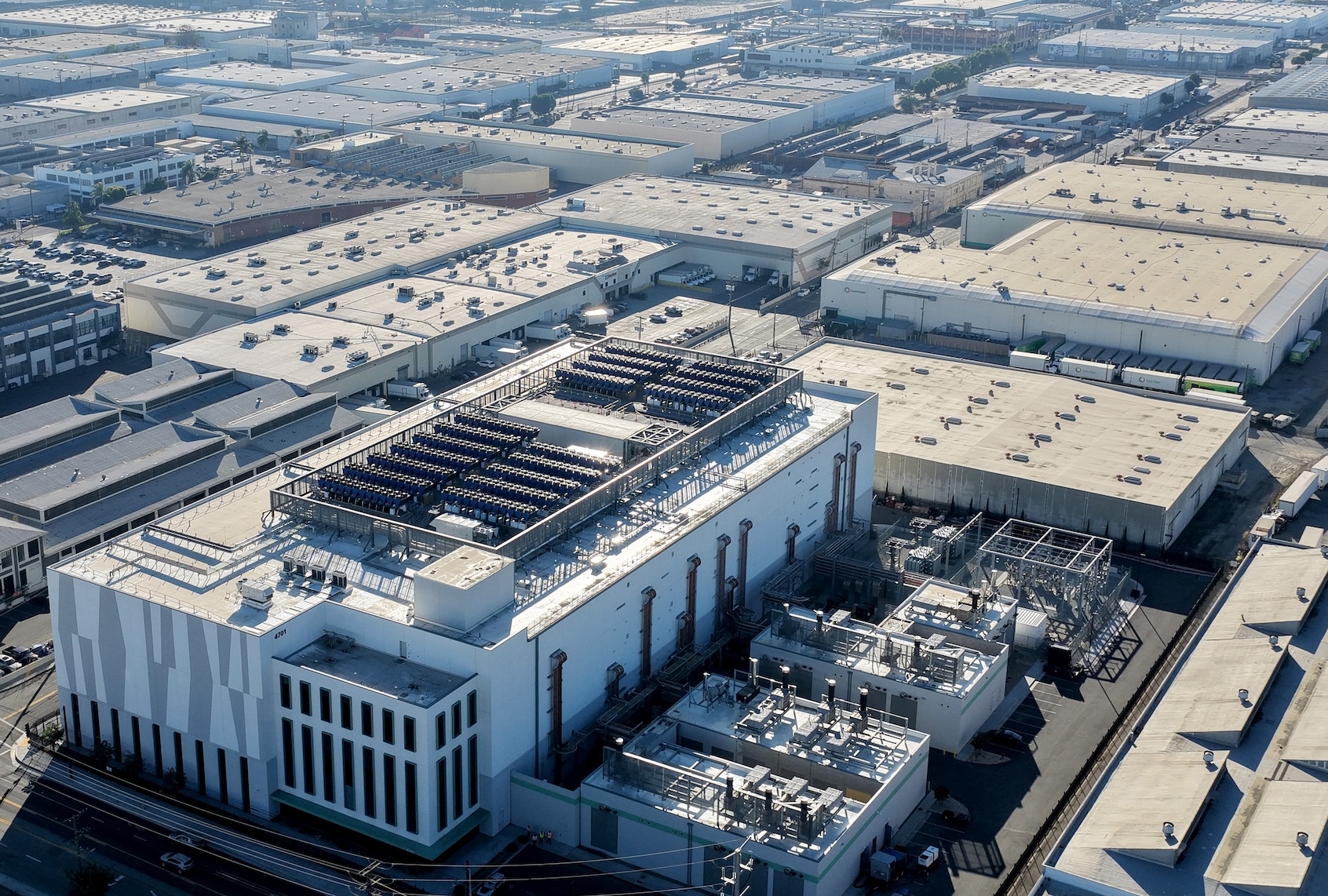
The construction of data centers is becoming a contentious political issue as major technology companies, including Meta, Amazon, and Google, invest billions to build the infrastructure necessary to support their artificial intelligence initiatives. Local opposition is growing, driven by concerns about environmental impact and the potential for job displacement. As this backlash intensifies, analysts suggest that the ongoing construction boom may be a key factor sustaining the American economy.
The expansion of data centers, which can occupy thousands of acres, raises significant environmental concerns. Critics argue that while these facilities promise to enhance AI capabilities, they often result in increased electricity costs and provide limited job opportunities. For instance, one Texas data center currently employs around 1,500 workers for construction but will only have approximately 100 full-time positions once operational. Similarly, a new data center in Louisiana is projected to employ 500 people upon completion, a stark contrast to the 5,000 workers currently engaged in its construction.
Senator Bernie Sanders has been vocal in his criticism, advocating for a moratorium on new data center projects. In an interview with CNN, he stated, “Frankly, I think you gotta slow this process down. It’s not good enough for the oligarchs to tell us, ‘It’s coming, you adapt.’” His comments highlight the concern that as AI technology advances, it could contribute to widespread job losses, particularly in sectors like fast food and retail.
Economic analyses indicate that the data center boom is playing a significant role in the growth of the U.S. economy. According to a report by Harvard economist Jason Furman, data center construction accounted for 92% of GDP growth in the first half of 2025. Furthermore, a report from JPMorgan noted that AI-related capital expenditures contributed to 1.1% of GDP growth during the same period. While some experts caution against overreliance on this sector, it is clear that AI infrastructure development is currently a substantial part of the economic landscape.
Despite the economic benefits, concerns about a speculative bubble in the AI industry persist. Critics warn that the current strategy of expanding AI capabilities may not be sustainable in the long term. As Servaas Storm, an economist at Delft University of Technology, notes, “There is no universe in which the giga-expenditures on GPUs, data center infrastructure, and compute will pay off.” He emphasizes that the prevailing economic metrics may not reflect the experiences of the average American worker, particularly as wealth concentration among the richest continues to rise.
Construction projects tied to data centers have created employment opportunities, particularly for electricians. The International Brotherhood of Electrical Workers Local 995 in Baton Rouge reported that thousands of workers are gaining valuable training for future projects. Jason Dedon, the union’s business manager, explained that while the construction phase offers immediate job growth, the long-term prospects may not be as favorable, as many workers will need to seek new opportunities once the data centers are completed.
The potential ramifications of a moratorium on new data center projects could be far-reaching. Storm warns that a slowdown in the AI sector might influence consumer spending and stock prices, as high-income individuals who drive economic activity might retract their spending. This could lead to broader job losses, particularly in service industries that are often the first to feel the pinch during economic downturns.
As the debate surrounding the construction of AI data centers intensifies, the implications for local communities and the workforce remain significant. Advocates for responsible AI development argue that measures must be taken to ensure that technological advancement benefits all workers, not just a select few. As the industry evolves, policymakers will need to address these challenges to foster a sustainable balance between innovation and community well-being.

Cosmic Mystery Deepens: Where Are the Universe’s Defects?

Lady Bulldogs Shine in Postseason Awards Following Final Four Run

CALV Hosts Essential Class for Local Real Estate Professionals

Urgent Alert: “Spaving” Surges as Shoppers Overspend Online

Jefferies Initiates Coverage on Insmed with “Buy” Rating

Three Dog Night to Perform with Ambrosia at Mayo Civic Center

Urgent Announcement: Charles M. Payment Passes Away at 78

Houston Education Foundation Donates $4,592 for Student Programs

Beeks Financial Cloud Shares Drop 7% Amid Increased Trading Volume

Foreign Inflows into Japan Stocks Surge to ¥1.34 Trillion

University of Hawaiʻi Joins $25.6M AI Project to Monitor Disasters

Sydney Sweeney Embraces Body Positivity Amid Hollywood Challenges

Hudson Williams Gains Popularity as Breakout Star on Heated Rivalry

Urgent Farewell: Joleen Chaney Leaves Legacy at KFOR

Boeing’s Merger with McDonnell Douglas: A Strategic Move Explained

$1.25M Grant Advances Hawaiʻi’s Real-Time Hazard Monitoring

Derrick Dove and ABAC Band Set for Free Americana Concert

BOYNEXTDOOR’s Jaehyun Faces Backlash Amid BTS-TWICE Controversy
-
Business9 months ago
Foreign Inflows into Japan Stocks Surge to ¥1.34 Trillion
-
Science9 months ago
University of Hawaiʻi Joins $25.6M AI Project to Monitor Disasters
-
 Entertainment9 months ago
Sydney Sweeney Embraces Body Positivity Amid Hollywood Challenges
-
 Entertainment7 months ago
Hudson Williams Gains Popularity as Breakout Star on Heated Rivalry
-
 Top Stories8 months ago
Urgent Farewell: Joleen Chaney Leaves Legacy at KFOR
-
 World9 months ago
Boeing’s Merger with McDonnell Douglas: A Strategic Move Explained
-
 Science7 months ago
$1.25M Grant Advances Hawaiʻi’s Real-Time Hazard Monitoring
-
 Entertainment8 months ago
Derrick Dove and ABAC Band Set for Free Americana Concert
-
 Top Stories9 months ago
BOYNEXTDOOR’s Jaehyun Faces Backlash Amid BTS-TWICE Controversy
-

 Health6 months ago
Bodybuilder Eugene Teo Transitions to Mindful Movement for Health
-

 World6 months ago
San Francisco Airport to Host 16 Nonstop Airlines to Europe in 2026
-

 Top Stories7 months ago
National Coast Guard Museum Set to Open in 2027 After Funding Secured