
World
Protests Surge in Iran as Currency Hits Record Low Against Dollar

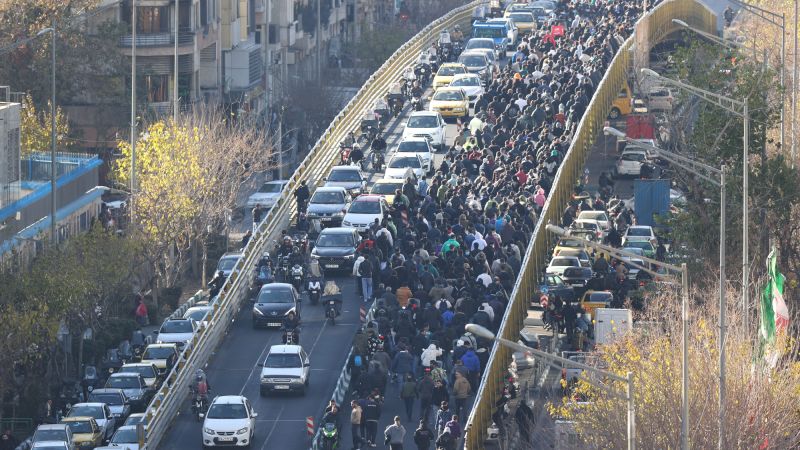
Protests erupted across Iran on Monday as the national currency, the rial, plummeted to a record low against the US dollar, prompting the resignation of the head of the Central Bank. The rial traded at approximately 1.38 million rials per dollar, a steep decline from 430,000 rials when Mohammad Reza Farzin took office in 2022. Demonstrations began in Tehran, with shopkeepers and traders rallying in significant areas such as Saadi Street and the Shush neighborhood near the Grand Bazaar.
The protests mark the largest civil unrest in Iran since 2022 when widespread demonstrations followed the death of Mahsa Jina Amini, a young woman who died in police custody. Amini had been detained for allegedly violating the country’s strict hijab laws. The current demonstrations have seen participants chanting anti-government slogans, with reports of similar protests occurring in major cities including Isfahan, Shiraz, and Mashhad.
Economic Strain Fuels Discontent
The rapid depreciation of the rial is exacerbating inflation, making basic necessities increasingly unaffordable for many households. According to the state statistics center, the inflation rate reached 42.2% in December compared to the previous year, with food prices rising by 72% and health items by 50%. The situation has worsened further with a recent increase in gasoline prices, leading to heightened public dissatisfaction.
Merchants in Tehran played a pivotal role in the 1979 Islamic Revolution, and their participation in the current protests underscores the economic frustration felt across the nation. The semiofficial ILNA news agency reported that many businesses closed their doors in solidarity, as traders urged others to follow suit. Witnesses stated that in some areas, police used tear gas to disperse protesters, indicating the tense atmosphere surrounding the demonstrations.
Political Implications and International Context
The resignation of Farzin comes amid growing concerns about economic stability. Reports of potential tax increases planned for the Iranian new year, which begins on March 21, 2024, have further fueled anxiety among citizens. Critics warn that the inflation rate could signal an impending hyperinflation crisis.
The economic turmoil is compounded by geopolitical uncertainties, particularly following the 2015 nuclear accord that lifted sanctions in exchange for limits on Iran’s nuclear program. The agreement fell apart when former US President Donald Trump withdrew the United States in 2018, leading to renewed sanctions and market instability. Diplomatic tensions have escalated with the recent reimposition of nuclear-related sanctions by the United Nations, further freezing Iranian assets abroad.
As protests continue, Iranians remain deeply concerned about both their economic future and the potential for broader conflict in the region. The recent escalation of hostilities, including a 12-day war involving Iran and Israel in June, has heightened fears of a more extensive confrontation that could involve the United States.
The current unrest in Iran serves as a stark reminder of the complex interplay between economic hardship and political dissent, as citizens call for change in a country facing mounting challenges on multiple fronts.

Cosmic Mystery Deepens: Where Are the Universe’s Defects?

Lady Bulldogs Shine in Postseason Awards Following Final Four Run

CALV Hosts Essential Class for Local Real Estate Professionals

Urgent Alert: “Spaving” Surges as Shoppers Overspend Online

Jefferies Initiates Coverage on Insmed with “Buy” Rating

Three Dog Night to Perform with Ambrosia at Mayo Civic Center

Urgent Announcement: Charles M. Payment Passes Away at 78

Houston Education Foundation Donates $4,592 for Student Programs

Beeks Financial Cloud Shares Drop 7% Amid Increased Trading Volume

Foreign Inflows into Japan Stocks Surge to ¥1.34 Trillion

University of Hawaiʻi Joins $25.6M AI Project to Monitor Disasters

Sydney Sweeney Embraces Body Positivity Amid Hollywood Challenges

Hudson Williams Gains Popularity as Breakout Star on Heated Rivalry

Urgent Farewell: Joleen Chaney Leaves Legacy at KFOR

Boeing’s Merger with McDonnell Douglas: A Strategic Move Explained

$1.25M Grant Advances Hawaiʻi’s Real-Time Hazard Monitoring

Derrick Dove and ABAC Band Set for Free Americana Concert

Bodybuilder Eugene Teo Transitions to Mindful Movement for Health
-
Business9 months ago
Foreign Inflows into Japan Stocks Surge to ¥1.34 Trillion
-
Science9 months ago
University of Hawaiʻi Joins $25.6M AI Project to Monitor Disasters
-
 Entertainment9 months ago
Sydney Sweeney Embraces Body Positivity Amid Hollywood Challenges
-
 Entertainment8 months ago
Hudson Williams Gains Popularity as Breakout Star on Heated Rivalry
-
 Top Stories9 months ago
Urgent Farewell: Joleen Chaney Leaves Legacy at KFOR
-
 World9 months ago
Boeing’s Merger with McDonnell Douglas: A Strategic Move Explained
-
 Science8 months ago
$1.25M Grant Advances Hawaiʻi’s Real-Time Hazard Monitoring
-
 Entertainment8 months ago
Derrick Dove and ABAC Band Set for Free Americana Concert
-
 Health6 months ago
Bodybuilder Eugene Teo Transitions to Mindful Movement for Health
-

 Top Stories9 months ago
BOYNEXTDOOR’s Jaehyun Faces Backlash Amid BTS-TWICE Controversy
-

 World7 months ago
San Francisco Airport to Host 16 Nonstop Airlines to Europe in 2026
-

 Top Stories7 months ago
National Coast Guard Museum Set to Open in 2027 After Funding Secured