
World
NTSB Chair Condemns Defense Bill, Warns of Air Safety Risks

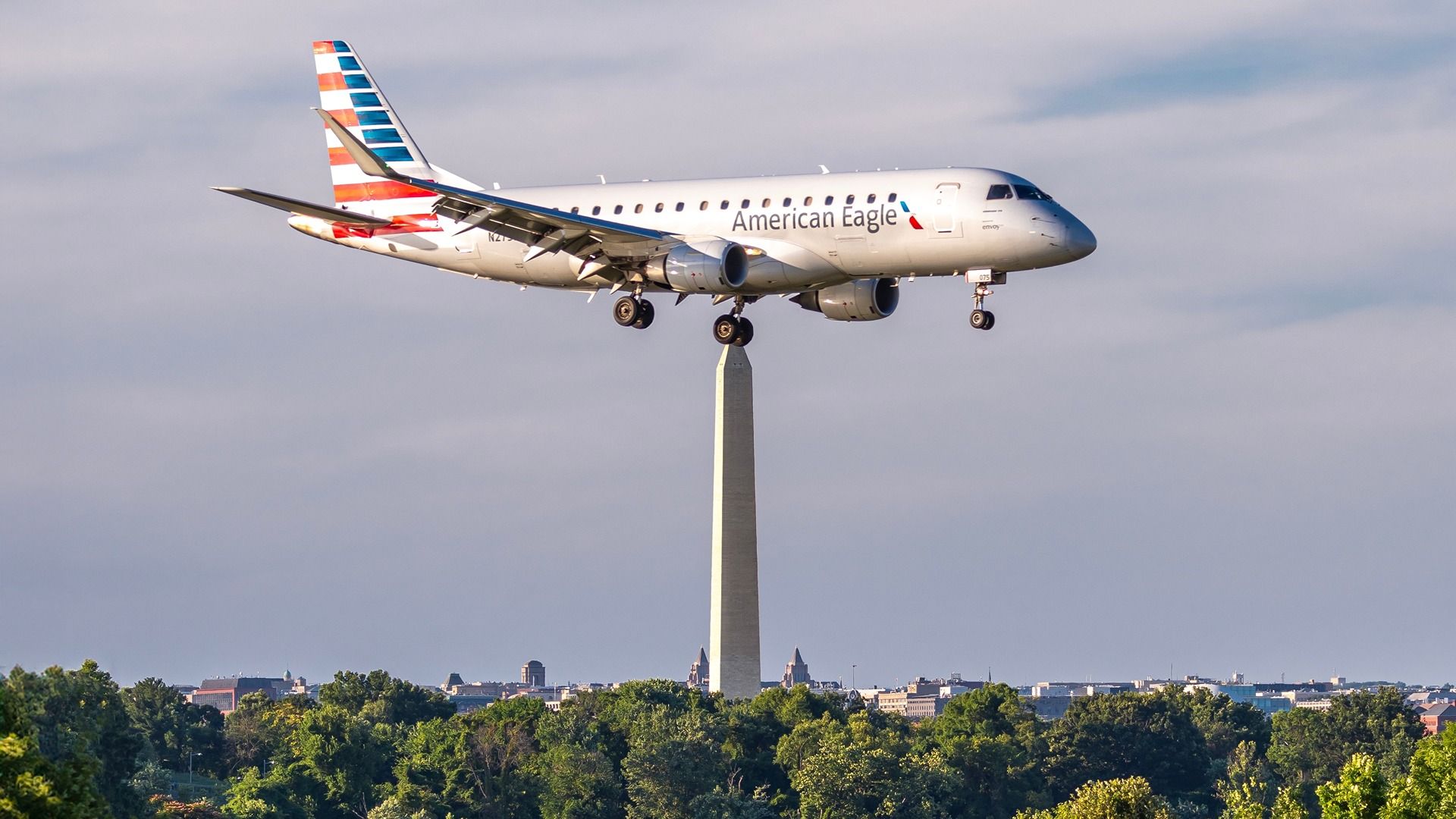
The chair of the National Transportation Safety Board (NTSB), Jennifer Homendy, has publicly criticized a new defense bill, arguing that it will compromise safety in the airspace surrounding Ronald Reagan Washington National Airport (DCA). The bill, which spans over 3,000 pages and allocates $900 billion to the Department of Defense, includes controversial provisions that would significantly ease military flight access in the busy Washington, D.C. airspace.
At the heart of Homendy’s concerns is a provision allowing US Army helicopters to operate with reduced tracking requirements, raising alarms in the wake of a tragic midair collision earlier this year that claimed the lives of 67 individuals. The collision occurred on January 29, 2025, between an American Airlines flight and a US Army UH-60 Sikorsky Blackhawk helicopter, with investigations revealing that the helicopter deviated from its assigned altitude during the incident.
The NTSB chair described the bill’s provisions as a “shameful step backward” and criticized the lack of adequate oversight. Speaking to reporters, she stated, “This is shameful. It essentially gives the military unfettered access. It is a step backward. In fact, I would say it’s a safety whitewash.”
Concerns Over Airspace Safety
The airspace around DCA is notorious for its congestion, with numerous close calls reported over the years. Following the fatal collision in January, the NTSB recorded over 15,000 near-miss events between 2021 and 2024, according to analysis highlighted by CNN. The combination of heavy air traffic, air traffic control staffing issues, and military operations raises significant safety concerns.
The current provisions in the National Defense Authorization Act (NDAA) would permit military aircraft to traverse DCA airspace with tracking devices disabled, which Homendy argues will reduce situational awareness for both commercial pilots and air traffic controllers. The bill states that military flight operations could be authorized by any secretary of a military branch, pending concurrence from the Secretary of Transportation after a “commercial aviation risk compatibility assessment.” However, Homendy expressed skepticism about the clarity and validity of such assessments, stating that no one she consulted could adequately define what they would entail.
The implications of these changes are troubling for many lawmakers. Adam Smith, the top Democrat on the House Armed Services panel, voiced concerns over the lack of accountability these provisions could afford the Pentagon under current leadership. He emphasized the potential for the military to operate outside the bounds of congressional oversight or established laws.
Potential Rollback of Safety Improvements
The NDAA’s provisions threaten to reverse safety measures implemented in the aftermath of the January collision. Following that incident, the FAA imposed restrictions on nonessential helicopter flights around DCA, aiming to enhance safety in one of the nation’s busiest airspaces. With the proposed bill, there are fears that military aircraft could evade critical safety protocols, such as using Automatic Dependent Surveillance–Broadcast (ADS-B) technology, effectively jeopardizing the progress made since the crash.
Calls for revision of the NDAA have emerged from members of the Senate Commerce Committee, who argue that changes are necessary to protect public safety. Homendy and victim families are urging lawmakers to reconsider the bill’s language to prevent a return to dangerous conditions in the skies over the nation’s capital.
As discussions around the NDAA continue, the potential consequences for aviation safety remain a pressing concern. The balance between national defense and public safety hangs in the balance as lawmakers navigate this contentious legislation.

Cosmic Mystery Deepens: Where Are the Universe’s Defects?

Lady Bulldogs Shine in Postseason Awards Following Final Four Run

CALV Hosts Essential Class for Local Real Estate Professionals

Urgent Alert: “Spaving” Surges as Shoppers Overspend Online

Jefferies Initiates Coverage on Insmed with “Buy” Rating

Three Dog Night to Perform with Ambrosia at Mayo Civic Center

Urgent Announcement: Charles M. Payment Passes Away at 78

Houston Education Foundation Donates $4,592 for Student Programs

Beeks Financial Cloud Shares Drop 7% Amid Increased Trading Volume

Foreign Inflows into Japan Stocks Surge to ¥1.34 Trillion

University of Hawaiʻi Joins $25.6M AI Project to Monitor Disasters

Sydney Sweeney Embraces Body Positivity Amid Hollywood Challenges

Hudson Williams Gains Popularity as Breakout Star on Heated Rivalry

Urgent Farewell: Joleen Chaney Leaves Legacy at KFOR

Boeing’s Merger with McDonnell Douglas: A Strategic Move Explained

$1.25M Grant Advances Hawaiʻi’s Real-Time Hazard Monitoring

Derrick Dove and ABAC Band Set for Free Americana Concert

BOYNEXTDOOR’s Jaehyun Faces Backlash Amid BTS-TWICE Controversy
-
Business9 months ago
Foreign Inflows into Japan Stocks Surge to ¥1.34 Trillion
-
Science9 months ago
University of Hawaiʻi Joins $25.6M AI Project to Monitor Disasters
-
 Entertainment9 months ago
Sydney Sweeney Embraces Body Positivity Amid Hollywood Challenges
-
 Entertainment7 months ago
Hudson Williams Gains Popularity as Breakout Star on Heated Rivalry
-
 Top Stories8 months ago
Urgent Farewell: Joleen Chaney Leaves Legacy at KFOR
-
 World9 months ago
Boeing’s Merger with McDonnell Douglas: A Strategic Move Explained
-
 Science7 months ago
$1.25M Grant Advances Hawaiʻi’s Real-Time Hazard Monitoring
-
 Entertainment8 months ago
Derrick Dove and ABAC Band Set for Free Americana Concert
-
 Top Stories9 months ago
BOYNEXTDOOR’s Jaehyun Faces Backlash Amid BTS-TWICE Controversy
-

 Health6 months ago
Bodybuilder Eugene Teo Transitions to Mindful Movement for Health
-
 World6 months ago
San Francisco Airport to Host 16 Nonstop Airlines to Europe in 2026
-

 Top Stories7 months ago
National Coast Guard Museum Set to Open in 2027 After Funding Secured