
World
New Pacific Auction Set for March 18: Boeing 757s on the Block

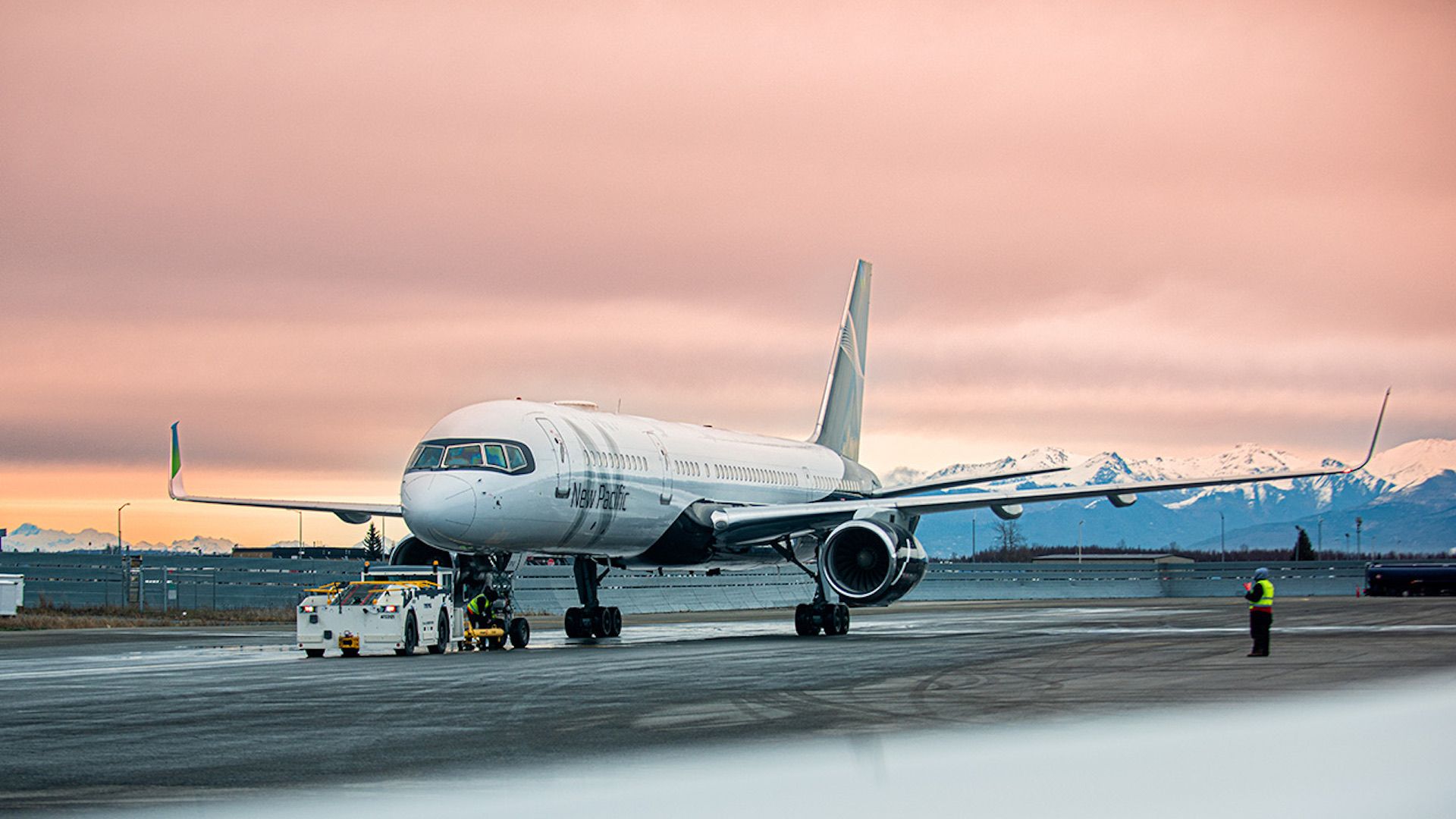
New Pacific’s liquidation process has led to an intriguing auction, scheduled for March 18, 2025. This sale will feature a unique mix of assets, including two operational Boeing 757-200 aircraft, an engineless airframe, and a valuable FAA Part 121 operating certificate. Following FLOAT Alaska’s Chapter 11 filing and New Pacific’s abrupt closure in late 2025, the question arises: what will become of these aircraft?
The Boeing 757 has lost its appeal among mainstream passenger airlines, shifting the focus from whether these jets will return to scheduled service to how they will be utilized. Potential outcomes include conversion into charter operations, cargo transport, or decommissioning for spare parts. The auction’s structure allows bidders to consider acquiring the entire package or individual components, which may lead to a split sale among different buyers.
Details of the Auction
Bidders must qualify by March 16, 2025, after signing a non-disclosure agreement. The auction includes not only the two airworthy Boeing 757s but also three retired Boeing 747-200s, spare components, and tools. The aircraft up for auction, identified as N627NP and N628NP, are equipped with Rolls-Royce RB211-535E4 engines. The third airframe, N629NP, is available without engines but remains valuable for parts. According to Aerospace Global News, airframes without engines can be repurposed to support other aircraft.
This flexibility in bidding opens avenues for various buyers. One could acquire the operating certificate, while another might focus on the functional aircraft, and a third could be interested in the stripped-down jet for its parts.
The Evolving Boeing 757 Market
The second-hand market for Boeing 757s has shifted from typical airline replacements to a focus on cargo and specialized missions. Analysts predict that retirements of Boeing 757s over the next decade could match the size of the entire fleet active in 2025. This trend underscores the aircraft’s decline in passenger service, but it does not diminish its overall value.
Boeing anticipates continued growth in the North American air cargo sector, while the International Air Transport Association (IATA) projects rising cargo volumes into 2026. These factors contribute to the Boeing 757 finding a new life as an aftermarket freighter. The aircraft, particularly when paired with an operator certificate, retains significant appeal.
Despite the fading viability of the Boeing 757 in passenger roles, its potential as a cargo aircraft and source for spare parts remains robust. The aircraft has increasingly been repurposed for freight and decommissioning, especially those powered by RB211 engines, to support the expanding cargo market.
Potential Buyers and Their Interests
Several types of buyers are likely to participate in the auction. Cargo and aftermarket specialists, such as AerSale and AAR, may be particularly interested in the engine-equipped aircraft for freighter conversion, while the engineless N629NP holds parts value.
Charter operators and brokers focusing on large-group VIP services may also show interest. Companies like Elevate Aviation and Private Jet Services, which have previously collaborated with New Pacific, could seek these 78-seat business-class jets for various routes. Demand has surged from sports teams, entertainment groups, and corporate shuttles.
Lastly, investor-backed startups that prioritize the Part 121 certificate over the airframes might vie for these assets. Strategic investors could also enter the mix, seeking to acquire some or all of the assets with the intent to resell at a profit.
As the auction approaches, the fate of New Pacific’s Boeing 757s will be closely watched by industry insiders and potential buyers alike. The outcomes may not only shape the future of these aircraft but also reflect broader trends in the aviation market.

Cosmic Mystery Deepens: Where Are the Universe’s Defects?

Lady Bulldogs Shine in Postseason Awards Following Final Four Run

CALV Hosts Essential Class for Local Real Estate Professionals

Urgent Alert: “Spaving” Surges as Shoppers Overspend Online

Jefferies Initiates Coverage on Insmed with “Buy” Rating

Three Dog Night to Perform with Ambrosia at Mayo Civic Center

Urgent Announcement: Charles M. Payment Passes Away at 78

Houston Education Foundation Donates $4,592 for Student Programs

Beeks Financial Cloud Shares Drop 7% Amid Increased Trading Volume

Foreign Inflows into Japan Stocks Surge to ¥1.34 Trillion

University of Hawaiʻi Joins $25.6M AI Project to Monitor Disasters

Sydney Sweeney Embraces Body Positivity Amid Hollywood Challenges

Hudson Williams Gains Popularity as Breakout Star on Heated Rivalry

Boeing’s Merger with McDonnell Douglas: A Strategic Move Explained

Urgent Farewell: Joleen Chaney Leaves Legacy at KFOR

$1.25M Grant Advances Hawaiʻi’s Real-Time Hazard Monitoring

Derrick Dove and ABAC Band Set for Free Americana Concert

BOYNEXTDOOR’s Jaehyun Faces Backlash Amid BTS-TWICE Controversy
-
Business9 months ago
Foreign Inflows into Japan Stocks Surge to ¥1.34 Trillion
-
Science9 months ago
University of Hawaiʻi Joins $25.6M AI Project to Monitor Disasters
-
 Entertainment9 months ago
Sydney Sweeney Embraces Body Positivity Amid Hollywood Challenges
-
 Entertainment8 months ago
Hudson Williams Gains Popularity as Breakout Star on Heated Rivalry
-
 World9 months ago
Boeing’s Merger with McDonnell Douglas: A Strategic Move Explained
-
 Top Stories9 months ago
Urgent Farewell: Joleen Chaney Leaves Legacy at KFOR
-
 Science8 months ago
$1.25M Grant Advances Hawaiʻi’s Real-Time Hazard Monitoring
-
 Entertainment9 months ago
Derrick Dove and ABAC Band Set for Free Americana Concert
-
 Top Stories9 months ago
BOYNEXTDOOR’s Jaehyun Faces Backlash Amid BTS-TWICE Controversy
-

 Health7 months ago
Bodybuilder Eugene Teo Transitions to Mindful Movement for Health
-
 World7 months ago
San Francisco Airport to Host 16 Nonstop Airlines to Europe in 2026
-

 Top Stories7 months ago
National Coast Guard Museum Set to Open in 2027 After Funding Secured