
World
Floods Across Asia Claim Over 1,750 Lives, Rescue Efforts Challenged

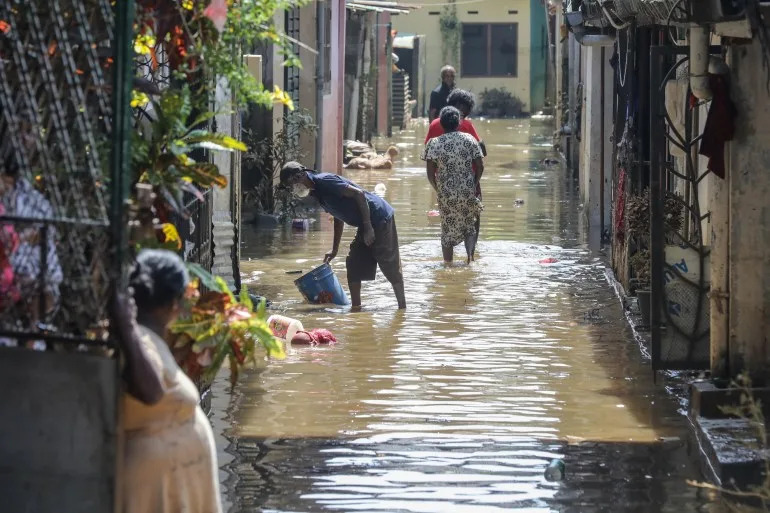
Heavy rains have severely hindered rescue operations as the death toll from catastrophic floods in Asia has surpassed 1,750 people. The most affected nations include Indonesia, Sri Lanka, and Thailand, where millions are grappling with the aftermath of this climate-related disaster.
In Indonesia, the situation remains dire. Official reports indicate that at least 867 individuals have been confirmed dead, with another 521 still unaccounted for. The floods have displaced over 800,000 people in the province of Aceh on the island of Sumatra. Governor Muzakir Manaf highlighted the grim reality, stating that survivors are trapped in “waist-deep” mud as response teams continue to search for bodies. He warned that starvation has become a pressing concern in isolated villages, noting, “Many people need basic necessities. People are not dying from the flood, but from starvation.”
In Sri Lanka, the government has confirmed 607 fatalities, with an additional 214 individuals missing and feared dead. President Anura Kumara Dissanayake has described the ongoing crisis as the country’s most challenging natural disaster, with over 2 million people affected, nearly 10 percent of the population. The Disaster Management Centre (DMC) reported that heavy rains continue to pose risks of new landslides, complicating cleanup operations.
The floods in Thailand have resulted in at least 276 deaths, while two fatalities were reported in Malaysia and two in Vietnam due to landslides triggered by persistent heavy rainfall. The disaster has been exacerbated by the simultaneous occurrence of two typhoons and a cyclone in the region, events that climate experts say are becoming more frequent due to climate change.
Environmental Factors and Government Actions
The recent deluge in Indonesia has been linked to illegal logging and deforestation, which are significantly contributing to the severity of natural disasters. In response, Indonesia’s Forestry Minister Raja Juli Antoni announced the revocation of logging licenses for 20 companies, encompassing an area of 750,000 hectares (approximately 1.8 million acres) in flood-affected regions.
The country’s Environment Minister Hanif Faisol Nurofiq has also halted the operations of palm oil, mining, and power plant companies located upstream from the disaster-hit areas. He emphasized the importance of protecting the ecological integrity of strategic watersheds, stating that these areas must be preserved to mitigate future disasters.
Experts from Griffith University in Australia, including programme coordinator Febi Dwirahmadi, have pointed out that intact rainforest ecosystems play a crucial role in absorbing rainfall. Dwirahmadi explained that deforestation not only exacerbates climate change but also diminishes the land’s capacity to manage heavy rainfalls effectively.
Continuing Challenges and Humanitarian Needs
As rescue teams strive to provide support, the challenges are mounting. In Aceh, entire villages have been obliterated, leaving communities devastated. Governor Manaf described the Aceh Tamiang region as “completely destroyed,” with many areas now unrecognizable.
The humanitarian needs are overwhelming, as many affected individuals remain cut off from assistance. The ongoing rain and the threat of additional landslides continue to impede rescue operations and relief efforts, creating a precarious situation for those already suffering.
With climate change intensifying weather patterns, the region faces a daunting future. The urgent need for international support and effective disaster management strategies has never been more critical as communities rebuild and recover from this unprecedented crisis.

Cosmic Mystery Deepens: Where Are the Universe’s Defects?

Lady Bulldogs Shine in Postseason Awards Following Final Four Run

CALV Hosts Essential Class for Local Real Estate Professionals

Urgent Alert: “Spaving” Surges as Shoppers Overspend Online

Jefferies Initiates Coverage on Insmed with “Buy” Rating

Three Dog Night to Perform with Ambrosia at Mayo Civic Center

Urgent Announcement: Charles M. Payment Passes Away at 78

Houston Education Foundation Donates $4,592 for Student Programs

Beeks Financial Cloud Shares Drop 7% Amid Increased Trading Volume

Foreign Inflows into Japan Stocks Surge to ¥1.34 Trillion

University of Hawaiʻi Joins $25.6M AI Project to Monitor Disasters

Sydney Sweeney Embraces Body Positivity Amid Hollywood Challenges

Hudson Williams Gains Popularity as Breakout Star on Heated Rivalry

Urgent Farewell: Joleen Chaney Leaves Legacy at KFOR

Boeing’s Merger with McDonnell Douglas: A Strategic Move Explained

$1.25M Grant Advances Hawaiʻi’s Real-Time Hazard Monitoring

Derrick Dove and ABAC Band Set for Free Americana Concert

BOYNEXTDOOR’s Jaehyun Faces Backlash Amid BTS-TWICE Controversy
-
Business9 months ago
Foreign Inflows into Japan Stocks Surge to ¥1.34 Trillion
-
Science8 months ago
University of Hawaiʻi Joins $25.6M AI Project to Monitor Disasters
-
 Entertainment9 months ago
Sydney Sweeney Embraces Body Positivity Amid Hollywood Challenges
-
 Entertainment7 months ago
Hudson Williams Gains Popularity as Breakout Star on Heated Rivalry
-
 Top Stories8 months ago
Urgent Farewell: Joleen Chaney Leaves Legacy at KFOR
-
 World9 months ago
Boeing’s Merger with McDonnell Douglas: A Strategic Move Explained
-
 Science7 months ago
$1.25M Grant Advances Hawaiʻi’s Real-Time Hazard Monitoring
-
 Entertainment8 months ago
Derrick Dove and ABAC Band Set for Free Americana Concert
-
 Top Stories9 months ago
BOYNEXTDOOR’s Jaehyun Faces Backlash Amid BTS-TWICE Controversy
-

 Health6 months ago
Bodybuilder Eugene Teo Transitions to Mindful Movement for Health
-

 World6 months ago
San Francisco Airport to Host 16 Nonstop Airlines to Europe in 2026
-

 Top Stories7 months ago
National Coast Guard Museum Set to Open in 2027 After Funding Secured