
World
Experts Warn of Rising Tensions in Israel-Lebanon Relations

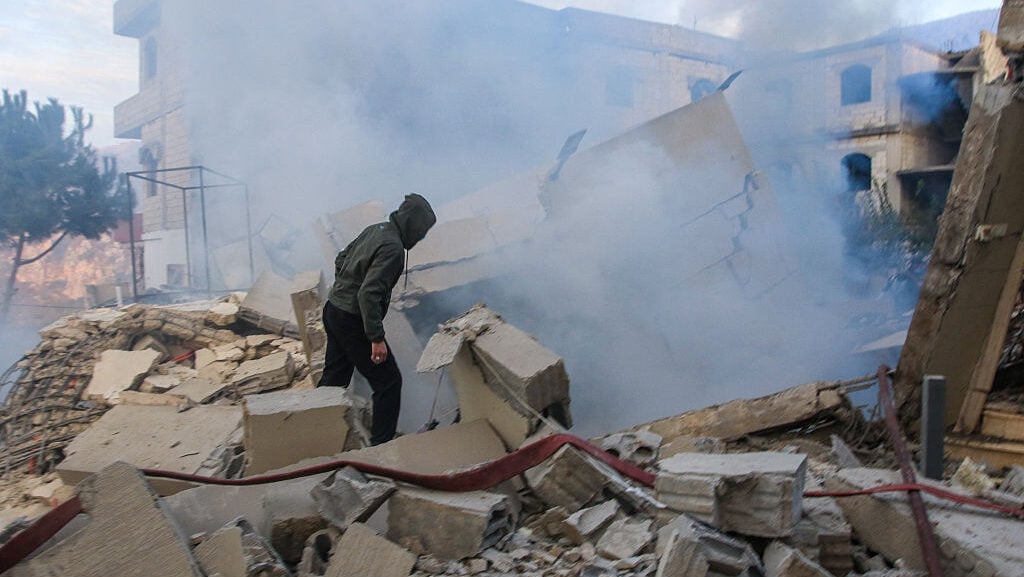
Recent diplomatic efforts, including a visit by Pope Francis and direct talks between Lebanese and Israeli representatives, have raised hopes for long-term peace in the region. However, analysts predict a potential escalation of hostilities between Israel and Lebanon, primarily due to concerns over Hezbollah’s military presence and the Lebanese government’s ability to disarm the group.
In a conversation with Breaking Defense, Paul Salem, a Senior Fellow at the Middle East Institute, expressed skepticism regarding the effectiveness of these diplomatic overtures. According to Salem, as long as Israel perceives that the Lebanese government is not sufficiently addressing Hezbollah’s disarmament, it is likely that tensions will rise further. He stated, “I definitely think there’s a rising concern of any conflict escalation. It’s one way. It’s Israel escalating more in Lebanon.”
The backdrop to these concerns includes a ceasefire agreement brokered by the United States over a year ago. Under this agreement, Israel committed to withdrawing from Lebanese territory, while Lebanon pledged to prevent Hezbollah from conducting operations against Israel. However, the situation on the ground has remained complex. Israeli military forces have continued to operate within Lebanese territory, and Hezbollah has not been fully disarmed, despite ongoing efforts.
Israeli Prime Minister Benjamin Netanyahu reiterated the country’s expectations of Lebanon to uphold its commitments, asserting, “We expect the Lebanese government to uphold its commitments, namely, to disarm Hezbollah. We won’t let Lebanon become a renewed front against us, and we’ll do what’s necessary.” This statement underscores Israel’s determination to maintain security amidst ongoing threats.
Concerns about Hezbollah’s military capabilities persist. Analysts note that the group is reportedly reorganizing and may be acquiring weapons through undisclosed channels. The Lebanese Armed Forces (LAF) are seen as not fully addressing the issue, with some weapons allegedly present in private homes that remain unchecked. The phased approach to disarming Hezbollah could take years, while Israel appears to seek immediate action.
Retired Lebanese armed forces general Wehbe Katicha shared insights on the escalating situation, stating, “I expect an escalation of Israeli strikes. First, Israel is always threatening. Second, Hezbollah claims to have regained its deterrent power. And third, the Lebanese government has not fully implemented Resolution 1701,” which was originally designed to secure peace between Israel and Hezbollah.
Analysts from the global risk consultancy Control Risks, including Dina Arakji, caution that even if disarmament progresses, Israel will likely continue its military operations against Hezbollah. “Ultimately, disarmament will remain a political issue rather than one resolved solely through LAF operations,” Arakji noted. She suggested that further airstrikes and potential limited ground operations in southern Lebanon are plausible.
Salem anticipates that Israel will conduct “much larger” strikes against Hezbollah targets, particularly in the Beqaa Valley and potentially in Syria, where the group may be smuggling weapons. Katicha pointed out that the scale of Israel’s military response remains uncertain, emphasizing that as long as residents of northern Israel feel unsafe in their villages, the potential for conflict will persist.
With the ongoing complexities in Israeli-Lebanese relations, the international community watches closely, aware that the region remains a tinderbox, ready to ignite under the right circumstances. The hope for lasting peace hangs in the balance as both sides navigate the delicate dynamics of military engagement and diplomatic negotiations.

Cosmic Mystery Deepens: Where Are the Universe’s Defects?

Lady Bulldogs Shine in Postseason Awards Following Final Four Run

CALV Hosts Essential Class for Local Real Estate Professionals

Urgent Alert: “Spaving” Surges as Shoppers Overspend Online

Jefferies Initiates Coverage on Insmed with “Buy” Rating

Three Dog Night to Perform with Ambrosia at Mayo Civic Center

Urgent Announcement: Charles M. Payment Passes Away at 78

Houston Education Foundation Donates $4,592 for Student Programs

Beeks Financial Cloud Shares Drop 7% Amid Increased Trading Volume

Foreign Inflows into Japan Stocks Surge to ¥1.34 Trillion

University of Hawaiʻi Joins $25.6M AI Project to Monitor Disasters

Sydney Sweeney Embraces Body Positivity Amid Hollywood Challenges

Hudson Williams Gains Popularity as Breakout Star on Heated Rivalry

Urgent Farewell: Joleen Chaney Leaves Legacy at KFOR

Boeing’s Merger with McDonnell Douglas: A Strategic Move Explained

$1.25M Grant Advances Hawaiʻi’s Real-Time Hazard Monitoring

Derrick Dove and ABAC Band Set for Free Americana Concert

BOYNEXTDOOR’s Jaehyun Faces Backlash Amid BTS-TWICE Controversy
-
Business9 months ago
Foreign Inflows into Japan Stocks Surge to ¥1.34 Trillion
-
Science9 months ago
University of Hawaiʻi Joins $25.6M AI Project to Monitor Disasters
-
 Entertainment9 months ago
Sydney Sweeney Embraces Body Positivity Amid Hollywood Challenges
-
 Entertainment7 months ago
Hudson Williams Gains Popularity as Breakout Star on Heated Rivalry
-
 Top Stories8 months ago
Urgent Farewell: Joleen Chaney Leaves Legacy at KFOR
-
 World9 months ago
Boeing’s Merger with McDonnell Douglas: A Strategic Move Explained
-
 Science7 months ago
$1.25M Grant Advances Hawaiʻi’s Real-Time Hazard Monitoring
-
 Entertainment8 months ago
Derrick Dove and ABAC Band Set for Free Americana Concert
-
 Top Stories9 months ago
BOYNEXTDOOR’s Jaehyun Faces Backlash Amid BTS-TWICE Controversy
-

 Health6 months ago
Bodybuilder Eugene Teo Transitions to Mindful Movement for Health
-

 World6 months ago
San Francisco Airport to Host 16 Nonstop Airlines to Europe in 2026
-

 Top Stories7 months ago
National Coast Guard Museum Set to Open in 2027 After Funding Secured