
World
Deadly Train Collision Shakes Spain’s High-Speed Rail Legacy

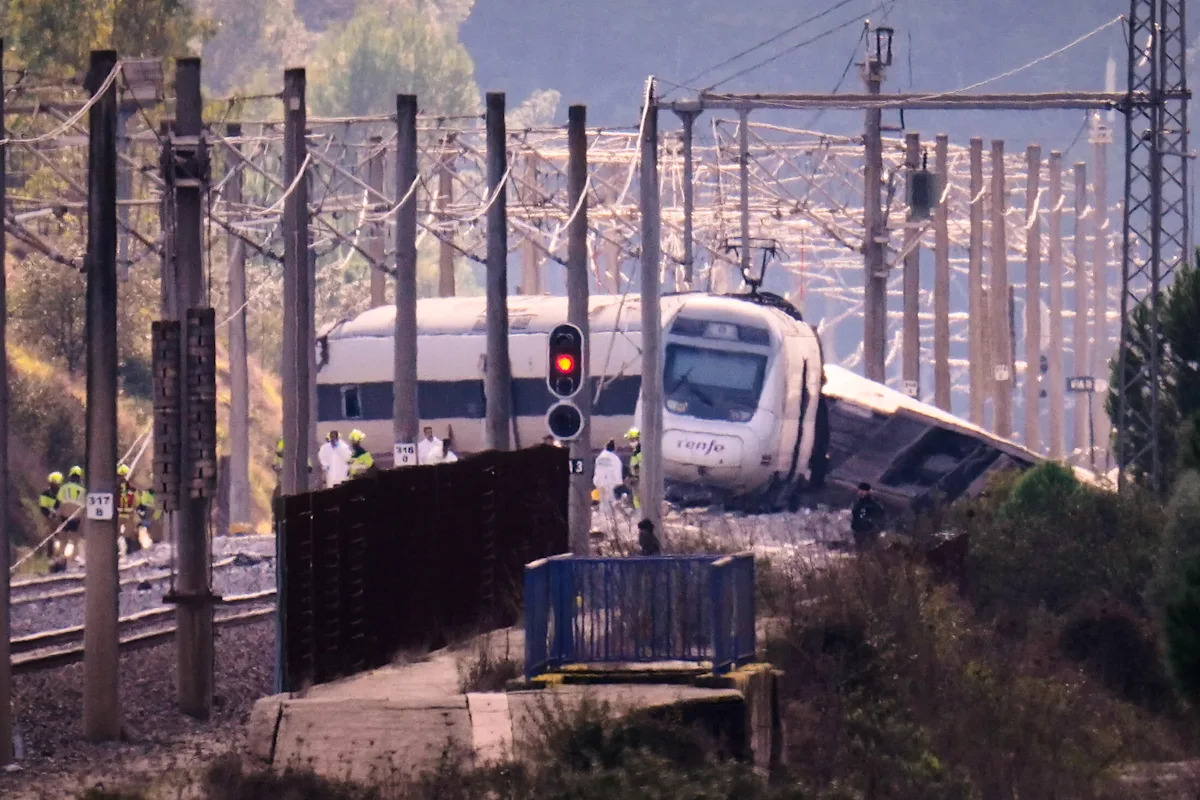
A catastrophic train collision occurred on Sunday night in southern Spain, resulting in at least 40 fatalities and numerous injuries. As of Monday evening, emergency services continued their response efforts, assessing the scene of the wreck involving two high-speed trains. This tragic event raises serious concerns about the future of Spain’s celebrated high-speed rail network, known as AVE, which has long been regarded as a symbol of national progress and innovation.
Spain’s High-Speed Rail Network: A Look Back
Spain inaugurated its first high-speed AVE train service in 1988, marking a significant milestone in the country’s transportation history. Over the past 34 years, governments have invested heavily in expanding this network, utilizing both tax revenues and European Union development aid. Today, Spain boasts approximately 3,900 kilometers (2,400 miles) of high-speed rail, making it one of the largest networks globally, second only to China.
Before the introduction of high-speed rail, a journey between Madrid and Barcelona could take up to seven hours. The advent of AVE reduced this travel time to approximately 2.5 hours, facilitating greater connectivity between major population centers. Plans announced in November 2023 aim to enhance the Madrid-Barcelona line further, allowing trains to reach speeds of 350 kph (218 mph) and potentially reducing travel time to under two hours.
While the high-speed rail network is a source of national pride, it has faced criticism for prioritizing certain routes over local commuter lines, which often experience delays. The absence of an AVE line is frequently perceived as a sign of economic decline for provincial cities, underscoring the importance of this transportation system in Spain’s socio-economic fabric.
Tragedy Strikes: The Collision
The collision, which occurred on March 24, 2024, involved an Iryo train, the first private operator to enter the high-speed market, and a Renfe-operated train. Reports indicate that both trains were traveling well below the speed limit at the time of the accident, with Álvaro Fernández, president of Renfe, stating that “human error could be ruled out.” This incident marks the first deadly accident in the history of Spain’s high-speed rail service.
Witnesses described the aftermath as devastating, with one official likening the wreckage to a “mass of twisted metal.” Investigations are underway to determine the cause of the accident, as Spanish officials express confusion over how two high-speed trains could collide on a network known for its safety.
The last major rail disaster in Spain occurred in 2013, resulting in 80 deaths when a train derailed in the northwest region of the country. That incident was attributed to excessive speed on a non-high-speed track, emphasizing the critical need for rigorous safety measures in rail operations.
As Spain mourns the loss of life from this tragic event, the future of its high-speed rail network hangs in the balance. The nation’s commitment to advancing rail transportation has been a central component of its strategy to combat climate change and promote sustainable travel. However, this collision raises pressing questions about safety standards and operational protocols as the country seeks to maintain its position as a leader in high-speed rail innovation.

Cosmic Mystery Deepens: Where Are the Universe’s Defects?

Lady Bulldogs Shine in Postseason Awards Following Final Four Run

CALV Hosts Essential Class for Local Real Estate Professionals

Urgent Alert: “Spaving” Surges as Shoppers Overspend Online

Jefferies Initiates Coverage on Insmed with “Buy” Rating

Three Dog Night to Perform with Ambrosia at Mayo Civic Center

Urgent Announcement: Charles M. Payment Passes Away at 78

Houston Education Foundation Donates $4,592 for Student Programs

Beeks Financial Cloud Shares Drop 7% Amid Increased Trading Volume

Foreign Inflows into Japan Stocks Surge to ¥1.34 Trillion

University of Hawaiʻi Joins $25.6M AI Project to Monitor Disasters

Sydney Sweeney Embraces Body Positivity Amid Hollywood Challenges

Hudson Williams Gains Popularity as Breakout Star on Heated Rivalry

Urgent Farewell: Joleen Chaney Leaves Legacy at KFOR

Boeing’s Merger with McDonnell Douglas: A Strategic Move Explained

$1.25M Grant Advances Hawaiʻi’s Real-Time Hazard Monitoring

Derrick Dove and ABAC Band Set for Free Americana Concert

BOYNEXTDOOR’s Jaehyun Faces Backlash Amid BTS-TWICE Controversy
-
Business9 months ago
Foreign Inflows into Japan Stocks Surge to ¥1.34 Trillion
-
Science8 months ago
University of Hawaiʻi Joins $25.6M AI Project to Monitor Disasters
-
 Entertainment9 months ago
Sydney Sweeney Embraces Body Positivity Amid Hollywood Challenges
-
 Entertainment7 months ago
Hudson Williams Gains Popularity as Breakout Star on Heated Rivalry
-
 Top Stories8 months ago
Urgent Farewell: Joleen Chaney Leaves Legacy at KFOR
-
 World9 months ago
Boeing’s Merger with McDonnell Douglas: A Strategic Move Explained
-
 Science7 months ago
$1.25M Grant Advances Hawaiʻi’s Real-Time Hazard Monitoring
-
 Entertainment8 months ago
Derrick Dove and ABAC Band Set for Free Americana Concert
-
 Top Stories9 months ago
BOYNEXTDOOR’s Jaehyun Faces Backlash Amid BTS-TWICE Controversy
-

 Health6 months ago
Bodybuilder Eugene Teo Transitions to Mindful Movement for Health
-

 World6 months ago
San Francisco Airport to Host 16 Nonstop Airlines to Europe in 2026
-

 Top Stories7 months ago
National Coast Guard Museum Set to Open in 2027 After Funding Secured