
Top Stories
US Health Official Urges Vaccination Amid Rising Measles Cases

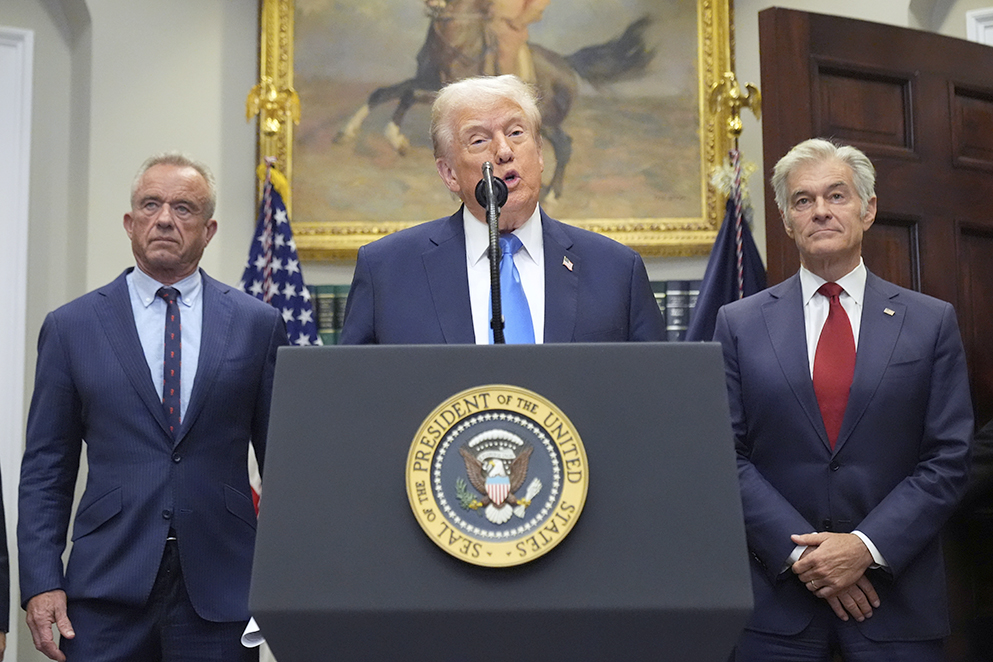
A significant rise in measles cases has prompted Dr. Mehmet Oz, the administrator of the Centers for Medicare and Medicaid Services, to advocate for vaccination. With outbreaks reported in South Carolina and along the Utah-Arizona border, the United States risks losing its measles elimination status. During an appearance on CNN’s “State of the Union,” Oz urged the public to “Take the vaccine, please,” emphasizing the critical need for immunization against this highly contagious disease.
Measles cases in South Carolina have surged to hundreds, surpassing the total recorded during Texas’ 2025 outbreak. Meanwhile, other states are also experiencing confirmed cases of measles this year, primarily affecting children. Public health experts express concern that increasing distrust in vaccines is contributing to the resurgence of diseases previously thought to be eradicated.
Dr. Oz underscored the danger of measles, stating, “Oh, for sure,” when asked if people should fear the illness. He reassured viewers that both Medicare and Medicaid will continue to cover the measles vaccine, ensuring that access remains available to all Americans. “There will never be a barrier to Americans get access to the measles vaccine. And it is part of the core schedule,” he confirmed.
In addition to his comments on vaccination, Oz defended recently revised federal vaccine recommendations and past remarks by President Donald Trump and Health Secretary Robert F. Kennedy Jr. He noted that Kennedy has consistently advocated for measles vaccinations, despite his broader skepticism about the U.S. vaccination schedule. “When the first outbreak happened in Texas, he said, get your vaccines for measles, because that’s an example of an ailment that you should get vaccinated against,” Oz explained.
The recent changes to vaccine recommendations have raised eyebrows, particularly following the Trump administration’s decision to reassess guidelines based on how peer nations handle vaccine policies. While states hold the authority to mandate vaccinations for schoolchildren, some have begun forming alliances to counter federal guidance, reflecting rising concerns over vaccine hesitancy.
Federal data indicates a troubling trend: U.S. vaccination rates have declined, and the number of children with exemptions has reached an all-time high. Concurrently, diseases preventable by vaccines, like measles and whooping cough, have seen a resurgence.
Kennedy’s history of anti-vaccine activism has drawn scrutiny, particularly after his nomination to lead the Department of Health and Human Services. During his Senate confirmation hearing, he stated that a 2019 trip to Samoa—prior to a devastating measles outbreak—had “nothing to do with vaccines.” However, documents obtained by The Guardian and the Associated Press suggest otherwise, indicating that Kennedy sought meetings with Samoan officials during his visit, which some officials believe bolstered anti-vaccine credibility prior to the outbreak that claimed 83 lives, mostly children under five years old.
The mixed messages from government officials regarding vaccine efficacy reflect a broader pattern of discordant statements. At a recent Senate hearing, Dr. Jay Bhattacharya, director of the National Institutes of Health, reiterated that no single vaccine causes autism. Still, he did not dismiss the potential for research to uncover negative health side effects from certain vaccine combinations.
Kennedy continues to assert that a link between vaccines and autism has not been disproved, claiming that components such as thimerosal may lead to childhood neurological disorders. Most vaccines for measles, mumps, and rubella do not contain thimerosal, and a federal vaccine advisory board recently decided to stop recommending thimerosal-containing vaccines altogether.
As U.S. public health officials strive to rebuild trust following the pandemic, misinformation surrounding vaccines has proliferated, leading to an increase in interest from the public in anti-vaccine groups. Kennedy, who previously led the Children’s Health Defense group, has faced criticism for calling for reviews of vaccines and public health guidelines that are generally accepted by the medical community.
In September, Trump made unfounded claims linking Tylenol and vaccines to a rise in autism, further complicating trust in public health messaging. With the landscape of vaccination and public health policy shifting, health officials continue to emphasize the importance of immunization in combating outbreaks of diseases like measles.

Cosmic Mystery Deepens: Where Are the Universe’s Defects?

Lady Bulldogs Shine in Postseason Awards Following Final Four Run

CALV Hosts Essential Class for Local Real Estate Professionals

Urgent Alert: “Spaving” Surges as Shoppers Overspend Online

Jefferies Initiates Coverage on Insmed with “Buy” Rating

Three Dog Night to Perform with Ambrosia at Mayo Civic Center

Urgent Announcement: Charles M. Payment Passes Away at 78

Houston Education Foundation Donates $4,592 for Student Programs

Beeks Financial Cloud Shares Drop 7% Amid Increased Trading Volume

Foreign Inflows into Japan Stocks Surge to ¥1.34 Trillion

University of Hawaiʻi Joins $25.6M AI Project to Monitor Disasters

Sydney Sweeney Embraces Body Positivity Amid Hollywood Challenges

Hudson Williams Gains Popularity as Breakout Star on Heated Rivalry

Urgent Farewell: Joleen Chaney Leaves Legacy at KFOR

Boeing’s Merger with McDonnell Douglas: A Strategic Move Explained

$1.25M Grant Advances Hawaiʻi’s Real-Time Hazard Monitoring

Derrick Dove and ABAC Band Set for Free Americana Concert

BOYNEXTDOOR’s Jaehyun Faces Backlash Amid BTS-TWICE Controversy
-
Business9 months ago
Foreign Inflows into Japan Stocks Surge to ¥1.34 Trillion
-
Science9 months ago
University of Hawaiʻi Joins $25.6M AI Project to Monitor Disasters
-
 Entertainment9 months ago
Sydney Sweeney Embraces Body Positivity Amid Hollywood Challenges
-
 Entertainment7 months ago
Hudson Williams Gains Popularity as Breakout Star on Heated Rivalry
-
 Top Stories8 months ago
Urgent Farewell: Joleen Chaney Leaves Legacy at KFOR
-
 World9 months ago
Boeing’s Merger with McDonnell Douglas: A Strategic Move Explained
-
 Science7 months ago
$1.25M Grant Advances Hawaiʻi’s Real-Time Hazard Monitoring
-
 Entertainment8 months ago
Derrick Dove and ABAC Band Set for Free Americana Concert
-
 Top Stories9 months ago
BOYNEXTDOOR’s Jaehyun Faces Backlash Amid BTS-TWICE Controversy
-

 Health6 months ago
Bodybuilder Eugene Teo Transitions to Mindful Movement for Health
-

 World6 months ago
San Francisco Airport to Host 16 Nonstop Airlines to Europe in 2026
-

 Top Stories7 months ago
National Coast Guard Museum Set to Open in 2027 After Funding Secured