
Top Stories
Trump Demands Stricter Voting Rules Before Signing Bills

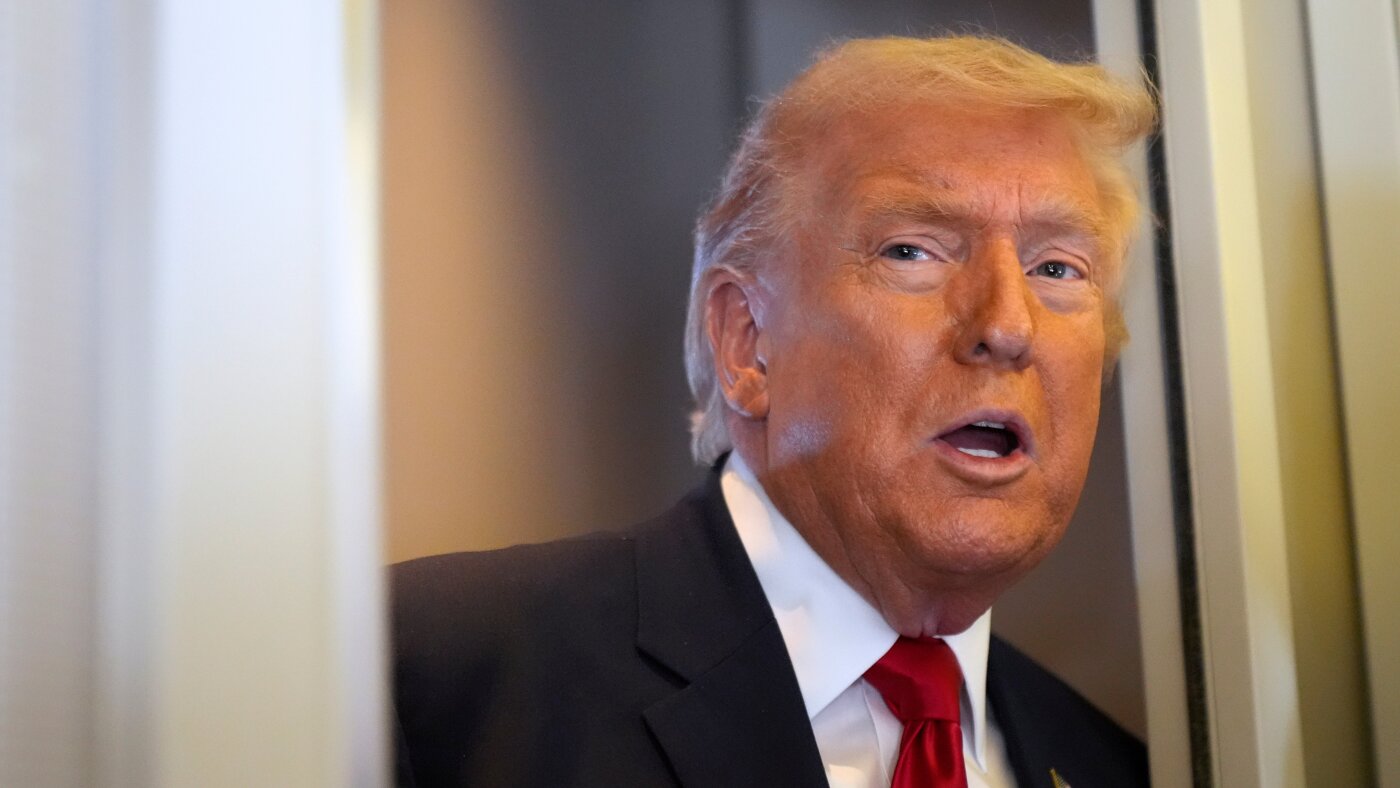
President Donald Trump has announced he will not sign any bills into law until Congress enacts stricter federal voting requirements. This ultimatum, shared via social media on Sunday, heightens his ongoing campaign to reshape election rules ahead of the 2026 midterm elections. In his post, Trump stated, “I, as President, will not sign other Bills until this is passed,” referring specifically to the proposed Safeguard American Voter Eligibility (SAVE) America Act.
If enacted, the SAVE America Act would significantly alter voter registration processes and voting in the United States. The legislation mandates that eligible voters provide proof of citizenship through documents such as a valid U.S. passport or a birth certificate, along with a valid photo identification. Although it is already illegal for non-U.S. citizens to vote in federal elections, Trump insists that this legislation should “go to the front of the line.”
Trump’s declaration follows his endorsement of a guest on Fox News who advocated for changes to Senate rules that currently require 60 votes to advance most legislation. In the past, Trump has called on Senators to eliminate the filibuster, a move that would allow bills he supports to pass without needing Democratic cooperation. However, Senate Majority Leader John Thune of South Dakota has consistently opposed such changes, stating that there is insufficient support within the Republican conference for altering filibuster rules.
Responses from Congressional Leaders
In response to Trump’s threat, Senate Minority Leader Chuck Schumer of New York reiterated that Democrats are unlikely to support the SAVE America Act. Schumer remarked, “If Trump is saying he won’t sign any bills until the SAVE Act is passed, then so be it: there will be total gridlock in the Senate.” He declared that Senate Democrats “will not help pass the SAVE Act under any circumstances.”
The GOP-controlled House has already passed several versions of the legislation, yet critics, including many Democrats and voting rights advocates, argue that the measure would impede access to voting for eligible citizens. As the political landscape continues to evolve, the implications of Trump’s decision to withhold his signature on all legislation remain uncertain.
If Congress manages to advance a bill and remains in session, any legislation could still become law within ten days, even without Trump’s endorsement. The White House has yet to comment on whether Trump would sign a bill related to funding the Department of Homeland Security or a military package intended to support efforts in Iran. Requests for comments from House Speaker Mike Johnson and Thune’s office have also gone unanswered.
As the debate surrounding voting rights intensifies, Trump’s actions signal a critical moment in American politics, with potential ramifications for the upcoming elections and beyond. The ongoing discourse highlights the challenges of reaching a consensus on voting regulations, an issue that resonates deeply with many Americans.

Cosmic Mystery Deepens: Where Are the Universe’s Defects?

Lady Bulldogs Shine in Postseason Awards Following Final Four Run

CALV Hosts Essential Class for Local Real Estate Professionals

Urgent Alert: “Spaving” Surges as Shoppers Overspend Online

Jefferies Initiates Coverage on Insmed with “Buy” Rating

Three Dog Night to Perform with Ambrosia at Mayo Civic Center

Urgent Announcement: Charles M. Payment Passes Away at 78

Houston Education Foundation Donates $4,592 for Student Programs

Beeks Financial Cloud Shares Drop 7% Amid Increased Trading Volume

Foreign Inflows into Japan Stocks Surge to ¥1.34 Trillion

University of Hawaiʻi Joins $25.6M AI Project to Monitor Disasters

Sydney Sweeney Embraces Body Positivity Amid Hollywood Challenges

Hudson Williams Gains Popularity as Breakout Star on Heated Rivalry

Urgent Farewell: Joleen Chaney Leaves Legacy at KFOR

Boeing’s Merger with McDonnell Douglas: A Strategic Move Explained

$1.25M Grant Advances Hawaiʻi’s Real-Time Hazard Monitoring

Derrick Dove and ABAC Band Set for Free Americana Concert

BOYNEXTDOOR’s Jaehyun Faces Backlash Amid BTS-TWICE Controversy
-
Business9 months ago
Foreign Inflows into Japan Stocks Surge to ¥1.34 Trillion
-
Science8 months ago
University of Hawaiʻi Joins $25.6M AI Project to Monitor Disasters
-
 Entertainment9 months ago
Sydney Sweeney Embraces Body Positivity Amid Hollywood Challenges
-
 Entertainment7 months ago
Hudson Williams Gains Popularity as Breakout Star on Heated Rivalry
-
 Top Stories8 months ago
Urgent Farewell: Joleen Chaney Leaves Legacy at KFOR
-
 World9 months ago
Boeing’s Merger with McDonnell Douglas: A Strategic Move Explained
-
 Science7 months ago
$1.25M Grant Advances Hawaiʻi’s Real-Time Hazard Monitoring
-
 Entertainment8 months ago
Derrick Dove and ABAC Band Set for Free Americana Concert
-
 Top Stories9 months ago
BOYNEXTDOOR’s Jaehyun Faces Backlash Amid BTS-TWICE Controversy
-

 Health6 months ago
Bodybuilder Eugene Teo Transitions to Mindful Movement for Health
-

 World6 months ago
San Francisco Airport to Host 16 Nonstop Airlines to Europe in 2026
-

 Top Stories7 months ago
National Coast Guard Museum Set to Open in 2027 After Funding Secured