
Top Stories
Trump Administration Suspends $10M Child Care Funds as NY Session Opens

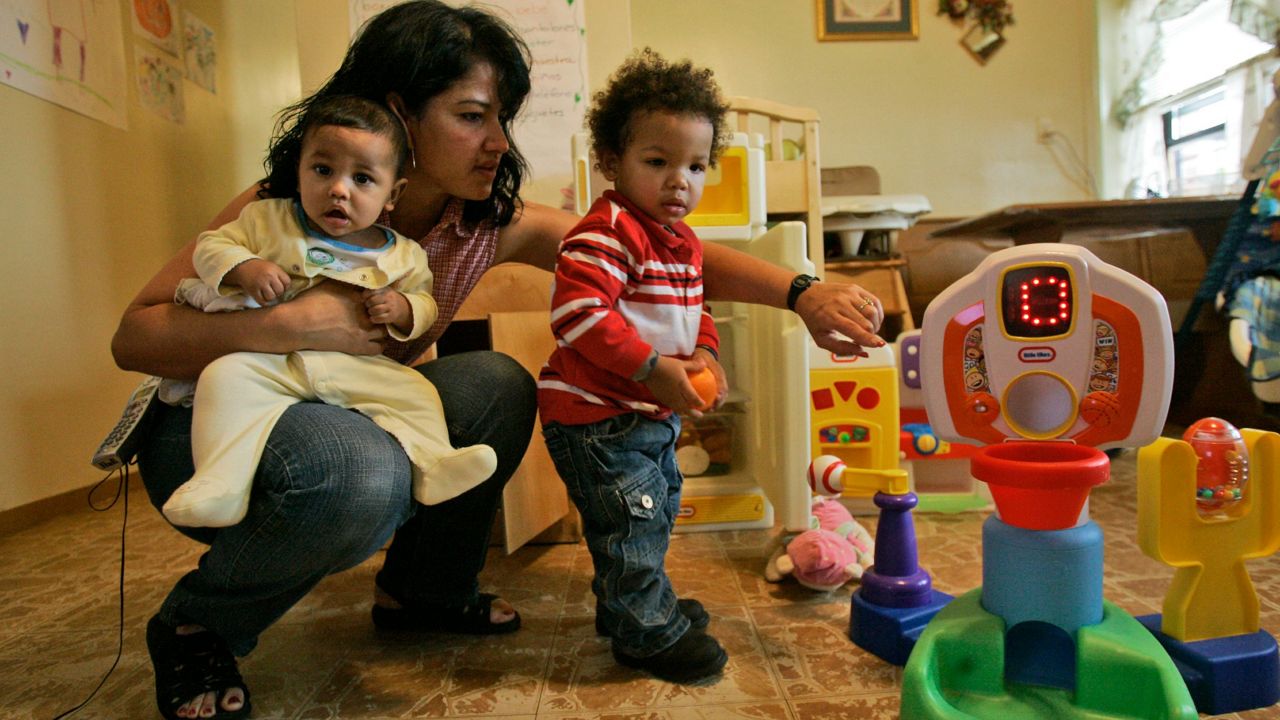
UPDATE: The Trump Administration has just announced a pause on $10 million in social services funding, including critical support for child care programs in several Democrat-led states. This decision comes as lawmakers gather at the New York State Capitol for the opening of the 2026 legislative session, raising urgent concerns about the future of child care initiatives in New York.
With the session kicking off, New York officials, led by Gov. Kathy Hochul, are gearing up to focus on affordability, particularly in light of the recent electoral success of New York City Mayor Zohran Mamdani and his push for universal child care. However, the federal funding freeze threatens to derail these efforts.
While speaking to reporters, Health and Human Services spokesperson Andrew Nixon characterized the funding pause as an oversight, claiming that “Democrat-led states have allowed massive amounts of fraud.” He emphasized that the Trump Administration is committed to ensuring federal funds are utilized properly.
Gov. Hochul, however, condemned the pause as a “frontal assault on children,” comparing it to the federal government’s previous handling of SNAP benefits during the recent government shutdown. She stated, “This is a fight we’re going to have to take on if we get that notification; it’s vindictive, and I believe we’ll be successful in court.”
As of Tuesday evening, Hochul’s office has not received official notification regarding the funding pause, but discussions about child care funding are already heating up in Albany. Last year, the Child Care Assistance Program, New York’s main resource for helping low-income families access child care, saw a surge in enrollment due to new eligibility standards. Advocates are alarmed that the funding freeze could exacerbate existing challenges, as nearly half of the program’s $2.2 billion budget comes from federal sources.
Dede Hill, vice president of policy at the Schuyler Center for Analysis and Advocacy, voiced her concerns about the potential long-term impact of the funding pause. “It’s important to keep an eye on this. It’s an important source of funding, and it needs to flow without delay to meet the needs of New York families,” she stated.
Advocates are calling for immediate prioritization of full funding for the Child Care Assistance Program and a dedicated funding stream for the child care workforce. Hill emphasized that without adequate support for the workforce, efforts to implement universal child care would be severely compromised.
Assemblymember Sarah Clark slammed the funding pause as “purely vindictive,” calling for meaningful investments in the child care workforce. She expressed hope that Hochul’s upcoming budget proposal would reflect substantial steps toward achieving universal child care.
Hochul has previously resisted raising income taxes on the state’s wealthiest residents to fund these initiatives, though she has not ruled out increases to the corporate tax rate. Clark remains optimistic, saying, “I’m hopeful that in her State of the State, she has some ideas.”
As the legislative session unfolds, urgent conversations about child care funding are expected to dominate discussions, with advocates insisting on equitable investments for both New York City and upstate regions. “We need to make sure we’re getting the same share for child care outside of the city,” Clark stressed.
As of now, all eyes are on the governor’s office, awaiting guidance on the federal funding situation and preparing for the vital discussions surrounding child care in New York. The implications of these developments could significantly impact thousands of families relying on state support for child care access.

Cosmic Mystery Deepens: Where Are the Universe’s Defects?

Lady Bulldogs Shine in Postseason Awards Following Final Four Run

CALV Hosts Essential Class for Local Real Estate Professionals

Urgent Alert: “Spaving” Surges as Shoppers Overspend Online

Jefferies Initiates Coverage on Insmed with “Buy” Rating

Three Dog Night to Perform with Ambrosia at Mayo Civic Center

Urgent Announcement: Charles M. Payment Passes Away at 78

Houston Education Foundation Donates $4,592 for Student Programs

Beeks Financial Cloud Shares Drop 7% Amid Increased Trading Volume

Foreign Inflows into Japan Stocks Surge to ¥1.34 Trillion

University of Hawaiʻi Joins $25.6M AI Project to Monitor Disasters

Sydney Sweeney Embraces Body Positivity Amid Hollywood Challenges

Hudson Williams Gains Popularity as Breakout Star on Heated Rivalry

Urgent Farewell: Joleen Chaney Leaves Legacy at KFOR

Boeing’s Merger with McDonnell Douglas: A Strategic Move Explained

$1.25M Grant Advances Hawaiʻi’s Real-Time Hazard Monitoring

Derrick Dove and ABAC Band Set for Free Americana Concert

BOYNEXTDOOR’s Jaehyun Faces Backlash Amid BTS-TWICE Controversy
-
Business9 months ago
Foreign Inflows into Japan Stocks Surge to ¥1.34 Trillion
-
Science9 months ago
University of Hawaiʻi Joins $25.6M AI Project to Monitor Disasters
-
 Entertainment9 months ago
Sydney Sweeney Embraces Body Positivity Amid Hollywood Challenges
-
 Entertainment7 months ago
Hudson Williams Gains Popularity as Breakout Star on Heated Rivalry
-
 Top Stories8 months ago
Urgent Farewell: Joleen Chaney Leaves Legacy at KFOR
-
 World9 months ago
Boeing’s Merger with McDonnell Douglas: A Strategic Move Explained
-
 Science7 months ago
$1.25M Grant Advances Hawaiʻi’s Real-Time Hazard Monitoring
-
 Entertainment8 months ago
Derrick Dove and ABAC Band Set for Free Americana Concert
-
 Top Stories9 months ago
BOYNEXTDOOR’s Jaehyun Faces Backlash Amid BTS-TWICE Controversy
-

 Health6 months ago
Bodybuilder Eugene Teo Transitions to Mindful Movement for Health
-

 World6 months ago
San Francisco Airport to Host 16 Nonstop Airlines to Europe in 2026
-

 Top Stories7 months ago
National Coast Guard Museum Set to Open in 2027 After Funding Secured