
Top Stories
Mice Give Birth After Space Mission: Major Breakthrough Confirmed

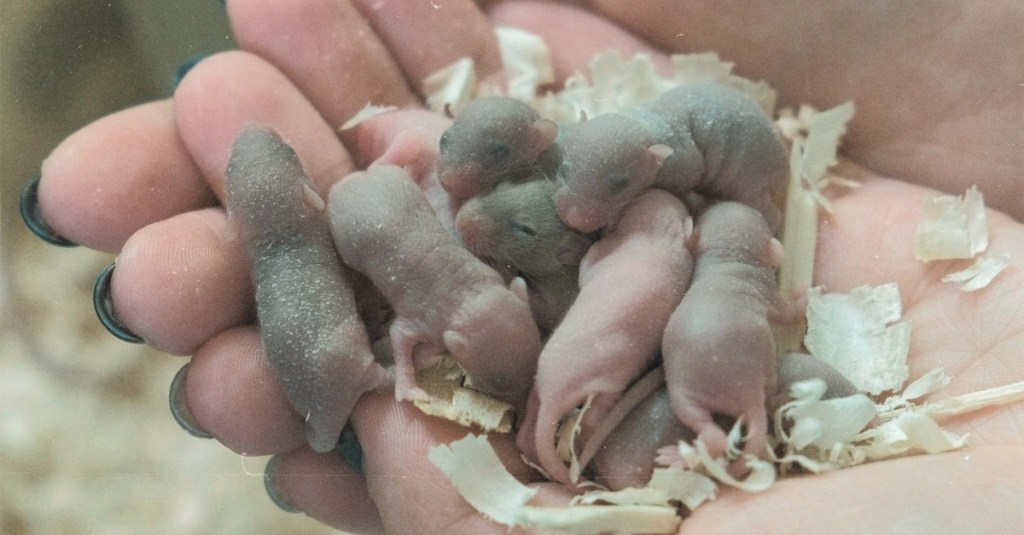
BREAKING: A female mouse has given birth to a litter of pups following a groundbreaking space mission, marking a significant step for reproductive biology in space. This remarkable event unfolded after the mouse spent two weeks aboard China’s Shenzhou-21 mission, which launched on October 31, 2023.
While it may seem like a small achievement, the implications are monumental for future space exploration. On December 10, 2023, the mother mouse returned home and delivered nine healthy pups, six of which survived, confirming that short-term exposure to microgravity did not impair her reproductive capabilities.
Scientists at the Chinese Academy of Sciences are closely monitoring the pups to understand their growth patterns and reproductive viability. According to researcher Wang Hongmei, this finding is crucial as it suggests that reproductive health can persist even after exposure to space conditions, which could alleviate concerns about human reproduction during long-duration missions to Mars or potential off-world settlements.
The Shenzhou-21 mission involved significant challenges. A change in the return schedule required the mice to stay longer than planned, raising alarms about their food supplies. Ground teams had to implement emergency measures, utilizing astronaut provisions like compressed biscuits and soy milk. An AI system was deployed to monitor the mice’s activities, ensuring their health remained stable throughout the mission.
This successful birth does not conclusively prove that mammals can thrive in reduced gravity or that they are free from the detrimental effects of space radiation. However, it does eliminate one of the more pessimistic scenarios regarding reproduction in space. As researchers continue to observe the pups’ development, they aim to identify any physiological changes that may arise over time.
The stakes are high: understanding mammalian reproduction in space is essential before humans can embark on multi-year journeys beyond Earth. One mouse delivering her litter is a step toward confirming that life can continue beyond our planet, igniting hope for future space exploration.
Stay tuned as researchers delve deeper into this fascinating study, with implications that could reshape humanity’s future in space. This development is not just a scientific curiosity; it could pave the way for permanent human presence on other planets.

Cosmic Mystery Deepens: Where Are the Universe’s Defects?

Lady Bulldogs Shine in Postseason Awards Following Final Four Run

CALV Hosts Essential Class for Local Real Estate Professionals

Urgent Alert: “Spaving” Surges as Shoppers Overspend Online

Jefferies Initiates Coverage on Insmed with “Buy” Rating

Three Dog Night to Perform with Ambrosia at Mayo Civic Center

Urgent Announcement: Charles M. Payment Passes Away at 78

Houston Education Foundation Donates $4,592 for Student Programs

Beeks Financial Cloud Shares Drop 7% Amid Increased Trading Volume

Foreign Inflows into Japan Stocks Surge to ¥1.34 Trillion

University of Hawaiʻi Joins $25.6M AI Project to Monitor Disasters

Sydney Sweeney Embraces Body Positivity Amid Hollywood Challenges

Hudson Williams Gains Popularity as Breakout Star on Heated Rivalry

Urgent Farewell: Joleen Chaney Leaves Legacy at KFOR

Boeing’s Merger with McDonnell Douglas: A Strategic Move Explained

$1.25M Grant Advances Hawaiʻi’s Real-Time Hazard Monitoring

Derrick Dove and ABAC Band Set for Free Americana Concert

BOYNEXTDOOR’s Jaehyun Faces Backlash Amid BTS-TWICE Controversy
-
Business9 months ago
Foreign Inflows into Japan Stocks Surge to ¥1.34 Trillion
-
Science8 months ago
University of Hawaiʻi Joins $25.6M AI Project to Monitor Disasters
-
 Entertainment9 months ago
Sydney Sweeney Embraces Body Positivity Amid Hollywood Challenges
-
 Entertainment7 months ago
Hudson Williams Gains Popularity as Breakout Star on Heated Rivalry
-
 Top Stories8 months ago
Urgent Farewell: Joleen Chaney Leaves Legacy at KFOR
-
 World9 months ago
Boeing’s Merger with McDonnell Douglas: A Strategic Move Explained
-
 Science7 months ago
$1.25M Grant Advances Hawaiʻi’s Real-Time Hazard Monitoring
-
 Entertainment8 months ago
Derrick Dove and ABAC Band Set for Free Americana Concert
-
 Top Stories9 months ago
BOYNEXTDOOR’s Jaehyun Faces Backlash Amid BTS-TWICE Controversy
-

 Health6 months ago
Bodybuilder Eugene Teo Transitions to Mindful Movement for Health
-

 World6 months ago
San Francisco Airport to Host 16 Nonstop Airlines to Europe in 2026
-

 Top Stories7 months ago
National Coast Guard Museum Set to Open in 2027 After Funding Secured