
Top Stories
Lebanon Army Set to Announce Completion of Hezbollah Disarmament Phase

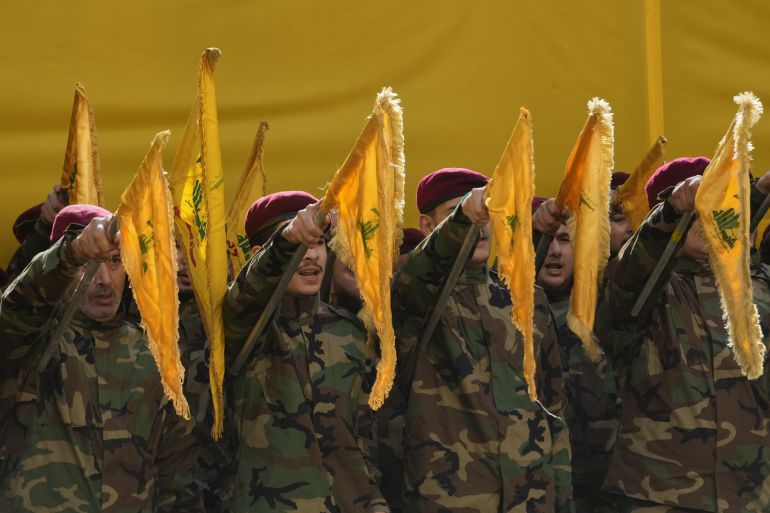
UPDATE: Lebanon’s army is poised to announce critical progress in its mission to disarm Hezbollah, with officials confirming that the first phase of the plan is nearing completion. This announcement is set for January 8, 2025, amid escalating tensions along the southern border with Israel.
The army’s commander, Rodolphe Haykal, has indicated that the operations will focus on areas between the Litani River and the Israeli border. These developments come as Israel has intensified its military actions, claiming that Hezbollah is rebuilding its military capabilities at a rapid pace.
Israel’s threats to escalate its military response if Lebanon fails to take decisive action against Hezbollah amplify the urgency of this situation. The Israeli military has already conducted airstrikes in the region, signaling its readiness to intervene further if necessary. As tensions rise, the Lebanese government faces immense pressure to assert state control over armed groups.
Haykal’s upcoming briefing is critical as he is expected to detail the army’s achievements despite acknowledging “limited capabilities.” He has previously attributed challenges to Israel’s ongoing military operations and occupation of Lebanese territory, complicating the disarmament process.
“With the Israeli enemy not implementing any of the steps of the agreement, Lebanon is no longer required to take any action on any level before the Israelis commit to what they are obligated to do,”
stated Hezbollah’s Secretary-General Naim Qassem. This statement underscores the complex interplay of regional power dynamics and the ongoing stalemate regarding disarmament efforts.
As Lebanon approaches the completion of the first phase, the next step will expand operations north of the Litani River, a move that could provoke significant political tension. Joe Macaron, a global fellow at the Wilson Center, cautioned that this phase will be “different, difficult, and challenging for the army.”
Hezbollah has publicly rejected disarmament efforts, framing them as an extension of U.S.-Israeli policy, and asserts that any ceasefire agreements apply only south of the Litani. Critics argue that the implementation of UN Resolution 1701, which calls for the disarmament of non-state actors, is essential for peace in Lebanon.
In a demonstration of its resolve, the Lebanese government, led by Prime Minister Nawaf Salam, has expressed readiness to proceed with the next phase of disarmament. However, the political consensus necessary for such actions appears fragile. The army is reportedly strategizing carefully to avoid potential internal conflict.
Adding to the complexities, Abbas Araghchi, Iran’s Foreign Minister, is expected to arrive in Beirut coinciding with the government meeting. Analysts suggest that Iran’s involvement in this critical moment reinforces Hezbollah’s position and complicates Lebanon’s disarmament efforts.
As the situation unfolds, the international community will be watching closely for Haykal’s briefing. The outcomes could reshape the power dynamics in Lebanon and impact regional stability. The stakes are high as Lebanon seeks to balance its sovereignty with external pressures from both Israel and Iran-backed Hezbollah.
Stay tuned for updates as this developing story progresses. The implications of these announcements could resonate far beyond Lebanon’s borders, influencing geopolitical relations in the region.

Cosmic Mystery Deepens: Where Are the Universe’s Defects?

Lady Bulldogs Shine in Postseason Awards Following Final Four Run

CALV Hosts Essential Class for Local Real Estate Professionals

Urgent Alert: “Spaving” Surges as Shoppers Overspend Online

Jefferies Initiates Coverage on Insmed with “Buy” Rating

Three Dog Night to Perform with Ambrosia at Mayo Civic Center

Urgent Announcement: Charles M. Payment Passes Away at 78

Houston Education Foundation Donates $4,592 for Student Programs

Beeks Financial Cloud Shares Drop 7% Amid Increased Trading Volume

Foreign Inflows into Japan Stocks Surge to ¥1.34 Trillion

University of Hawaiʻi Joins $25.6M AI Project to Monitor Disasters

Sydney Sweeney Embraces Body Positivity Amid Hollywood Challenges

Hudson Williams Gains Popularity as Breakout Star on Heated Rivalry

Urgent Farewell: Joleen Chaney Leaves Legacy at KFOR

Boeing’s Merger with McDonnell Douglas: A Strategic Move Explained

$1.25M Grant Advances Hawaiʻi’s Real-Time Hazard Monitoring

Derrick Dove and ABAC Band Set for Free Americana Concert

BOYNEXTDOOR’s Jaehyun Faces Backlash Amid BTS-TWICE Controversy
-
Business9 months ago
Foreign Inflows into Japan Stocks Surge to ¥1.34 Trillion
-
Science9 months ago
University of Hawaiʻi Joins $25.6M AI Project to Monitor Disasters
-
 Entertainment9 months ago
Sydney Sweeney Embraces Body Positivity Amid Hollywood Challenges
-
 Entertainment8 months ago
Hudson Williams Gains Popularity as Breakout Star on Heated Rivalry
-
 Top Stories9 months ago
Urgent Farewell: Joleen Chaney Leaves Legacy at KFOR
-
 World9 months ago
Boeing’s Merger with McDonnell Douglas: A Strategic Move Explained
-
 Science8 months ago
$1.25M Grant Advances Hawaiʻi’s Real-Time Hazard Monitoring
-
 Entertainment8 months ago
Derrick Dove and ABAC Band Set for Free Americana Concert
-
 Top Stories9 months ago
BOYNEXTDOOR’s Jaehyun Faces Backlash Amid BTS-TWICE Controversy
-

 Health6 months ago
Bodybuilder Eugene Teo Transitions to Mindful Movement for Health
-

 World6 months ago
San Francisco Airport to Host 16 Nonstop Airlines to Europe in 2026
-

 Top Stories7 months ago
National Coast Guard Museum Set to Open in 2027 After Funding Secured