
Top Stories
Korean Team Unveils Groundbreaking 4D Printing Using Sulfur Waste

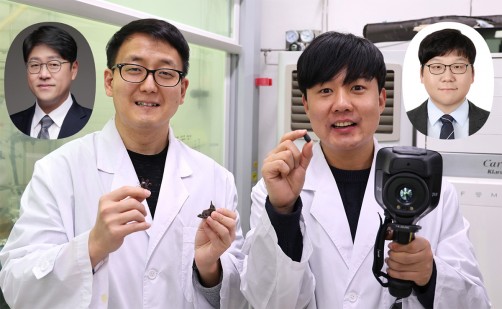
BREAKING: A revolutionary breakthrough in 4D printing technology has just been announced by a team of Korean researchers, enabling the creation of self-actuating, recyclable structures from waste sulfur produced during petroleum refining. This cutting-edge approach, led by Dr. Dong-Gyun Kim of the Korea Research Institute of Chemical Technology (KRICT), is set to transform the landscape of material science.
The team, including experts from Hanyang University and Sejong University, revealed that this is the world’s first application of sulfur-rich polymers in 4D printing, responding adeptly to heat, light, and magnetic fields. With global sulfur production reaching approximately 85 million tons in 2024, this development addresses the pressing need to convert this abundant industrial by-product into valuable resources.
This innovative technology tackles the significant challenge of using sulfur plastics, which are known for their environmental benefits but have struggled to integrate into 3D printing due to their dense cross-linked structures. By engineering a more flowable, loosely cross-linked sulfur polymer network, the researchers enabled complex 3D shapes to be printed with ease.
The resulting structures feature remarkable shape-memory properties, allowing them to autonomously change their shapes in response to external stimuli. Notably, the application of a near-infrared (NIR) laser for just eight seconds initiates a chemical welding process, securely bonding printed components without the need for adhesives, akin to assembling with LEGO blocks.
In an exciting development, the incorporation of 20% magnetic particles into the material allows the creation of soft robots smaller than 1 cm that can move independently, guided solely by external magnetic fields. This dual capability of shape-memory and magnetic responsiveness positions these robots at the forefront of future automation technologies.
The closed-loop manufacturing ability of this 4D printing technology is equally groundbreaking. After their intended use, these printed structures can be melted down and fully recycled, promoting a complete resource-circulating system.
Dr. Dong-Gyun Kim emphasized the significance of this study: “This study represents the first example of upcycling industrial sulfur waste into advanced robotic materials. Smart materials that can move autonomously and be recycled are expected to become key drivers of future soft robotics and automation technologies.”
The implications of this research are profound, potentially paving the way for advancements in sustainable materials and robotics that not only protect the environment but also enhance industrial capabilities.
Published in Advanced Materials, this study is supported by the Ministry of Science and ICT of Korea and the U.S. Army International Technology Center, showcasing a collaboration aimed at solving some of the most pressing challenges in material science today.
Stay tuned for further developments on this groundbreaking technology that could reshape industries and promote eco-friendly practices across the globe.

Cosmic Mystery Deepens: Where Are the Universe’s Defects?

Lady Bulldogs Shine in Postseason Awards Following Final Four Run

CALV Hosts Essential Class for Local Real Estate Professionals

Urgent Alert: “Spaving” Surges as Shoppers Overspend Online

Jefferies Initiates Coverage on Insmed with “Buy” Rating

Three Dog Night to Perform with Ambrosia at Mayo Civic Center

Urgent Announcement: Charles M. Payment Passes Away at 78

Houston Education Foundation Donates $4,592 for Student Programs

Beeks Financial Cloud Shares Drop 7% Amid Increased Trading Volume

Foreign Inflows into Japan Stocks Surge to ¥1.34 Trillion

University of Hawaiʻi Joins $25.6M AI Project to Monitor Disasters

Sydney Sweeney Embraces Body Positivity Amid Hollywood Challenges

Hudson Williams Gains Popularity as Breakout Star on Heated Rivalry

Urgent Farewell: Joleen Chaney Leaves Legacy at KFOR

Boeing’s Merger with McDonnell Douglas: A Strategic Move Explained

$1.25M Grant Advances Hawaiʻi’s Real-Time Hazard Monitoring

Derrick Dove and ABAC Band Set for Free Americana Concert

BOYNEXTDOOR’s Jaehyun Faces Backlash Amid BTS-TWICE Controversy
-
Business8 months ago
Foreign Inflows into Japan Stocks Surge to ¥1.34 Trillion
-
Science8 months ago
University of Hawaiʻi Joins $25.6M AI Project to Monitor Disasters
-
 Entertainment8 months ago
Sydney Sweeney Embraces Body Positivity Amid Hollywood Challenges
-
 Entertainment7 months ago
Hudson Williams Gains Popularity as Breakout Star on Heated Rivalry
-
 Top Stories8 months ago
Urgent Farewell: Joleen Chaney Leaves Legacy at KFOR
-
 World8 months ago
Boeing’s Merger with McDonnell Douglas: A Strategic Move Explained
-
 Science7 months ago
$1.25M Grant Advances Hawaiʻi’s Real-Time Hazard Monitoring
-
 Entertainment8 months ago
Derrick Dove and ABAC Band Set for Free Americana Concert
-
 Top Stories8 months ago
BOYNEXTDOOR’s Jaehyun Faces Backlash Amid BTS-TWICE Controversy
-

 Health5 months ago
Bodybuilder Eugene Teo Transitions to Mindful Movement for Health
-

 Top Stories6 months ago
National Coast Guard Museum Set to Open in 2027 After Funding Secured
-

 Health6 months ago
Hartford’s Abandoned Tower Faces Growing Safety Concerns