
Top Stories
Chinese Researchers Slash Microchip Defects by 99% with New Tech

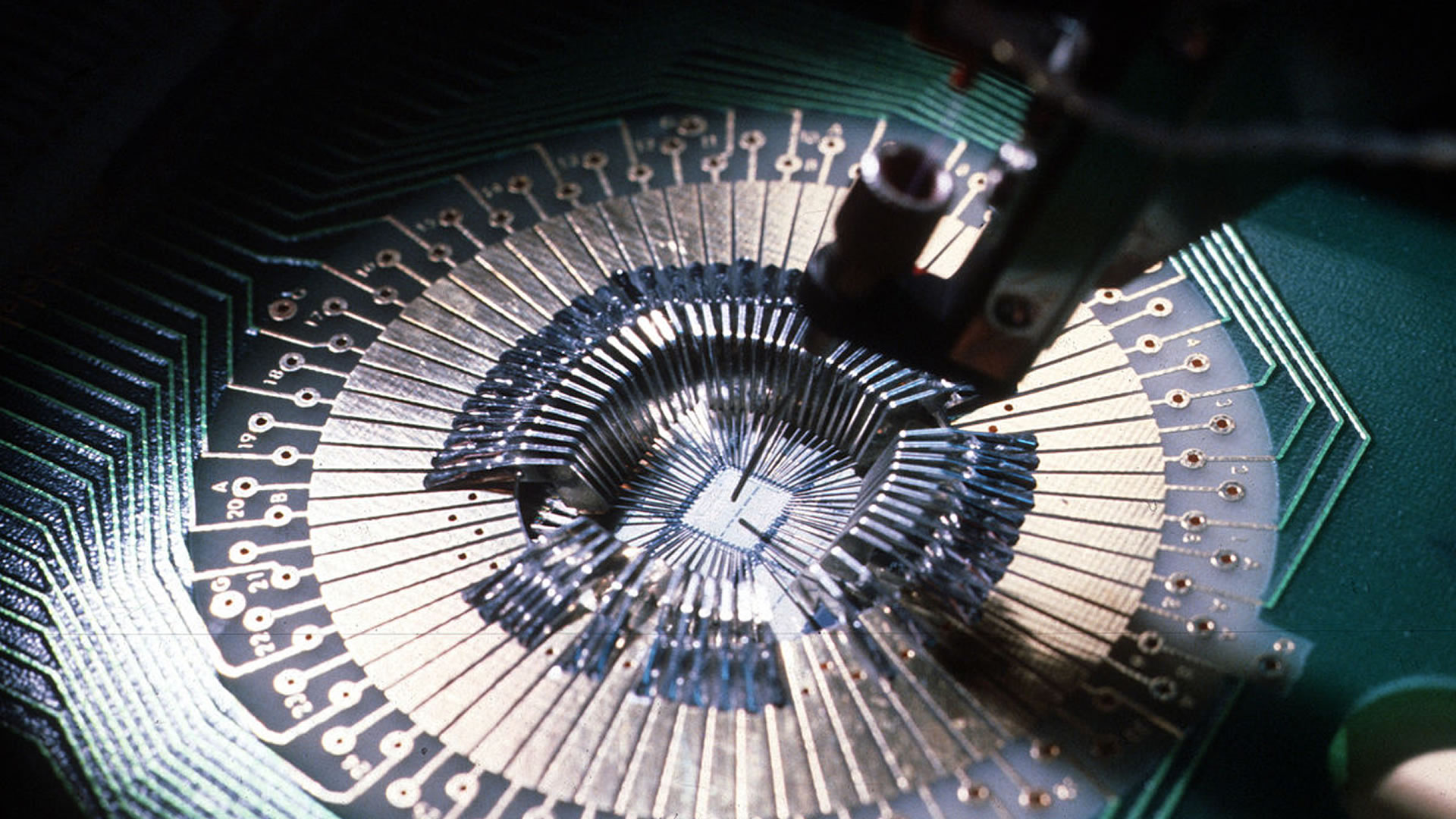
BREAKING: Chinese researchers have developed a groundbreaking technology that can reduce microchip manufacturing defects by a staggering 99%. This urgent advancement in semiconductor production was confirmed by a team led by Professor Peng Hailin from Peking University, Tsinghua University, and HKU (University of Hong Kong), marking a pivotal moment for the industry.
The innovative technique utilizes cryo-electron tomography (cryo-ET), a method typically reserved for biological studies, to freeze the microchip development process in real-time. This allows researchers to visualize and analyze defects that have long plagued the delicate lithography stage of microchip production.
Currently, during photolithography, tiny circuit patterns are “printed” onto silicon wafers using light. However, this intricate process can lead to significant issues, as even a minuscule 30-nanometre particle can render a chip unusable. Until now, manufacturers struggled to identify the exact causes of these defects, which can result in massive financial losses.
In a remarkable breakthrough, the research team rapidly froze the chemical process at 32°F (–175°C), capturing the behavior of photoresist polymers during development. Their findings revealed that approximately 70% of these polymers fail to dissolve properly, leading to the formation of clumps that cause defects. By implementing two effective adjustments—raising the bake temperature and altering the rinse process—they successfully reduced defect counts on 12-inch (30.5 cm) wafers by over 99%.
This urgent development not only enhances the quality of semiconductor manufacturing but also positions China as a formidable player in the global chip industry. As demand for advanced technology surges, this innovation could significantly impact tech production, ensuring more reliable and efficient microchips.
Next, industry experts are watching closely to see how quickly manufacturers will adopt these techniques, which promise to revolutionize the microchip landscape. With the potential for increased yields and reduced costs, this breakthrough could lead to a new era in semiconductor production.
Stay tuned for further updates on this developing story as the implications for technology and the economy unfold.

Cosmic Mystery Deepens: Where Are the Universe’s Defects?

Lady Bulldogs Shine in Postseason Awards Following Final Four Run

CALV Hosts Essential Class for Local Real Estate Professionals

Urgent Alert: “Spaving” Surges as Shoppers Overspend Online

Jefferies Initiates Coverage on Insmed with “Buy” Rating

Three Dog Night to Perform with Ambrosia at Mayo Civic Center

Urgent Announcement: Charles M. Payment Passes Away at 78

Houston Education Foundation Donates $4,592 for Student Programs

Beeks Financial Cloud Shares Drop 7% Amid Increased Trading Volume

Foreign Inflows into Japan Stocks Surge to ¥1.34 Trillion

University of Hawaiʻi Joins $25.6M AI Project to Monitor Disasters

Sydney Sweeney Embraces Body Positivity Amid Hollywood Challenges

Hudson Williams Gains Popularity as Breakout Star on Heated Rivalry

Urgent Farewell: Joleen Chaney Leaves Legacy at KFOR

Boeing’s Merger with McDonnell Douglas: A Strategic Move Explained

$1.25M Grant Advances Hawaiʻi’s Real-Time Hazard Monitoring

Derrick Dove and ABAC Band Set for Free Americana Concert

BOYNEXTDOOR’s Jaehyun Faces Backlash Amid BTS-TWICE Controversy
-
Business9 months ago
Foreign Inflows into Japan Stocks Surge to ¥1.34 Trillion
-
Science9 months ago
University of Hawaiʻi Joins $25.6M AI Project to Monitor Disasters
-
 Entertainment9 months ago
Sydney Sweeney Embraces Body Positivity Amid Hollywood Challenges
-
 Entertainment8 months ago
Hudson Williams Gains Popularity as Breakout Star on Heated Rivalry
-
 Top Stories9 months ago
Urgent Farewell: Joleen Chaney Leaves Legacy at KFOR
-
 World9 months ago
Boeing’s Merger with McDonnell Douglas: A Strategic Move Explained
-
 Science8 months ago
$1.25M Grant Advances Hawaiʻi’s Real-Time Hazard Monitoring
-
 Entertainment8 months ago
Derrick Dove and ABAC Band Set for Free Americana Concert
-
 Top Stories9 months ago
BOYNEXTDOOR’s Jaehyun Faces Backlash Amid BTS-TWICE Controversy
-

 Health6 months ago
Bodybuilder Eugene Teo Transitions to Mindful Movement for Health
-

 World6 months ago
San Francisco Airport to Host 16 Nonstop Airlines to Europe in 2026
-

 Top Stories7 months ago
National Coast Guard Museum Set to Open in 2027 After Funding Secured